
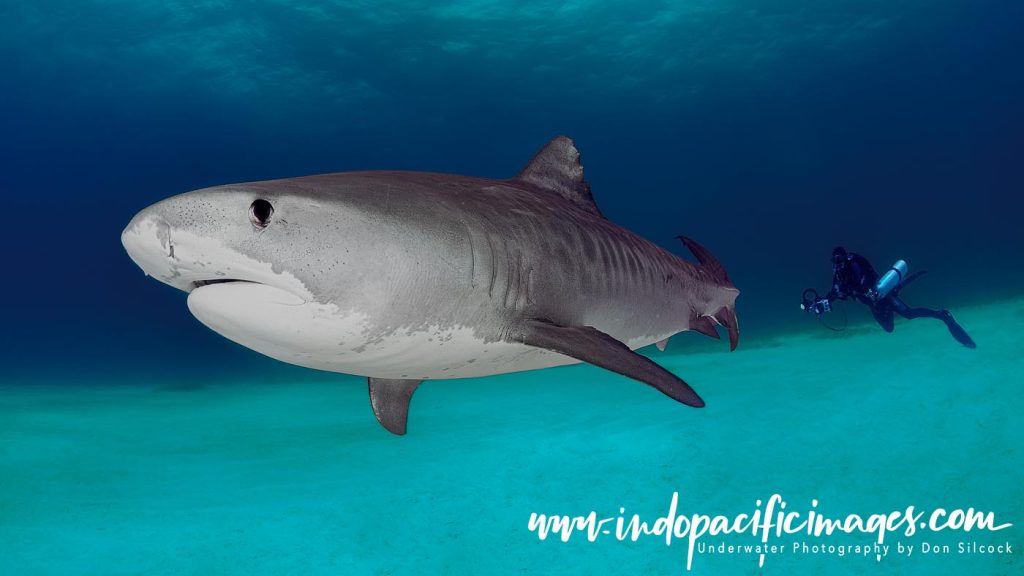
Tiger Beach is probably the world’s best-known location for close encounters with Tiger Sharks.
Together with large numbers of Caribbean reef sharks, lemon sharks, nurse sharks and, at times, other large shark species.
For both divers and underwater photographers, a trip there is an extraordinary opportunity.
But arriving at Tiger Beach for the first time is somewhat of a soul-searching and (if we are brutally honest) intimidating experience.
You know what you are about to do. Having seen the photographs, watched the videos and listened to stories from other divers.
But you are acutely aware that Tiger Sharks are large, powerful predators capable of reaching more than 5m in length.
And you are also equally well aware they have a fearsome reputation as second only to the Great White Shark as the most dangerous shark.
And then it’s time to get in the water…
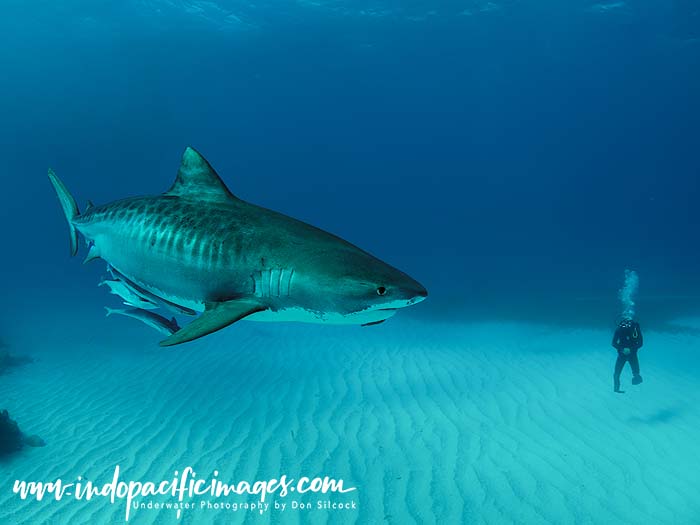
What is Tiger Beach?
The first thing to understand about Tiger Beach is that it isn’t actually a beach.
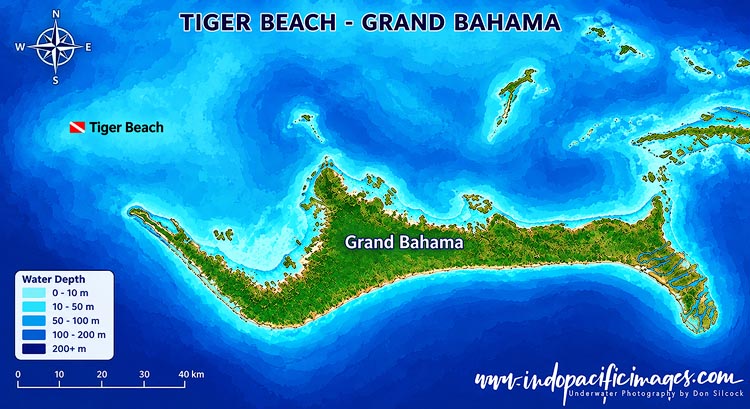
The name refers to a shallow area of sand and seagrass on the western edge of Little Bahama Bank, roughly 30km to the west of West End on Grand Bahama. The area is part of a vast shallow carbonate platform characteristic of the Bahamas archipelago.
It was once known locally as Dry Bank and had a reputation among fishermen for shark activity long before it became famous among divers.
The transformation into what we now know as Tiger Beach began in the late 1980s and early 1990s, with Captain Scott Smith of the Dolphin Dream among those credited with pioneering shark encounters in the area. Jim Abernathy of Scuba Adventures is generally credited with taking bait boxes into the water in the early 2000s and helping establish the name Tiger Beach.
Exactly who did what first has become part of the lore surrounding the site. What really matters is what developed from those early experiments. One of the world’s most remarkable locations for close encounters with large sharks.
Today, Tiger Beach is a major destination for dedicated shark-diving liveaboards and day boats. Particularly during the cooler months when tiger sharks are seasonally abundant in the area. Scientific research has documented seasonal aggregations of female tiger sharks around the northwestern edge of Little Bahama Bank. While provisioning by dive operators takes place at specific sites.
The First Descent…
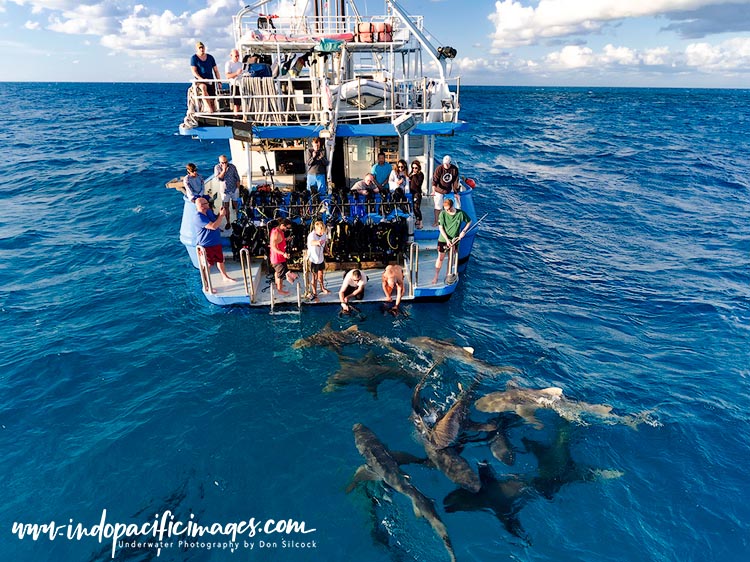
The briefings on Tiger Beach trips are (in my opinion) extensive, thorough and very methodical. Divers are told how to enter the water, where to position themselves, plus how to behave around the bait box.
And, most importantly… how to respond when a tiger shark approaches.
After the briefing, everyone gets ready on the back of the boat and waits for the signal to enter the water. Inevitably you look down into the clear blue water and look for sharks.
The first descent is a strange mixture of excitement and apprehension. The sharks are already there, and unlike many encounters with large marine animals, they are not disappearing into the distance.
They are coming towards you…
The first few minutes tend to be spent getting comfortable with the situation and finding your position on the bottom.
But, once everyone is settled, the experience becomes considerably easier.
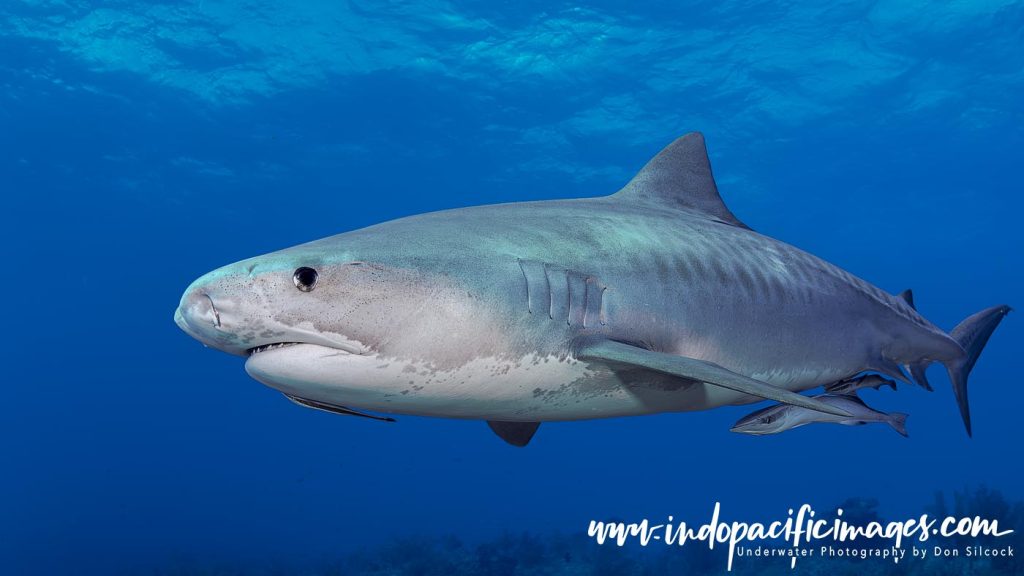
Tiger Beach – Reality Bites…
The really interesting thing is what happens once you are actually underwater. The nervous anticipation dissipates surprisingly quickly as you become aware of the sharks as individuals, rather than as one amorphous mass of danger.
The Caribbean Reef Sharks tend to be assertive and inquisitive, often approaching divers closely and moving repeatedly through the group. While the Lemon Sharks have a very different demeanour. Tending to stay low over the sand, sometimes appearing almost furtively as they approach.
And then a Tiger Shark arrives and everything changes.
Tiger sharks have an extraordinary presence underwater. They do not need to move quickly or behave aggressively to command attention. They simply appear and move with a slow, deliberate confidence, checking out what is around them. The other sharks often seem to give them space, and the entire character of the encounter changes as the tiger passes through.
This is the point at which the name “apex predator” stops being an abstract biological description and becomes something you very tangible.
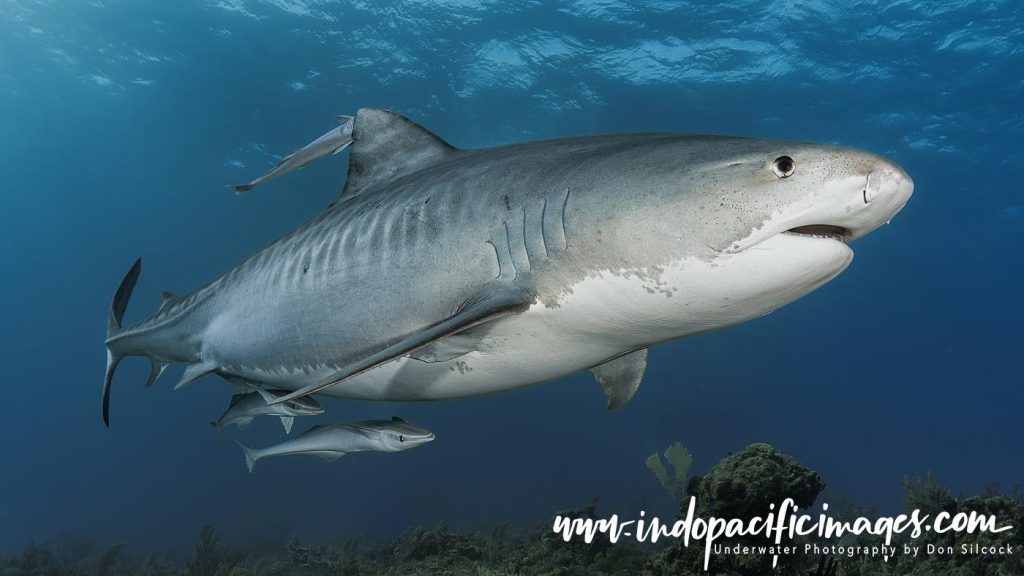
The Sharks of Tiger Beach
Perhaps the bset way of understanding the sharks of Tiger Beach is that they fall into two distinct categories. Neither of which has anything to do with specific species… Rather it is all about the potential damage a bite could inflict!
There are the larger sharks – essentially tiger and bull sharks – where any bite could be life-threatening. Then there are the smaller species, where the consequences of a bite would generally be less severe, although that certainly doesn’t make getting bitten something to take lightly.”
Tiger Sharks
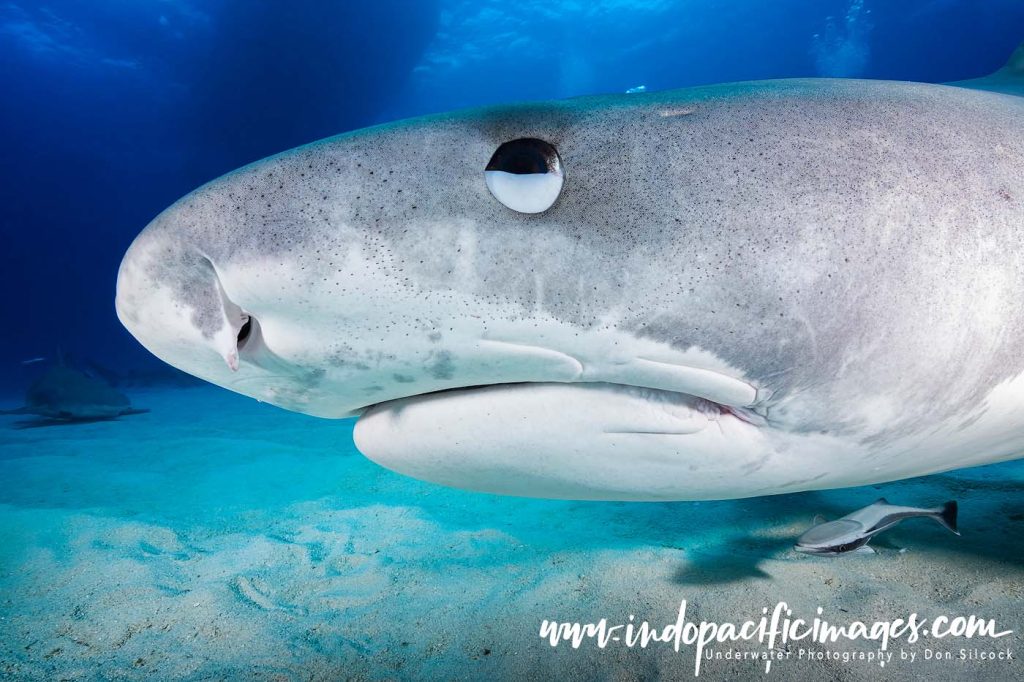
The Tiger Shark, (Galeocerdo cuvier), is one of the largest predatory sharks in tropical and subtropical seas. Fully grown adults can reach several metres in length and are very powerfully built animals. Their name comes from the dark vertical markings that are particularly prominent in younger sharks and tend to fade as they mature.
Their broad heads and heavily built bodies make them instantly recognisable. But size isn’t really what makes a Tiger Shark so impressive at Tiger Beach. It is their attitude.
They seem completely comfortable in their surroundings and are capable of approaching divers with remarkable confidence. For an underwater photographer, that creates an opportunity that is almost unique. And, instead of glimpsing a Tiger Shark disappearing into the distance. You can watch one approach, pass directly in front of the camera and sometimes turn and come back for another look.
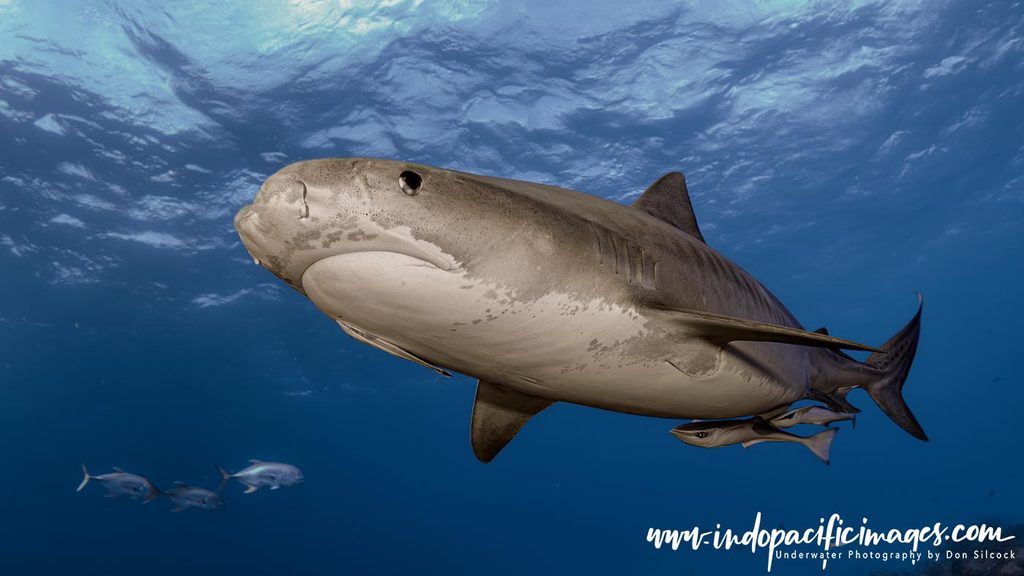
Bull Sharks
Bull sharks (Carcharhinus leucas) are more like occasional visitors to Tiger Beach rather than one of its principal attractions. Powerfully built and highly adaptable, they are definitely one of the “large sharks” with an assertive presence and a deliberate, purposeful swimming style.
They are not deliberately fed during the shark dives. So encounters often occur when a bull shark approaches the periphery of the activity and investigates before continuing on its way.
Their occasional appearance among the Tiger, Lemon and Caribbean Reef Sharks provides a fascinating reminder that Tiger Beach is very much part of a much larger and dynamic ecosystem.
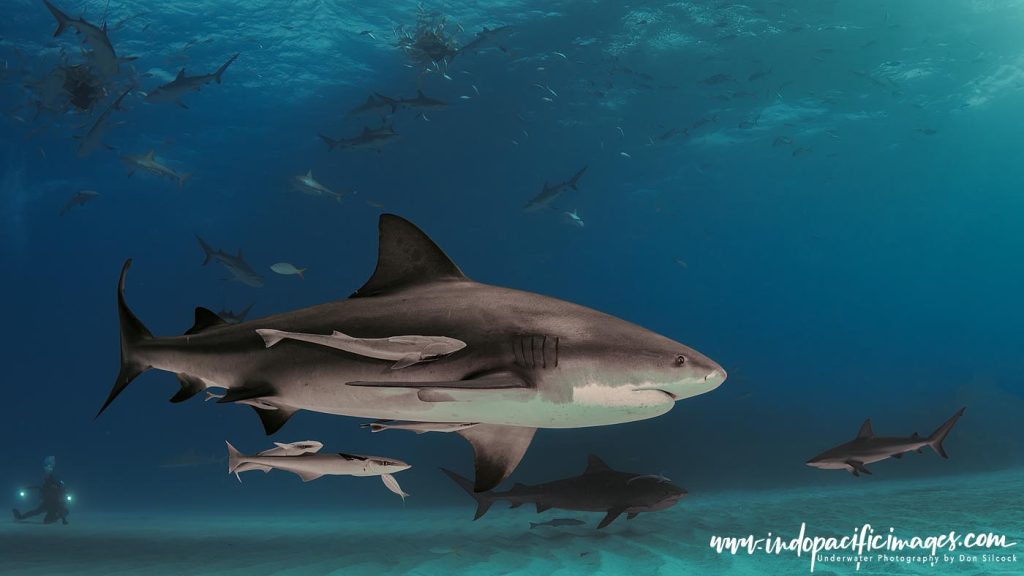
Hammerhead Sharks
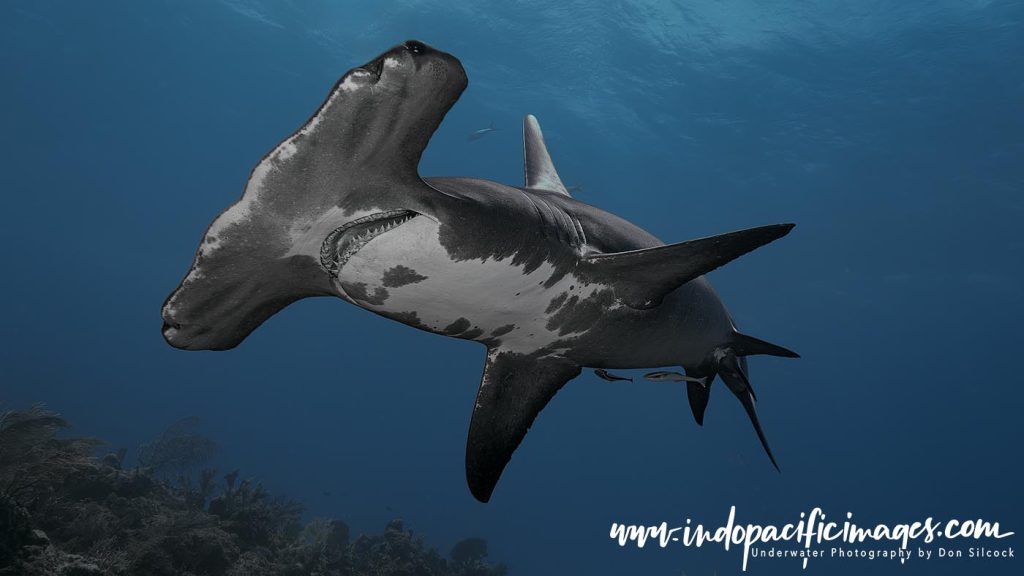
The third of the “large sharks” that can be seen at Tiger Beach is the Great Hammerhead (Sphyrna mokarran). Very much an occasional visitor, when they do appear it is a huge bonus as they can be really difficult to encounter underwater. Bimini is by far the best place to see Great Hammerhead Sharks in the Bahamas, but it seems there is cross pollination between the two locations.
Large, powerful and instantly recognisable, they generally move with a slow, deliberate grace that contrasts sharply with their formidable appearance. Great Hammerheads are highly mobile predators that can undertake long migrations. Research in the Bahamas has also demonstrated strong site fidelity, with some individuals repeatedly returning to favoured areas.
They are particularly accomplished hunters of rays and other elasmobranchs, and can switch from seemingly effortless cruising to remarkably fast and agile manoeuvres when pursuing prey.
At Tiger Beach, a Great Hammerheads usually appear from outside the main shark aggregation and may initially keep their distance, making wide circuits before gradually approaching the divers. Once comfortable, they often make repeated passes through the group, providing one of the most memorable encounters imaginable.
That specific behaviour should be viewed in the context of a baited dive as Great Hammerheads encountered away from provisioning sites can be considerably more wary. Their occasional appearance at Tiger Beach is therefore particularly special!
Caribbean Reef Sharks
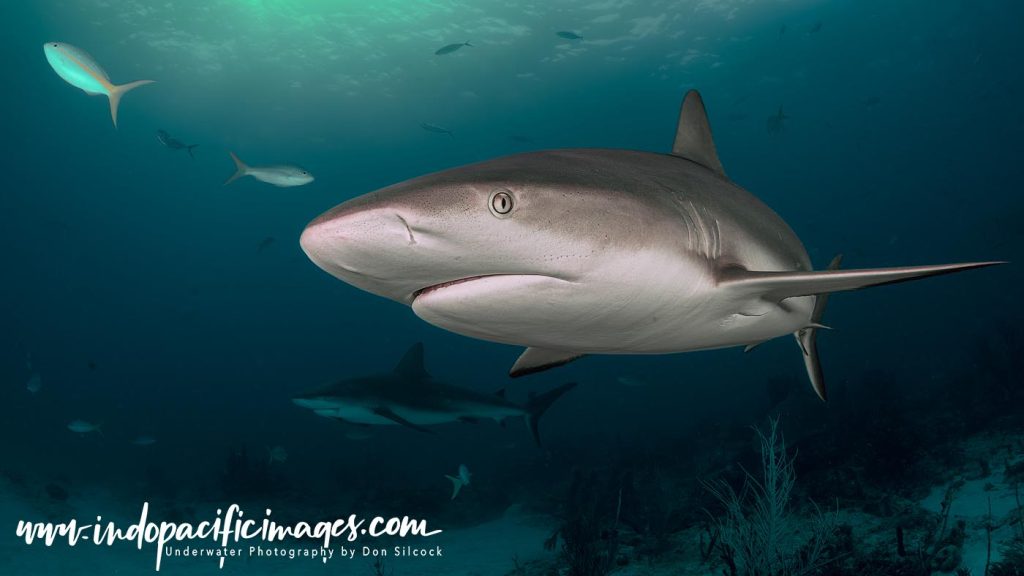
Caribbean Reef Sharks, Carcharhinus perezi, are usually what you notice first at Tiger Beach. Encountered normally along the edges of reefs, walls and channels they are generally solitary or in loose groups. Around divers, they are usually very cautious initially, often making several wide passes as they become accustomed to the visitors.
That behaviour changes quite dramatically when food is introduced. Sharks that were previously cruising independently can become more focused, faster and more competitive.
That is the behaviour on display at Tiger Beach because of the bait box. They can sense the presence of a food source and it is the catalyst for the change in behaviour. It is also why the briefings stress the need to stay in your allocated position and avoid getting too close to the bait box.
Lemon Sharks
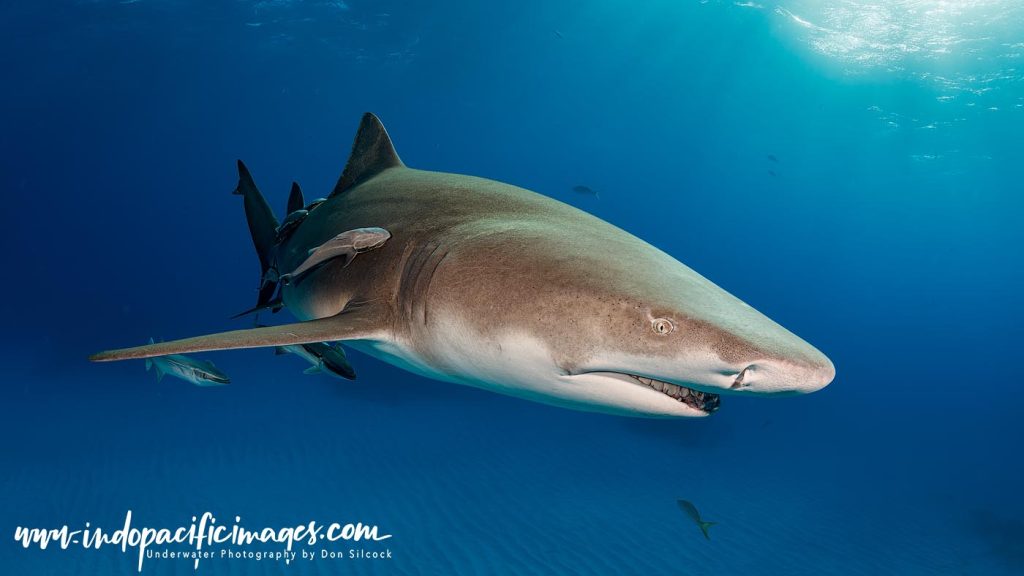
Lemon Sharks (Negaprion brevirostris) have a very different behavioural profile to the Caribbean Reef Shark with a much slower, more deliberate and less restless swimming pattern. They are predominantly bottom-associated predators, using their broad heads and electroreceptive senses to locate prey hidden in sand or beneath the substrate such as rays and crustaceans.
They are generally regarded as non-aggressive towards divers and are often described as relatively confident and inquisitive sharks. Rather than immediately fleeing when approached by divers, an individual may continue its normal movements and gradually investigate an unfamiliar object or diver.
The lemon sharks encountered at Tiger Beach are particularly interesting because they have become accustomed to the presence of divers and to the predictable conditions created by shark-diving operations.
They are commonly seen cruising slowly over the sandy bottom, sometimes moving almost directly through groups of divers. At times they appear remarkably relaxed, with a slow, rhythmic tail beat and relatively little change in direction.
Their behaviour can become even more focused when bait is present. Lemon Sharks often congregate around the baited area and compete with other sharks. But they generally retain their characteristic slow, deliberate swimming style rather than the rapid, frenetic movements that can occur during intense feeding activity.
Tiger Beach “Rules of Engagement”
The sheer number of sharks at Tiger Beach can be initially at least quite overwhelming. But the reality is that (in all probability…) there is limited danger from the “small sharks”. And the only real chance of being bitten is if you break the cardinal rule of getting too close to the bait box. The small sharks behave very much like hungry dogs and are much more interested in what may be on offer. Which is why you don’t want to get too close to the bait box!
Tiger Sharks, on the other hand, are a different ball game… They are intelligent and curious animals that will often approach divers, particularly at Tiger Beach. They may investigate unfamiliar objects by approaching closely or occasionally bumping them with the snout.
So you should always know where the Tiger Sharks are and you should always face them. In other words, keep the eye of the tiger in view at all times. Photographers are instructed to use their cameras as a shield – with the strict instruction to let go if a tiger decides to do a taste test. Remember, it’s not about hunger – they are simply curious.
Bull Sharks also need to be watched carefully as they are both dangerous and sneaky.
Tiger Beach – How It Works
The general area around Tiger Beach is what you might call ‘sharky’ – in other words, there are a lot of sharks in the neighbourhood.
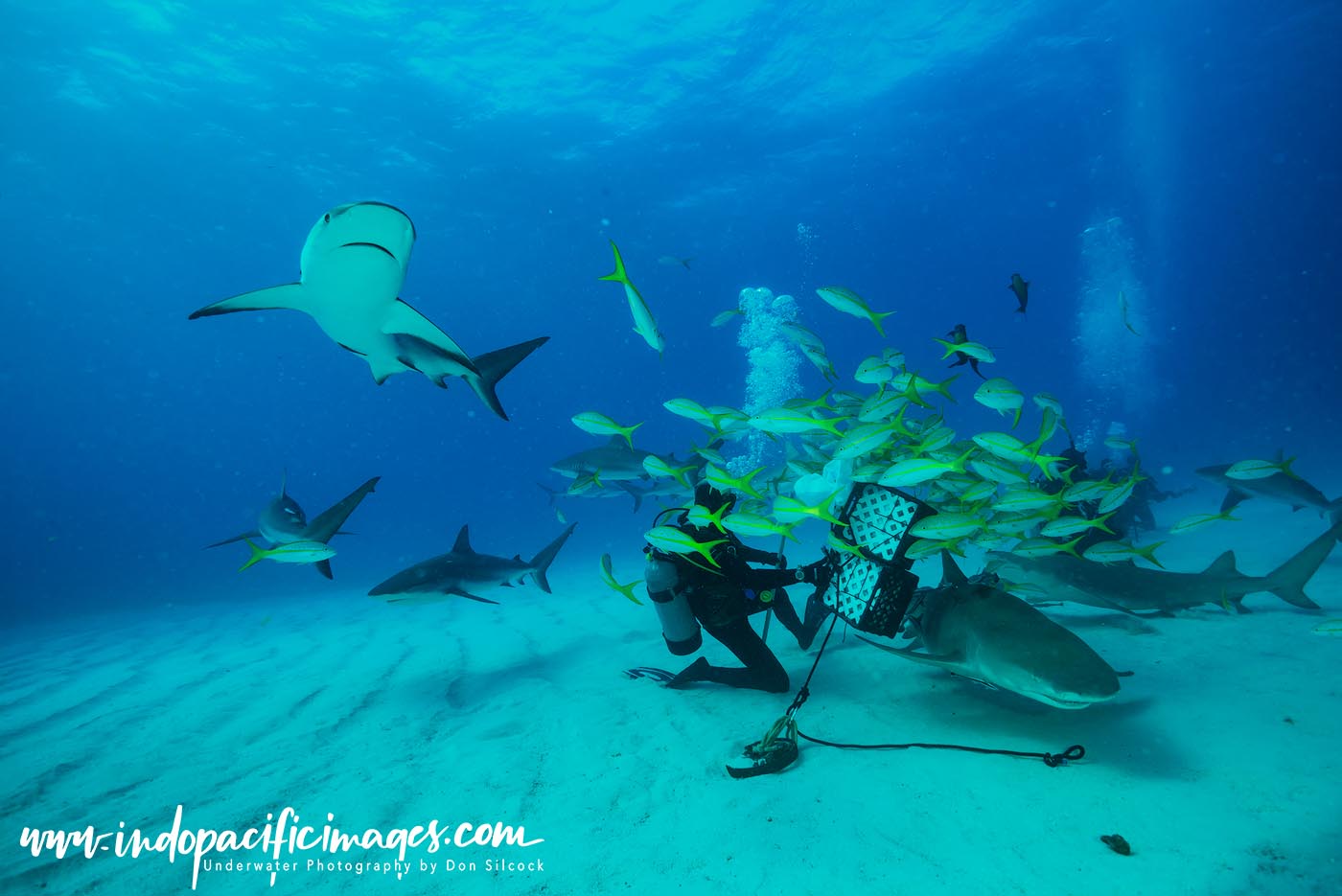
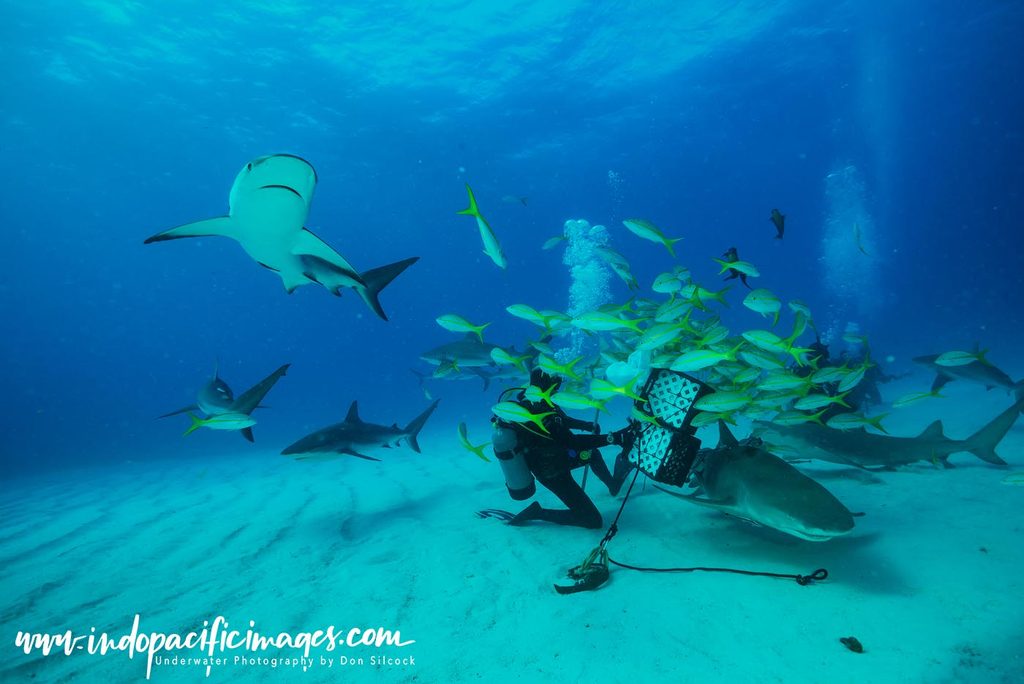
To get them to congregate in one location, the operators use a bait box. It consists of plastic milk crates packed with filleted fish carcasses and sealed with a thick plastic top held in place with numerous cable ties.
In the water, the scent of the dead fish percolating out from the bait-boxes attracts any sharks in the area. But it does not whip them into the frenzy that shark-feeding tends to do.
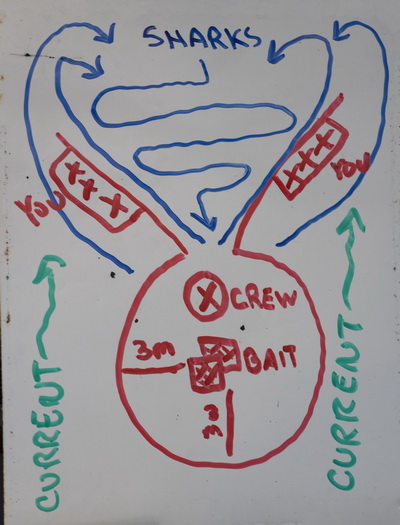
The boxes are positioned in the current so that the scent of the dead fish is carried downstream. And the sharks swim in to the current up the “runway” to the bait-box.
The guest-divers are positioned approximately 45 degrees to either side of the bait boxes to get good views of the sharks as they come up the runway.
There is also a 3m “exclusion zone” around the bait-boxes that the guest-divers cannot enter – for obvious reasons…
How Dangerous Is It?
I have been asked this question many times… The honest answer is undoubtedly there is a level of danger from being in open water with a large number of sharks.
But the real question should be whether that level of danger is manageable, and my opinion is yes, it is.
The key is making sure that participating divers understand and follow both the rules of engagement and the instructions provided during the initial briefing.
And that was very much the case on the trips I have personally undertaken.
Probably the most dangerous part of diving Tiger Beach is complacency. Because once you have been there a couple of days, it is easy to start thinking you are in some kind of petting zoo…
Sharks are everywhere, but they seem to avoid you and a feeling of superiority and invincibility starts to build.
That is the dangerous bit, because these are wild animals – they grace you with their presence. But the overall engagement is very much on their terms. But they are wild animals, and the encounter remains on their terms. A shark that appears completely relaxed can change its behaviour very quickly.
That said, if you want to experience sharks up front and personal, Tiger Beach is the place. There is simply nowhere else like it!
Or is Tiger Beach a Petting Zoo?
Diving Tiger Beach is, for me… an incredible mix of emotions that are brought to the boil at this very special location on Grand Bahama island. The first emotion that hit me personally was anxiety – specifically, was I even doing the right thing by getting in the water with so many potentially dangerous sharks. At that point in time all my previous experience of large, dangerous sharks had been with Australian Great Whites.
Widely acknowledged as the apex predator and the most dangerous marine creature, Great Whites are magnificent animals that have to be seen in their natural environment to be fully appreciated. And the only safe way to do that is in a cage.
And yet there I was preparing to go in the water with Tiger Sharks – the second most dangerous marine creature – with no cage. It dd not really make sense – hence the anxiety.
My trips to Tiger Beach taught me a lot about both Tiger Sharks and myself, which I have documented on this page: Is Tiger Beach Safe – Petting Zoo or the Real Deal?
Back To: Big Animal Underwater Encounters