

Why Tonga Is Unique – Whale Hunting to Whale Swimming Backstory…
Swimming with humpback whales in Tonga is truly a very special experience. Often referred to as gentle giants, humpbacks are inquisitive and mild-natured social animals and simply being in the water with them is an incredible, if initially somewhat overwhelming, encounter.
Tonga is one of the very few countries in the world where swimming with humpback whales is legally permitted.
And the backstory behind that legislation is truly a most intriguing one…
Whaling was first introduced in Tonga by Albert Edward Cook from New Zealand in 1888 using 8m long, double-ended boats, powered by oars and sail.
Initially the focus was on extracting and exporting whale oil, but when it was realised the cooked whale meat was actually good to eat Cook’s sons started selling it locally.
Over time that whale meat became a food staple in Tonga as it was readily available in season and reasonably priced.
No actual records of how many whales were actually killed, but anecdotal indicstions are that an average of ten adults and calves were taken each year.

Swimming with Humpback Whales – Aboriginal Subsistence Whaling
Traditional whaling, or as the International Whaling Commission calls it, “Aboriginal Subsistence Whaling” is where communities have a proven cultural and subsistence need to hunt and kill whales. This was very much the case with Tonga and while the loss of ten whales a year from local whaling is sad indeed, it pales into insignificance when compared to the horrendous total of 48,000 whales taken illegally by the former Soviet Union in the 1950s.
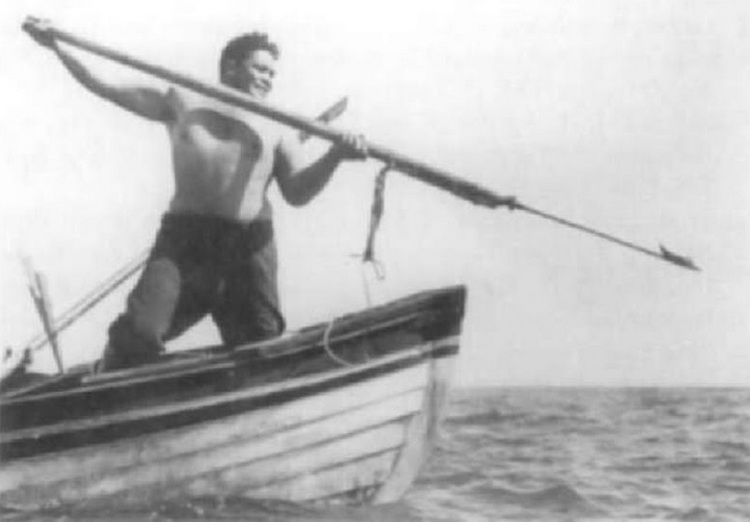
That wholesale Russian slaughter had a devestating inpact on the seven populations (or breeding stocks) of humpback whales across the Southern Hemisphere.
But, because the traditional whaling in Tonga specically targeted calves (hard to take on mature whales from a small open boat…) it had a compounding impact on the overall numbers of the Tongan Tribe – you can read more here.
And by the time the King of Tonga banned whaling completely in 1978 the total number of humpbacks in the Tongan Tribe were estimated to have fallen to around 250 – the brink of extinction!
The decision itself was quite unpopular in Tonga, which is a poor nation that has virtually no industry and where subsistence living is the norm. Remittances from expatriate Tongans are a principal source of income.
And so the humpback whales were perceived as a plentiful natural resource that provided valuable additional sustenance and income.
Despite on-going pressure from some sections of the population, together with targeted influence from the main whaling nations… The ban on whaling has stayed in place and given the increasing revenue from whale watching in Tonga it is unlikely (hopefully…) it will ever be rescinded.
It has been estimated that each humpback that returns to Tonga every year of its 45-50 year lifespan is worth US$1m in whale-watching revenue. Clearly demonstrating that live whales are considerably more valuable than dead ones!
Strict guidelines govern every interaction. These rules exist to protect both whales and swimmers, ensuring encounters remain calm, respectful, and non-intrusive. Operators must be licensed, guides are trained in whale behavior, and swimmer numbers are controlled. For visitors, this means encounters are not guaranteed — and that uncertainty is part of what makes each successful interaction so meaningful.
Swimming with Humpback Whales – Rules of Engagement
The Tongan government granted the first permits for whale watching in 1992. And somewhat controversially authorized operators to conduct in-water “swim-with” encounters. Quite why they took that big step is not known, but the probability is that it was done to give the country a competitive advantage.
Tonga is a long way from everywhere and lacks the cachet of Fiji (it’s closest neighbour tourism wise) with its upmarket resorts. So offering a unique wildlife experience like swimming with the humpbacks makes a lot of sense from a marketing angle.
However what does it do to the whales and many have made the point that given the slow recovery rate of the Tongan Tribe there are valid concerns that such interaction stresses them – particularly the mothers and their calves.
There are a very clear set of rules and regulations in place for whale watching and whale swimming in Tonga.
They govern the number of boats that can be near the humpbacks. How close they can go, how long they can stay and the overall interaction with the animals.
As such those rules and regulations are very clear. But the counter argument is that they rely on self-regulation and nobody is out on the water checking…
My experience was that the rules are followed. My guide, together with the crew that supported him, really did care about the welfare of the whales. Particularly the mothers and their calves.
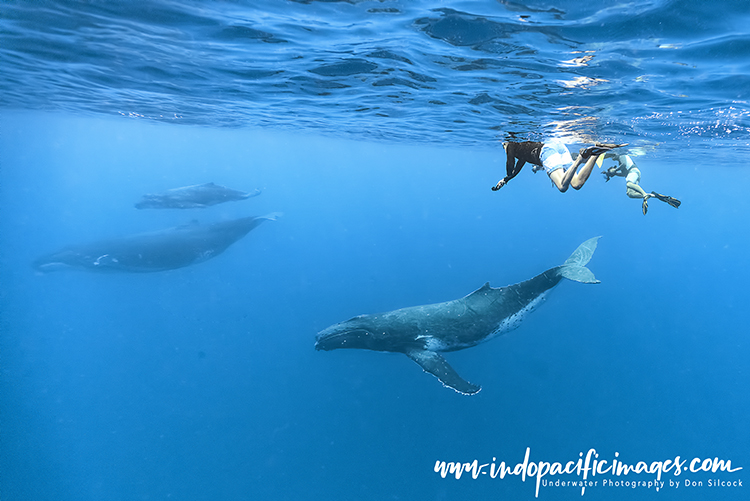
Any signs of stress at our presence in the water was the cue to immediately back off and leave them alone.
Back To: Humpback Whale Swimming in Tonga