
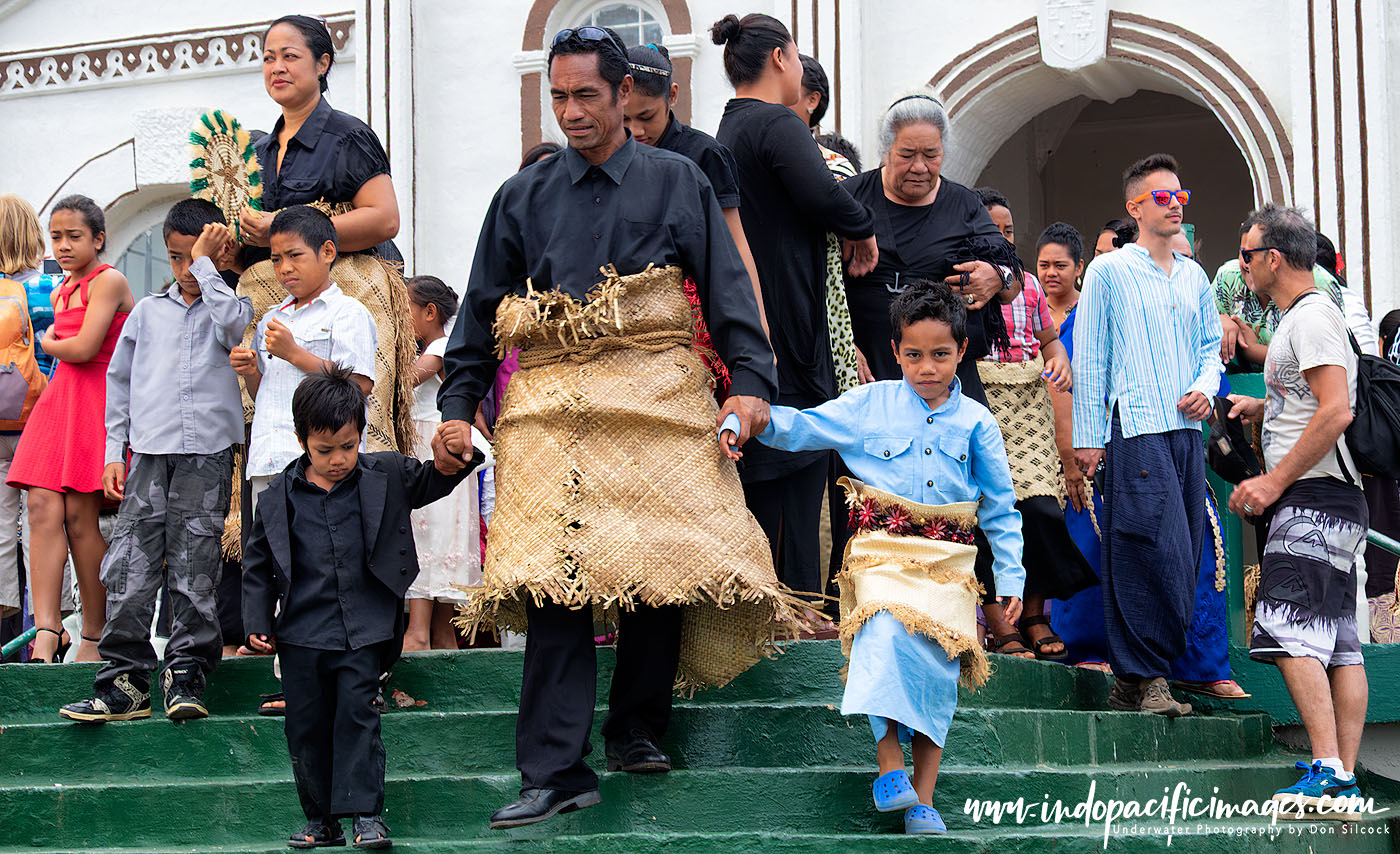
Tonga’s Polynesian culture… Far more than just a backdrop for humpback whale encounters, the Kingdom of Tonga is a place where culture isn’t tucked away in museums — it lives in every village, family gathering and Sunday hymn. Tonga’s society carries a distinctive, deeply rooted Polynesian identity, one that has endured centuries of change while remaining unmistakably its own.
Sunday – The Sacred Pause
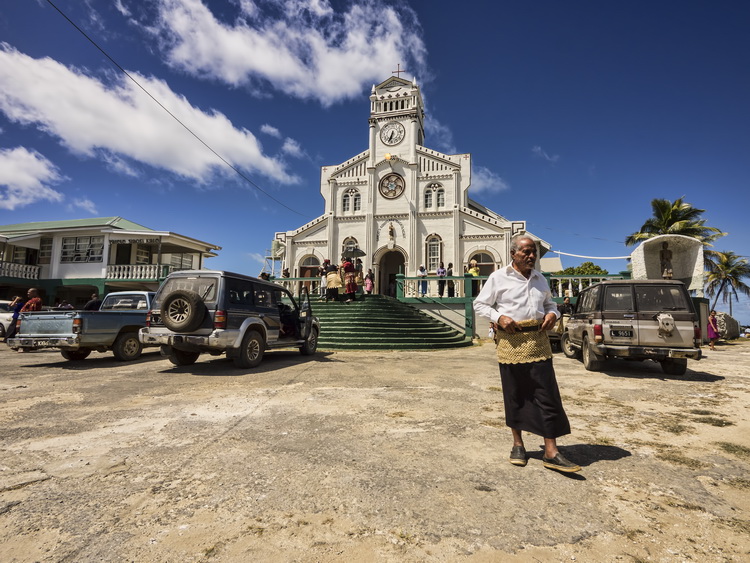
Step into Tonga on a Sunday and you’ll witness one of the most striking expressions of its cultural DNA — stillness. Tonga is deeply Christian, and this faith shapes daily life.
So central is Sunday worship that the constitution mandates the cessation of almost all commercial and entertainment activity from midnight Saturday until midnight Sunday.
Streets go quiet. Shops and small businesses close. Even taxis may cruise without passengers because no money can legally change hands. The few restaurants that do open do so as an act of hospitality rather than commerce.
It’s more than regulation — it’s a lived expression of what Tongans call the “Tongan way” (anga fakatonga) — a worldview rooted in faith, community, and peace.
For a first-time visitor it all seems bit strange at first for the visitor, but simply observing how much it means to Tongans puts it all into a different and very positive perspective!
Tonga’s Polynesian Culture: Family and Kin — The Core of Everything
In Tonga, family isn’t a small unit; it’s a tapestry of relationships. At its heart is the “famili” — a household that can include parents, children, grandparents, cousins, and often adopted members — all living, working and celebrating life together.
Beyond the famili is the “kainga” — extended kin connected through blood, marriage and shared history, often living in nearby villages. Community life thrives on this collective spirit: individual wealth is less important than shared wellbeing, and possessions are commonly held as communal resources.
The main industry in Tonga is agriculture and yet the country has to import a significant proportion of its food. So it relies heavily on the remittances sent home from the 50% of the country’s population that lives abroad mainly in Australia, New Zealand and the USA.
Tonga’s Polynesian Culture: Respect, Roles & Social Structure
Tongan society is traditional and hierarchical, shaped by respect (faka‘apa‘apa) for elders, chiefs and family ties. Age and status influence how people interact — younger Tongans learn to show deference and uphold family and social responsibilities.
Gender roles have deep roots in custom, with women traditionally playing central roles in caregiving and domestic life. There’s also the culturally recognized role of the “fakaleitī” — people who embody feminine gender expression — who are accepted socially, though discussions around sexuality can be complex and influenced by conservative views.
Back To: The Humpback Whales of Tonga – A Guide