
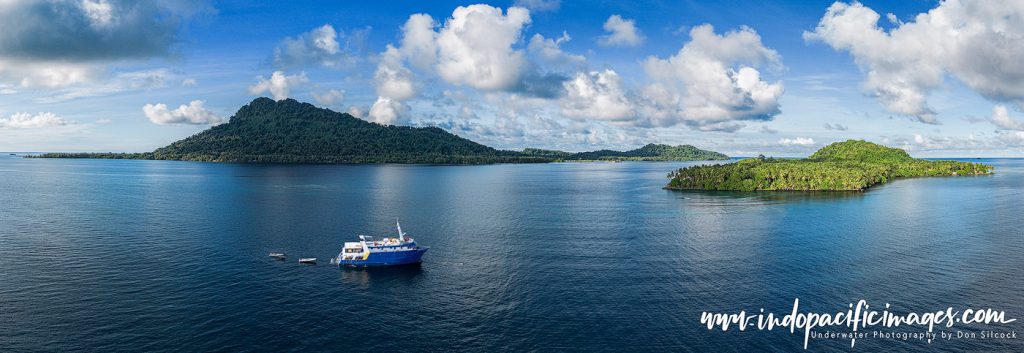
Photographing Truk Lagoon… Located deep in the remote heart of the south-west Pacific lies what is considered by many to be the ultimate wreck diving destination in the world – Truk Lagoon.
Resting at the bottom of this vast deep blue expanse of water is the world’s greatest underwater museum of twentieth-century naval warfare.
To the modern traveller, the Chuuk State of Micronesia appears as a tranquil tropical paradise – a ring of lush scenic islands surrounding a vast and protected lagoon.
But beneath the surface of that lagoon lies a silent, submerged fleet that serves as a haunting monument to “Operation Hailstone” – the 1944 American aircraft carrier-based strike that crippled the Imperial Japanese Navy.
For the underwater photographer, Truk Lagoon (as it was known during World War II) is more than a dive destination.
It is almost a pilgrimage to a place where the lines between history, tragedy, and art blur into a singular, visceral experience.
Here, the “Ghost Fleet” offers a visual narrative of a bygone era, preserved in a state of slow but sure decay that is as beautiful as it is sobering.
The Historical Canvas: Operation Hailstone
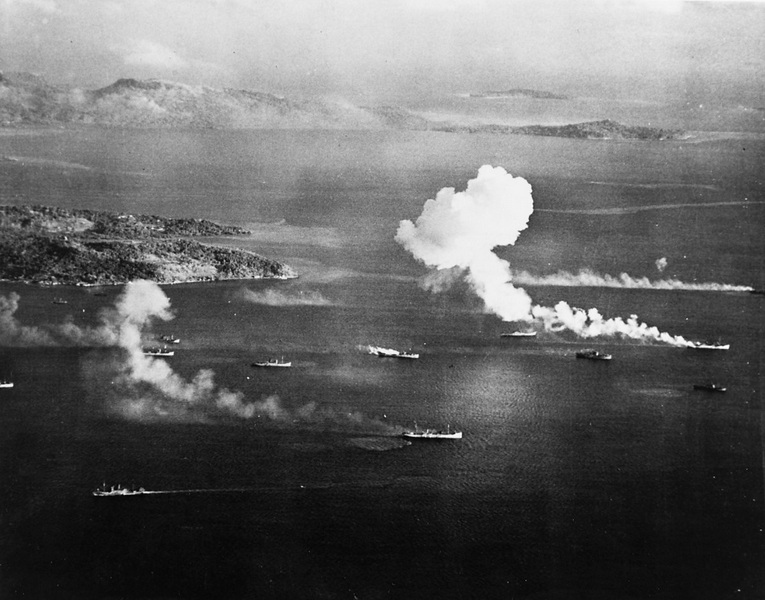
To photograph Truk is to try and document the aftermath of a pivotal moment in history. In 1944, Truk Lagoon was Japan’s most formidable stronghold in the Pacific – often called the “Gibraltar of the Pacific” – and served as the primary forward base for the Japanese Combined Fleet.
Then, on the 17th of February 1944, the United States launched a massive two-day carrier-based air assault on the lagoon. And, by the time the smoke cleared, over 50 ships had been sent to the seafloor, along with hundreds of aircraft.
Those vessels were not stripped of their contents or scuttled intentionally; they went down “live” and fully loaded with the material of war.
Today, they remain largely intact, creating a three-dimensional battlefield that is frozen in time.
The Aesthetic of Decay
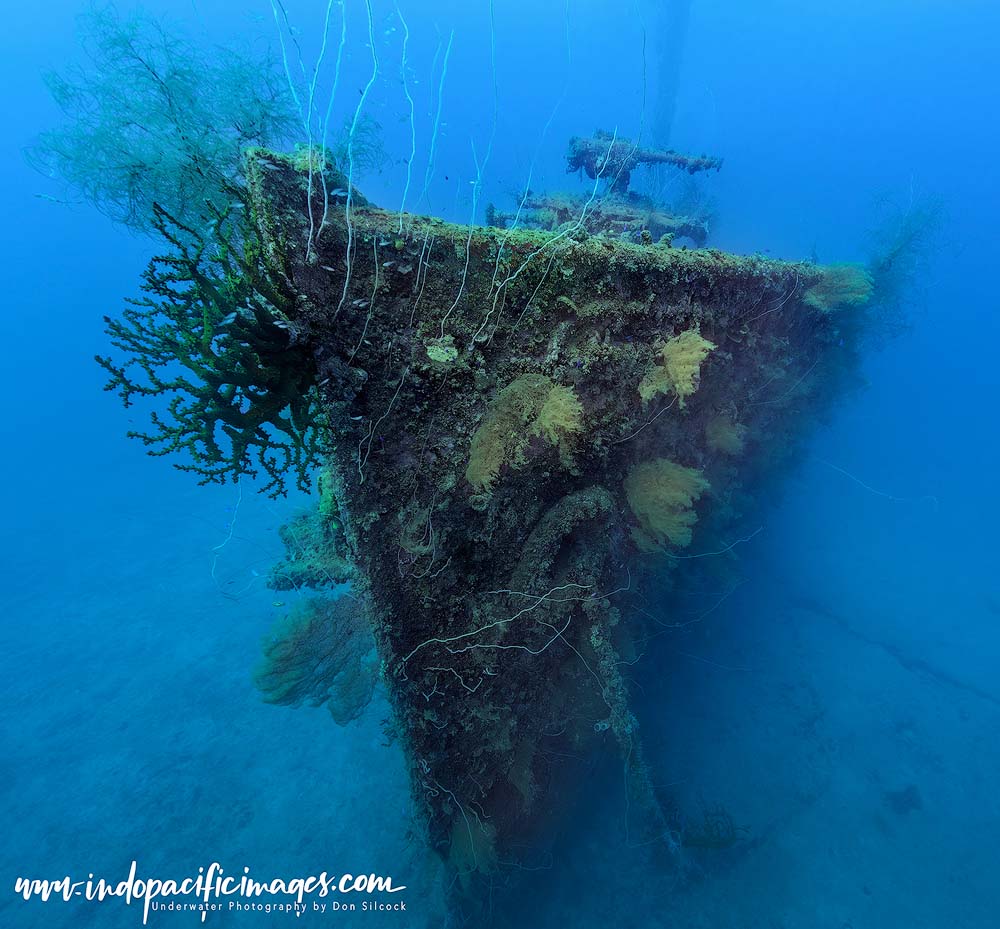
The primary draw for underwater photographers in Truk Lagoon is the unique juxtaposition of mechanical rigidity and organic chaos.
Over eight decades, the harsh edges of steel hulls and anti-aircraft guns have been softened by the relentless growth of the Pacific’s eco-systems. And the wrecks have become vibrant artificial reefs that are encrusted in hard and soft corals, sponges, anemones, and massive sea fans – providing a stunning color palette that contrasts sharply with the monochromatic tones of the wreckage.
Because many of the wrecks sit in the “recreational” depth range (between 15m and 40m), photographers can use the interplay of natural light filtering through the clear lagoon waters and the deep, atmospheric shadows found within the ship’s holds.
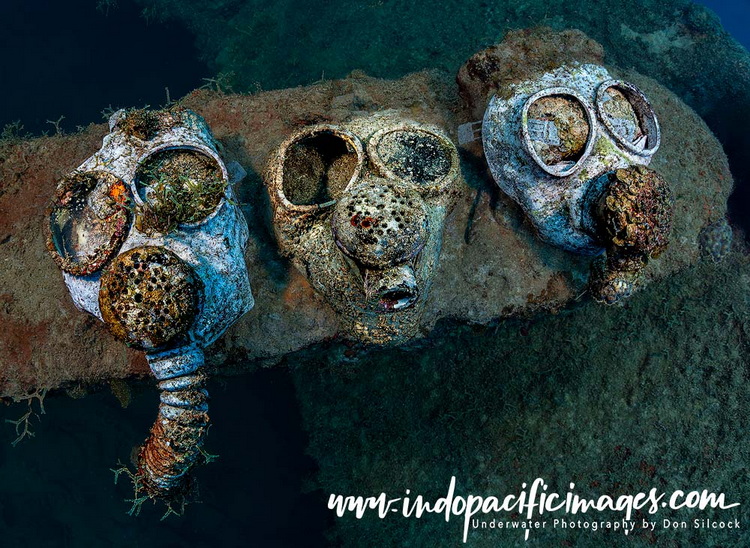
Perhaps the most profound element of that aesthetic is the presence of everyday artifacts – sake bottles, porcelain dishes, gas masks, and even the remains of the fallen – adds a layer of poignant intimacy that distinguishes Truk from almost any other wreck diving site in the world.
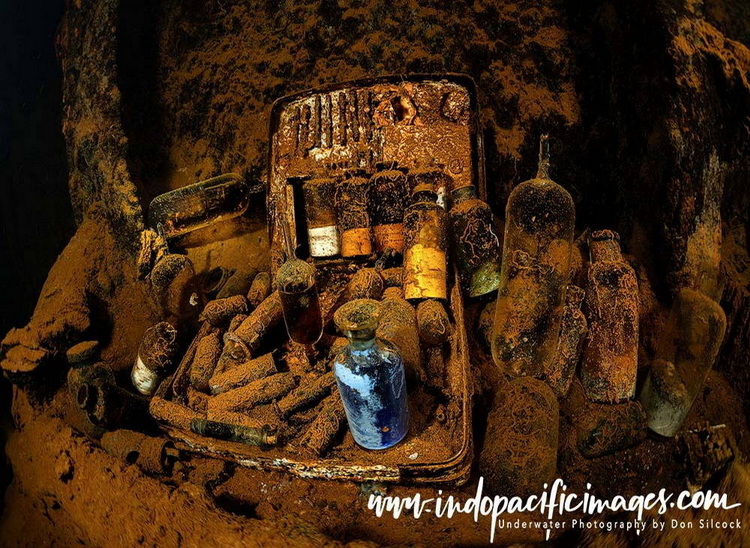
Photographing Truk Lagoon – The Challenges and the Opportunities…
Photographing these wrecks successfully requires a delicate balance of technical skill and artistic vision combined with the ability to stay safe and in control. The scale of the ships, such as the Heian Maru (at 155m long) or the Shinkoku Maru, demands every wide-angle underwater photography skill you have and… some you may not yet possess!
– Mastering the Scale of the Scene
Capturing the sheer enormity of a large cargo ship underwater is a daunting task. The visibility in the lagoon, while often excellent, can never be enough to capture an entire ship in a single frame. Ultra-wide or fisheye lenses are essential to get close enough to the subject and maintain clarity while still conveying the gargantuan proportions of the wreckage.
– The Light: Artificial and Ambient…
The sheer size of most of the wrecks mean that it is simply impossible to light them using strobe as they are just too big – which leaves two options.
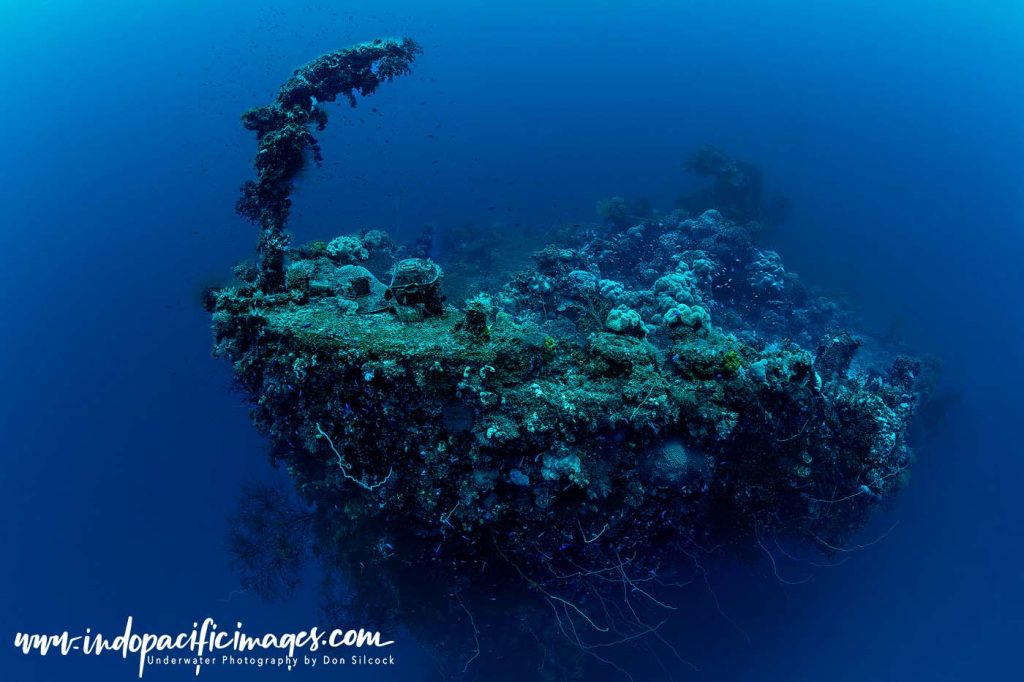
Capturing the size and shape of the wrecks means opting for ambient light and a careful exposure to capture as much detail in the shadows, without blowing out the highlights in the brighter areas. Focused post processing in Photoshop allows those details to be enhanced and (to a degree…) some colour to be restored and produce an image that illustrates the state of the wreck and its environment.
Then, secondly, strobes can be used to illuminate key elements of the wreck with ambient light adjusted to show the overall setting. That technique is similar in principle to how you would capture a reef scene, but the difference is the amount of “real estate” included in the background
Getting that mix of artificial and ambient light correct is the hardest part of those two options of photographing the wrecks of Truk Lagoon.
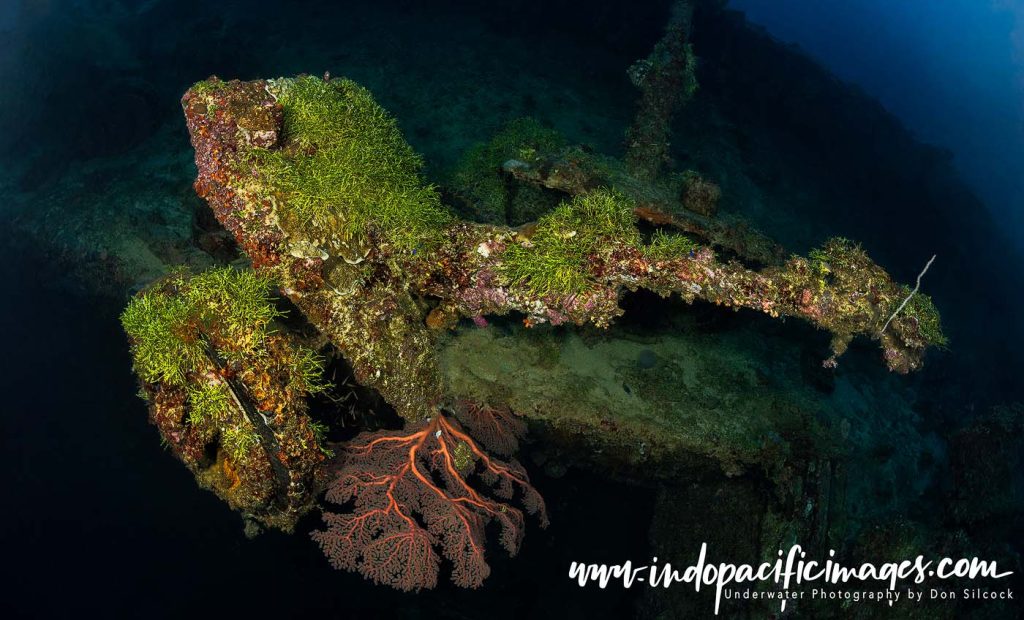
– Penetration Into the Wrecks
The engine rooms are the hearts of the “Ghost Fleet” and their mechanical equipment, gauge and fuel control panels are incredibly photogenic – but they reside in total darkness.
There are two main ways to approach that challenge, with the more straightforward option being the use of strobes to isolate and illuminate those elements. Or use strobes combined with strong video lights positioned strategically to provide side and back lighting to add some three-dimensionality. This is much more complicated and time-consuming, but the results can be stunning.
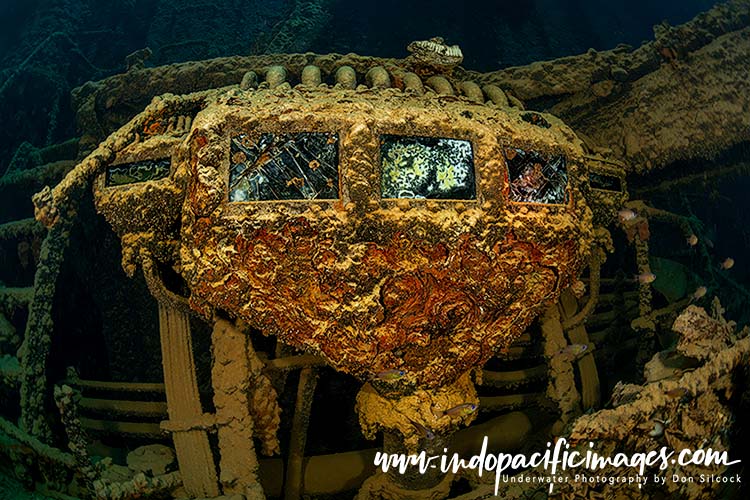
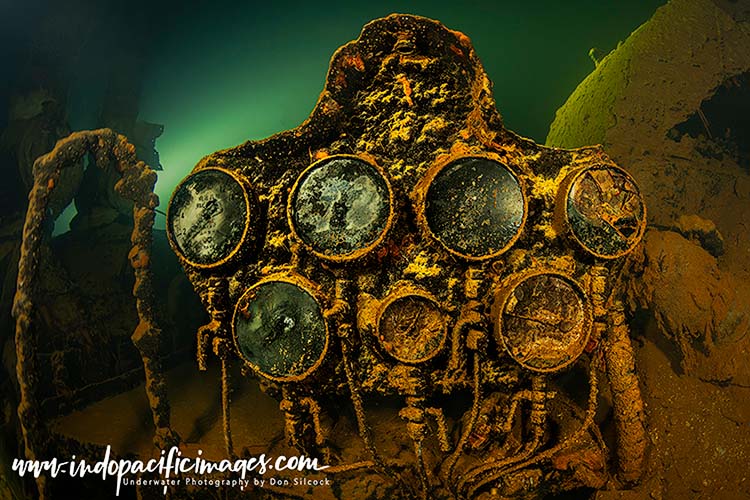
A third option is mounting the camera and housing on a tripod and using a powerful video light to “paint” light on to the equipment in the engine rooms, but that is very challenging technically and logistically and (currently…) way beyond my personal capability!
Photographing Truk Lagoon – Recreational or Technical?
Because of the depths of the majority of the wrecks in Truk Lagoon, it is possible to dive most of them “recreationally” – with a single back mounted cylinder and no decompression. And, if your objective is to simply experience the wrecks and maybe capture a few images, or some video footage, then the multiple dives possible diving recreationally make it a good choice.
But… if your objective is stay longer on the wrecks, explore them more fully and do some of the advanced penetration possible on many of them then technical diving is the way to go!
Open Circuit or CCR?
When I arranged my trips to Truk Lagoon my firm intention was to use my new rebreather. But it was not to be as I was unable (long story…) to get the hours on the unit I felt were necessary to be truly “match fit” and I had to accept that reality.
So, for my three back-to-back trips I dived open-circuit with two sidemount cylinders or air and either a single 50% mix of oxygen for decompression or, on the deeper dives, an additional 90% mix of oxygen for the shallow extended decompression.
As such it was the correct decision and I was able to dive extensively on many of the best wrecks of Truk Lagoon, but two things became very clear over the nearly one month I was there.
– Air and Nitrogen Narcosis
A significant percentage of the best parts of the wrecks are near or beyond recreational dive limits and, even diving technically, you are still breathing air at those depths.

Which means during the most challenging parts of those dives you will be impacted by nitrogen narcosis. Trying to capture images at depth, or inside a wreck, while “narked” is simply not a logical thing to do!
– Less Deco, Better Images and Safer Diving
Because I was diving technically, I was often grouped with other divers who were using rebreathers and was impressed at how much longer those divers could stay at depth and yet incur similar decompression obligations to mine.
Plus, nitrogen narcosis is not an issue with a CCR so the time they spent at depth was also much safer and more productive than mine.
All of which convinced me that my next trip to Truk Lagoon I will be diving on my CCR!
How to Dive Truk Lagoon

Tucked away, as it is in the south-west of the Pacific Ocean, any journey to Truk Lagoon will have its complications and coming from Sydney meant that I had to almost overfly it as I made my way to Tokyo, where I overnighted.
Then I headed south again to Guam to catch the United Airlines “island hopper” to Truk. Those complications made me decide that if I was going to go, I would stay in Truk as long as I could, which is effectively 30 days.
I eventually decided on two liveaboard trips on the Pacific Master (aka Taka) either side of a week with one of the two land-based dive resorts – here are the important things I learned from all that:
– Liveaboard is the Best Option...
I was familiar with the Pacific Master from my trip to Bikini Atoll in 2024 and knew that it was well equipped and organized for deep technical diving – plus when I first got on board several of the crew already knew me!
The big advantage of a liveaboard at Truk is that it can moor directly on the wreck which means that the return to the mooring line and then the deco bar at the stern is very straightforward and safe.
Whereas diving deep with extended decompression from the small boats used by the resorts made me feel distinctly vulnerable!
– The Guides are the Key!
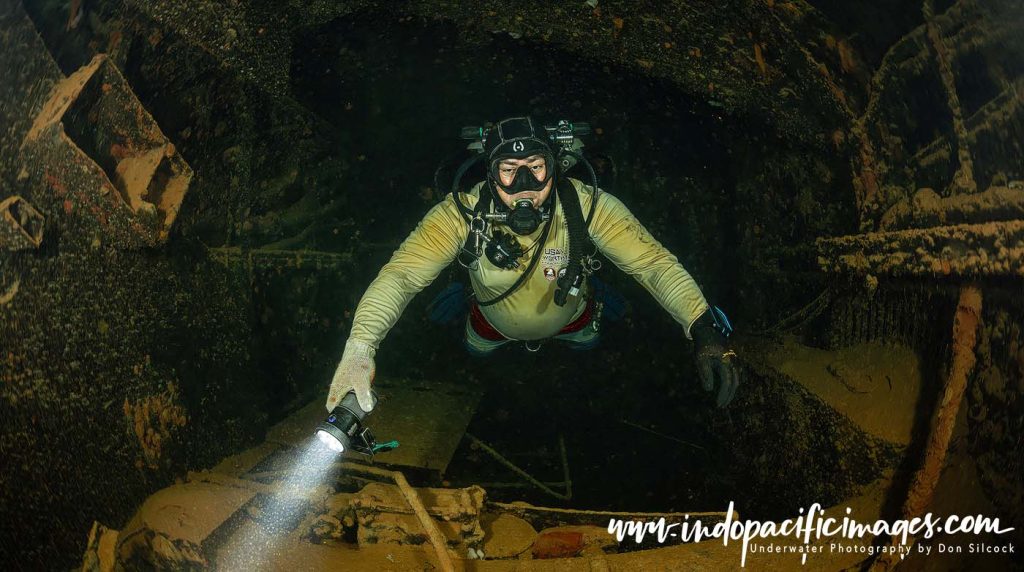
My guide for most of my dives from the Pacific Master was Tripler Marew, a 40-year-old Chuukese who has been diving the wrecks for 22 years and literally knows them inside out! Before each dive Tripler would explain the options, then we would discuss and agree on the plan for the dive.
I learned that I could follow him around the wrecks and into the dark recesses of the engine rooms, accommodation sections and deep into the holds with complete confidence – which was very reassuring and productive!
Whereas the guides from the resort tended to stay above the wreck to avoid incurring decompression obligations and leave most of the exploration to the divers…
Photographing Truk Lagoon – In Summary…
Photographing Truk Lagoon was something I have wanted to do for a very long time but had always hesitated over as I was not convinced I was at the right level of diving proficiency to dive it to the full.
My technical dive training changed that and overall, it was a transformative experience. One that has made me determined to return with a rebreather and the additional underwater photography skill and equipment to take my images of these Japanese ghosts of the Pacific to the next level!