
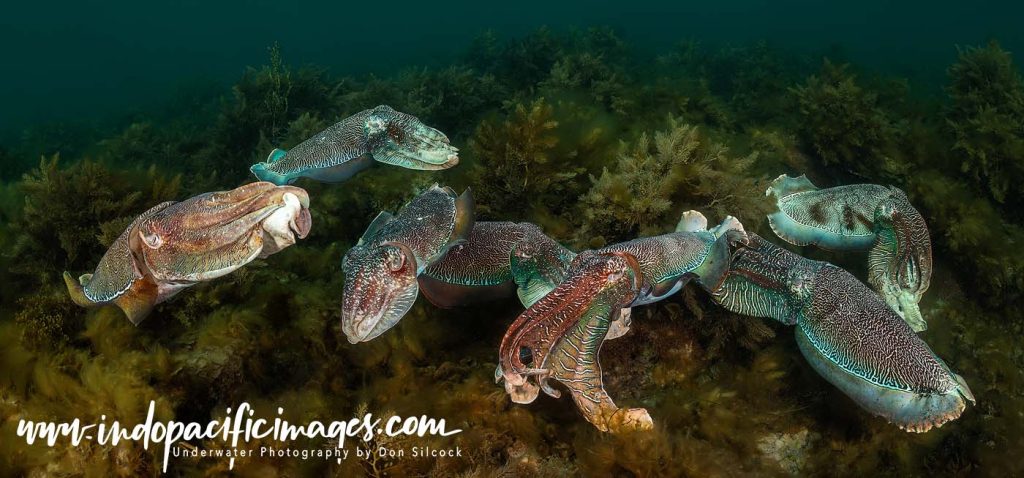
Cuttlefish Conservation in Whyalla… The upper Spencer Gulf in South Australia is the stage for one of the most spectacular biological events on the planet. Every winter, as the waters chill, tens of thousands of Giant Australian Cuttlefish descend upon a very specific 10km stretch of rocky reef near the industrial city of Whyalla.
It is the only known mass aggregation of its kind in the world. However, the associated story of cuttlefish conservation in Whyalla is not just one of natural wonder, but of a fragile species’ fight for survival and the community that rallied to save it.
The Annual Cuttlefish Aggregation in Whyalla – It’s Just What Happens, Right?
If you talk to local divers in Whyalla they will tell you that the annual aggregation just kind of happens every year. Basically they assumed that similar events must be occurring elsewhere…
Yet, as word spread, marine biologists and scientists from around the world came to see for themselves. And as they did, the exceptional nature of the aggregation became clear.
Basically nothing like the Whyalla aggregation is known to happen anywhere else in the world! A great story, no doubt…
But if it were not for the tremendous efforts of some of those local divers, combined with nature’s amazing capability to restore itself when we get out of the way, the chances are that it would now be significantly different story!
In all probability the annual aggregation has been happening for hundreds, if not thousands, of years.
The Giant Australian Cuttlefish is a short-lived animal with a life-cycle of one to two years. It is also semelparous, which means it has a single reproductive episode and then dies.
While us humans (and most animals) are iteroparous and therefore capable of multiple reproductive cycles over the course of our lives.
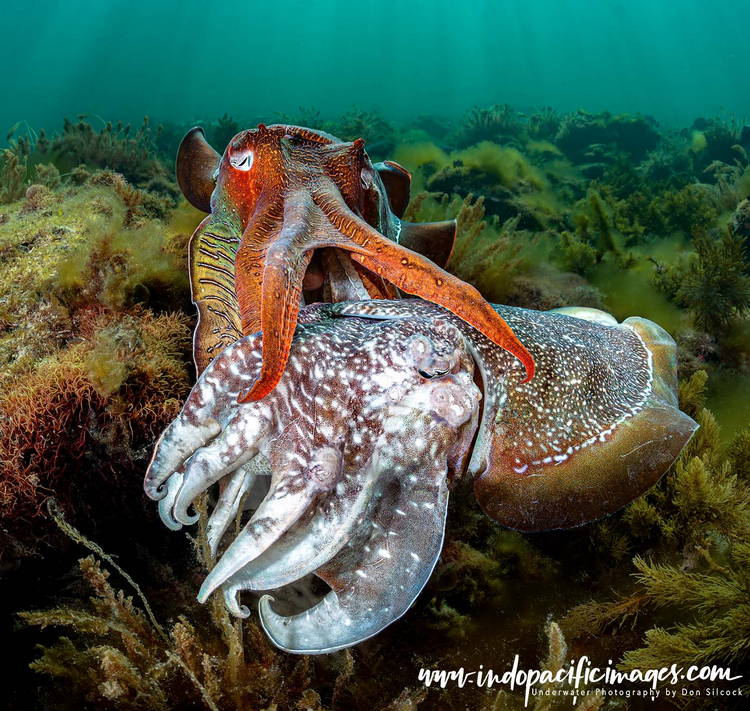
The main aggregation area around Point Lowly and Black Point is perfectly suited for the purpose the cuttlefish have adopted it for. Because it’s relatively sheltered and, unlike much of the upper Spencer Gulf which is mainly sand, sea grass flats and mud banks. There are numerous shallow rocky reefs which are perfect places for the females to hide their eggs.
So, here is a species that has evolved and thrived in a very specific manner, using an almost perfect location to ensure its propagation – then along comes man…
Cuttlefish Conservation in Whyalla – Rampant Greed!
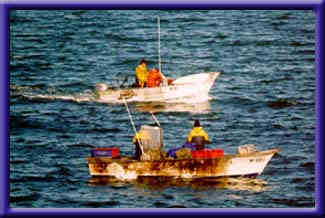
1997 was the year that things changed significantly for the giant cuttlefish of the upper Spencer Gulf. About 250,000 of them, roughly 250 tonnes, were taken during the annual aggregation by commercial fishermen for export to Southeast Asia.
Up until 1997 there had been very limited recreational and commercial fishing of the cuttlefish. But, so lucrative was the 1997 catch, that the word spread. And in 1998 a much larger contingent of boats arrived in Whyalla even before the cuttlefish did!
Within 4 weeks an estimated 150 tonnes of cuttlefish had been harvested. The stock was so devastated there was basically not much left to catch!
The Turning Point for Cuttlefish Conservation
The road to recovery for the Giant Australian Cuttlefish was paved by a combination of scientific research and local activism.
Recognizing that the species has a short lifespan of only 12 to 18 months – meaning they only get one chance to breed – the South Australian government implemented a complete ban on the cephalopod harvest in the Upper Spencer Gulf until September 1998.
Plus, a three-year assessment of the overall situation was ordered.
This legislative shield was the cornerstone of cuttlefish conservation in Whyalla. By removing the pressure of commercial and recreational fishing, the Whyalla ecosystem was allowed to stabilize.
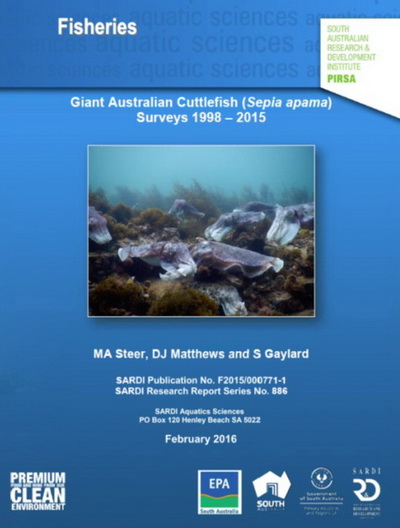
The results were staggering. Within five years, the population rebounded to over 100,000, and in 2020 the South Australian Research and Development Institute (SARDI) recorded almost 250,000 cuttlefish.
Numbers since then have shown a decline and in the 2025 population report the population was estimated at 63,734 cuttlefish.
The reasons for that decline are not clear, but SARDI’s summary of the situation is as follows:
“Overall, the estimates of cuttlefish abundance over the past twelve years indicate that the population increased substantially from the low levels observed in 2013 and has remained relatively high thereafter.”
Current Threats and Environmental Stewardship
While the ban on fishing remains a success, cuttlefish conservation in Whyalla faces modern challenges. The primary concerns today are habitat degradation and water quality. As “pulsing” organisms, cuttlefish are highly sensitive to changes in salinity and temperature.
Proposed industrial projects, such as desalination plants in the Spencer Gulf, have met with significant pushback from the conservation community. The concern is that the brine discharge could disrupt the delicate chemical balance the cuttlefish rely on to navigate back to their ancestral breeding grounds. For the photography and diving community, maintaining the clarity and purity of the water at Point Lowly and Black Point is not just about the “perfect shot”—it is about ensuring the survival of the species.
The Future of the Spencer Gulf
The story of the Giant Australian Cuttlefish is a testament to the resilience of nature when given a reprieve from human interference. However, we cannot remain complacent. Continued cuttlefish conservation in Whyalla requires ongoing monitoring of the Spencer Gulf’s industrial footprint and a commitment to protecting the “nursery” from the impacts of climate change.
As photographers and divers, we act as the eyes of the ocean. By sharing images of these magnificent, shape-shifting creatures, we build a global constituency for their protection. The giants of Whyalla have returned, and through dedicated conservation, we can ensure they continue to dance in the cold waters of the Gulf for generations to come..
Back To: Giant Australian Cuttlefish Guide