
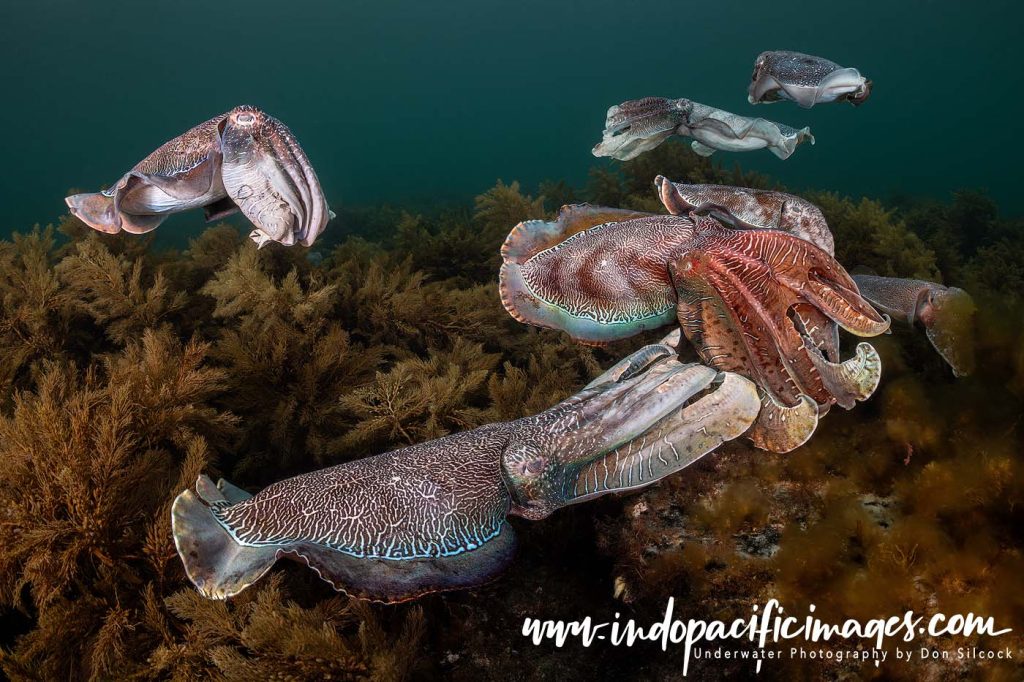
Every winter, the industrial coastline of Whyalla in South Australia, transforms into a technicolor theater of marine biology. When, in the shallow waters of the Upper Spencer Gulf, tens of thousands of cephalopods converge for the annual Whyalla Giant Cuttlefish aggregation.
It is the only known event of its kind and scale in the world and is a “live fast, die young” spectacle where the largest cuttlefish on Earth gather for a final, frantic push to ensure the next generation.
Whyalla Giant Cuttlefish Aggregation – Why Whyalla?
While Giant Australian Cuttlefish (Sepia Apama) are found all across the southern coast of Australia, they are typically solitary creatures.
The mass cuttlefish aggregation at Whyalla is a specific response to the unique geography of the Point Lowly peninsula.
And the primary driver is the availability of a very specialized habitat, as much of the upper Spencer Gulf is dominated by mangroves and sand, which are unsuitable for reproduction.
In contrast, the 10km stretch of coastline near Whyalla features a rare concentration of shallow rocky reefs and sandstone slabs.
This substrate provides the essential crevices female cuttlefish can safely attach their tear-shaped eggs.
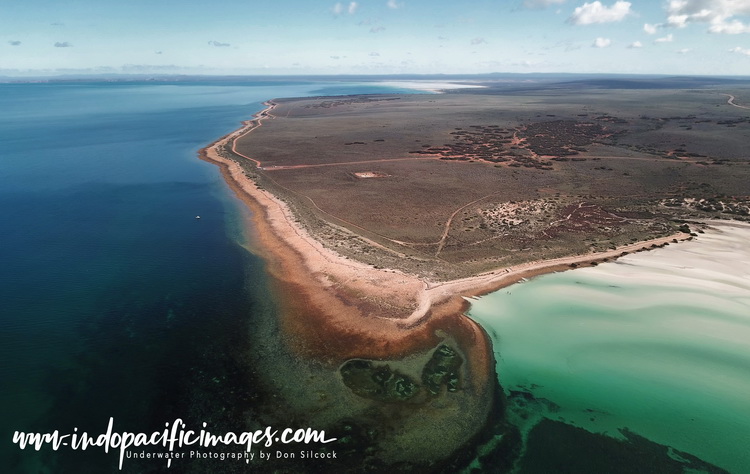
Plus, the area is part of an “inverse estuary” with the high evaporation rates typical of arid or semi-arid coastal zones, which means higher salinity levels than the open sea.
That high salinity. combined with cold winter water temperatures (averaging 12°C) are critical for the slow incubation of embryos. This predictable environment makes Whyalla the perfect location for Giant Australian Cuttlefish to aggregate and mate.
Whyalla Giant Cuttlefish Aggregation – Quite Unique
The Whyalla aggregation has often been described as the “the premier marine attraction on the planet” and is defined by its staggering density and extreme biological behaviors.
The key factors behind that are as follows:
The 11:1 Gender Imbalance
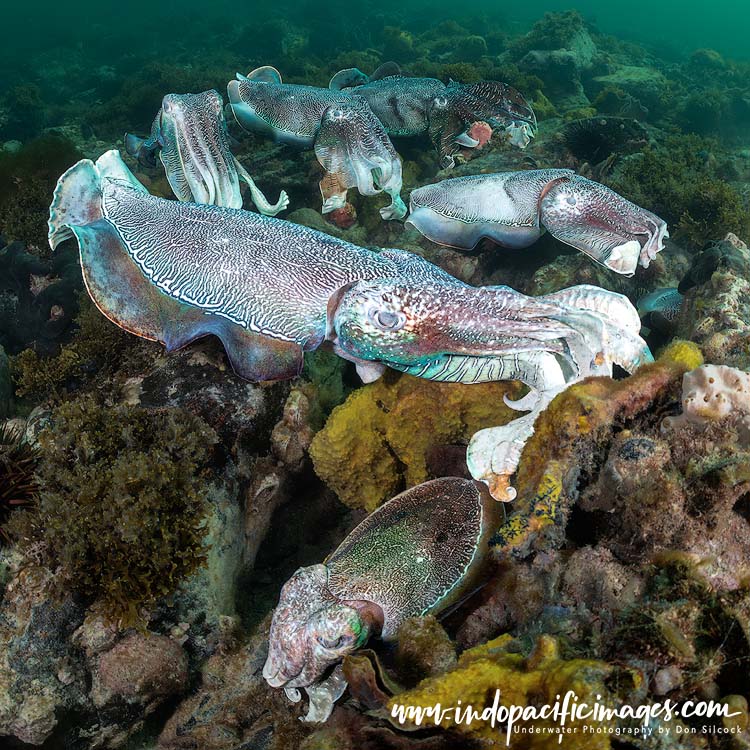
In most populations, the sex ratio is roughly equal. However, at the Whyalla cuttlefish breeding grounds, males can outnumber females by as many as 11 to 1 at the peak of the season.
Which creates a hyper-competitive environment where males have no choice but to use every tool and tactic available in their biological arsenal to try and secure a mate.
Visual Warfare and “Strobing” Displays
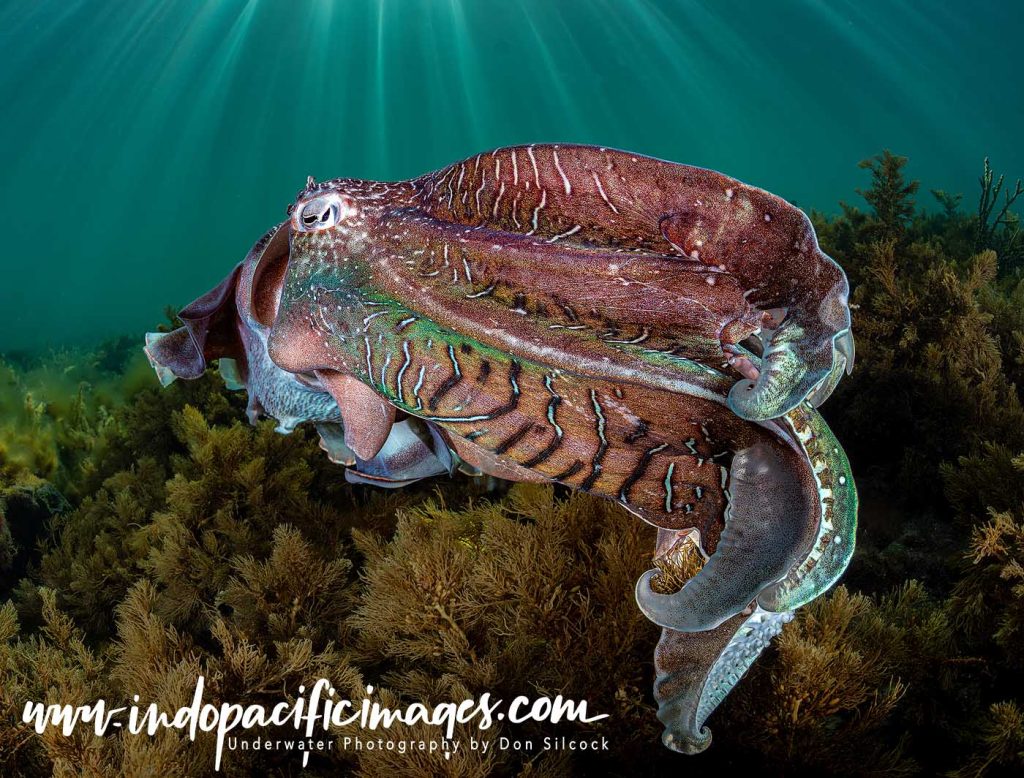
Cuttlefish are the “chameleons of the sea” and can completely blend in with their surroundings, becoming almost invisible.
But during the aggregation, large “bull” males abandon all camouflage and opt for mesmerizing displays designed to attract females.
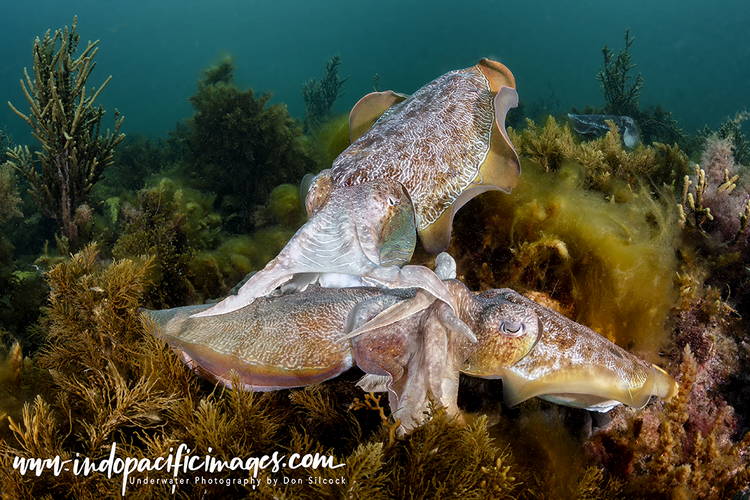
They “strobe” with rapid pulses of electric blue, deep red, and iridescent purple. These zebra-striped patterns are used to signal their dominance and try to intimidate and ward off rivals in a constant battle for female attention.
The Evolution of “Sneaker” Males
The fierce competition has led to a brilliant tactic of female mimicry. Smaller males, unable to physically compete with 10kg bulls, will tuck in their tentacles and adopt the mottled coloration of a female.
These “sneaker males” glide past guarding bulls unnoticed to reach a receptive female.
Research suggests these mimics are often more successful than the brawling bulls, as females often favor their ingenuity.
Polyandry…
The formal terminology for the mating strategy used by female Giant Australian Cuttlefish is polyandry.
Which means that each female will have multiple male partners to ensure better genetic variability of the species. All of which makes sense from a somewhat dry overall perspective…
But when viewed in practice at Whyalla, where so many cuttlefish have gathered. And the females are so completely outnumbered, it takes on a very different dynamic. “Spectacularly promiscuous” would probably better describe the apparently licentious and almost wanton behavior of the females!
Whyalla Giant Cuttlefish Aggregation – The Final Curtain…
For these cephalopods, Whyalla is their final act and by the end of the mating season they will all be dead.
The life cycle of the Giant Australian Cuttlefish is remarkably short, lasting only 12 to 18 months. The aggregation exhausts their bodies and by late August, the “bulls” begin to deteriorate and die, leaving the reef to the next generation.
When to Go?
The first cuttlefish appear around the middle of May when the water temperatures have dropped to about 14°C and from there the numbers rise steadily, peaking in the middle of June.
From there for the next four weeks or so is the “peak of the action” before a steady decline through to mid-August.