
Grey Nurse Shark Conservation… Few marine animals have suffered as much at the hands of human misunderstanding as the Australian Grey Nurse Shark.
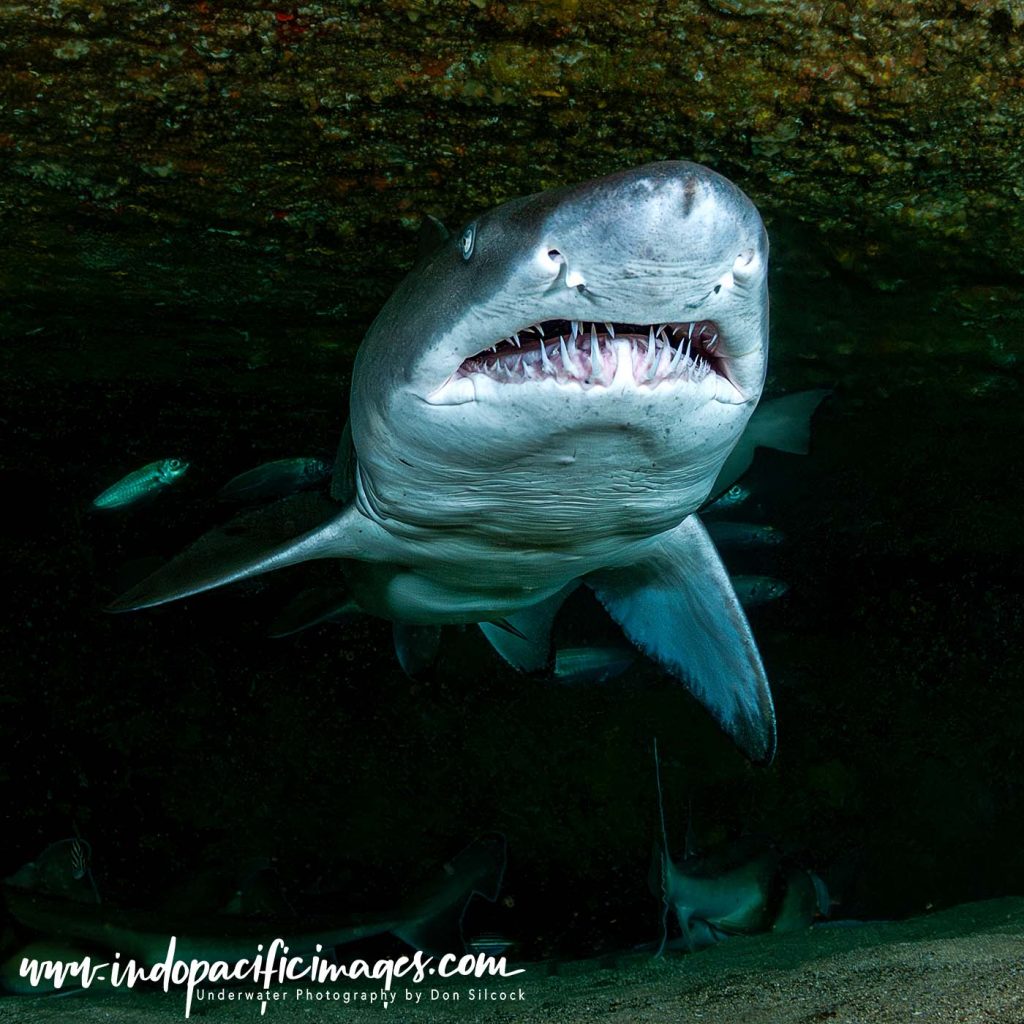
With their bulky frame, camouflaged colouring and rows of needle-sharp, protruding teeth, they appear every bit the villain from a 1950s B-movie.
For decades, that intimidating silhouette sealed their fate.
But the truth is very different as Grey Nurses are one of the ocean’s most placid predators — slow-moving, docile and generally indifferent to divers.
Yet in the mid-20th century, a combination of myth, media sensationalism and misguided fear sparked a campaign of persecution so severe that by the early 1980s, the species hovered on the brink of extinction in eastern Australia.
This is the story of how that happened — and how, against all odds, the Grey Nurse is slowly edging back from the abyss.
A Perfect Storm
Australia’s relationship with sharks has always been complicated. For many, the ocean was long perceived as a place filled with lurking dangers…
And few creatures embodied those fears more perfectly than the Grey Nurse.
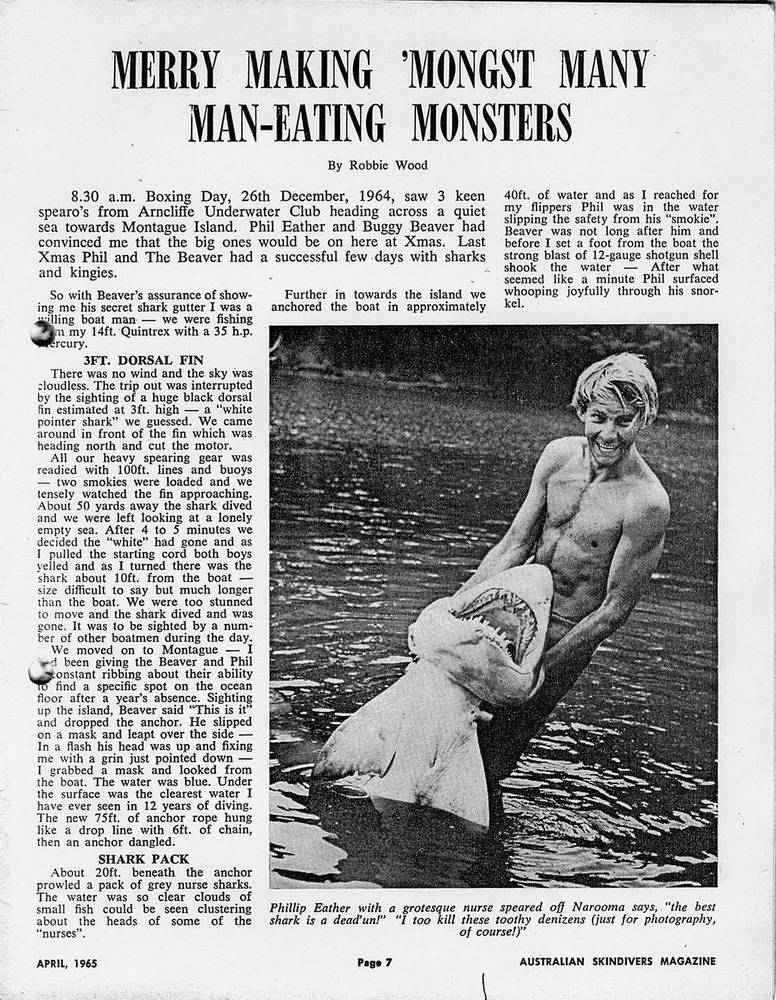
Their appearance alone — mouth agape, teeth jutting forward in a permanent snarl — convinced generations of Australians that they were aggressive man-eaters. The mythology grew through a combination of early newspaper reports of “rogue sharks”, misidentifications in fishing records and the rise of mass-market spearfishing.
The reality – the Grey Nurse Shark has never been implicated in a confirmed fatal attack in Australia.
The Spearfishing Boom of the 1960s–1980s
Spearfishing in Australia exploded in popularity from the 1950s onwards. Grey Nurse Sharks, curious and unthreatening, were easy to approach and photograph. They quickly became favoured targets — not for food, but for sport and spectacle.
Weekend spearfishing clubs held informal competitions that rewarded the largest or most dramatic catch. Grey Nurses, being large, slow and unafraid, were shot in huge numbers. The ease with which they could be taken only fed the myth that they were dangerous and plentiful — when the opposite was true.
By the 1970s, the population along the New South Wales coast had collapsed dramatically. Though precise numbers were never recorded, most researchers agree the eastern population had dwindled to just a few hundred individuals by the early 1980s.
Grey Nurse Population Collapse
One of the great challenges of Grey Nurse conservation is the species’ slow reproductive biology. Even under ideal conditions, they simply cannot rebound quickly.
The key biological constraints Grey Nurse Sharks are that they practice Oophagy, or intrauterine cannibalism, where the first developed embryo consume consume weaker siblings. With typically only two pups surviving.
Plus female Gray Nurse Sharks do not become sexually mature untill they are around 6–8 years of age and they have a long gestation of between 9 and12 months.
Combine all that with decades of unregulated killing and the result was catastrophic. By the early 1980s, their numbers were so low that local divers regarded sightings as rare events.
This environmental crisis eventually sparked the world’s first shark-specific protection law.
Grey Nurse Shark Conservation – The Long Path Back
In a landmark decision, New South Wales declared the Grey Nurse Shark a protected species in 1984 — the first law of its kind anywhere in the world. Queensland followed later, and by the early 2000s, the eastern population was formally listed as Critically Endangered.
But legal protection alone was not enough.
The Role of Critical Habitat Sites
Grey Nurses show strong site fidelity, returning year after year to the same aggregation sites. These locations — often gutters, ledges or steep drop-offs — are essential for gestation and resting.
Key sites now protected include Magic Point in Sydney, Bass Point, Shellharbour, Fish Rock at South West Rocks, Julian Rocks in Byron Bay, and Wolf Rock in Queensland.
These areas provide the calm, predictable environments the sharks need to conserve energy and gestate their young.
Fishing Impacts — A Continuing Threat
Despite their protected status, a significant number of Grey Nurse deaths still occur due to a combination of accidental hooking on recreational fishing gear, entanglement in commercial longlines and lost or discarded tackle.
Hook-and-release mortality is particularly concerning; even sharks freed from lines often die from stress and internal injury.
Although the species is no longer being deliberately killed – the threats to them have become subtler and harder to regulate.
What Divers Can Do to Help Grey Nurse Shark Conservation
Divers play a surprisingly important role in ongoing protection efforts. Responsible behaviour at aggregation sites is essential and you should always approach Grey Nurse Sharks slowly, calmly and avoiding any sudden movements.
Never chase, crowd or block their movement and respect the distance guidelines at protected sites.
Supporting charters and operators who prioritise conservation in very important as are responsible images. Particularly those showing natural behaviour as they help to shift public perception toward respect rather than fear.
Grey Nurse Shark Conservation – A Species Still in the Balance
The Australian Grey Nurse Shark is one of the country’s most misunderstood marine animals. Once vilified and hunted to the edge of extinction, it is now recognised as a gentle, vulnerable species deserving of protection.
The recovery has been slow — painfully slow at times — but there is genuine hope. Where sightings in the 1980s were rare, today divers encounter Grey Nurses regularly along the New South Wales coast, a small but meaningful testament to decades of conservation effort.
Their future, however, remains uncertain. Only continued protection, responsible fishing practices and increased public awareness will ensure that this remarkable species survives for generations to come.