
Edi Frommenwiler Raja Ampat… Many people have played significant roles in the bold and ultimately successful conservation strategy that was developed and implemented in Raja Ampat, on the remote northwestern tip of Indonesia’s West Papua province.
Mark Erdmann of Conservation International was the architect of the innovative strategy that would transform the region’s environmental future. The second part of this series profiled renowned Australian ichthyologist Gerry Allen, whose decades of research with Erdmann quantified Raja Ampat’s astonishing biodiversity. Numbers so compelling they convinced decision-makers that urgent protection was essential.
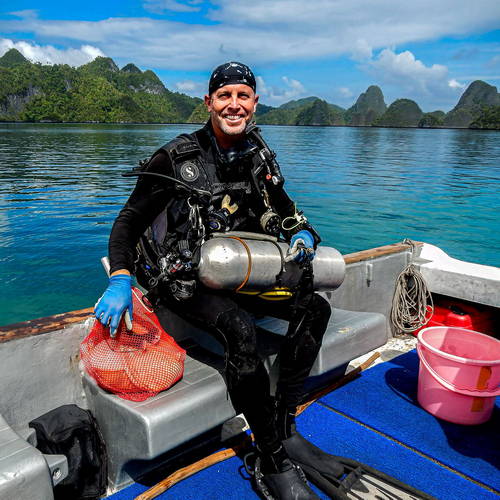
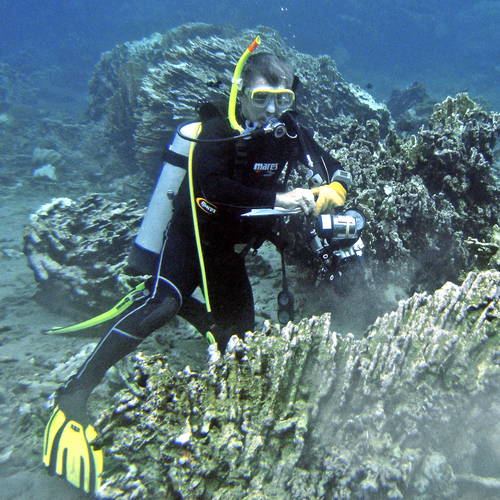
Yet numbers alone don’t protect reefs. Conservation needs pioneers — those willing to take risks, explore the unknown, and bring the world’s attention to remote places of beauty and fragility.
One such largely unsung hero is Swiss adventurer Edi Frommenwiler — the man who built Indonesia’s first true liveaboard dive boat, opened Raja Ampat to the wider world, and through sheer determination became an unlikely catalyst for marine conservation.
Who Is Edi Frommenwiler?
Universally known simply as “Edi,” he is best described as a force of nature — relentless, resourceful, and impossible to ignore.
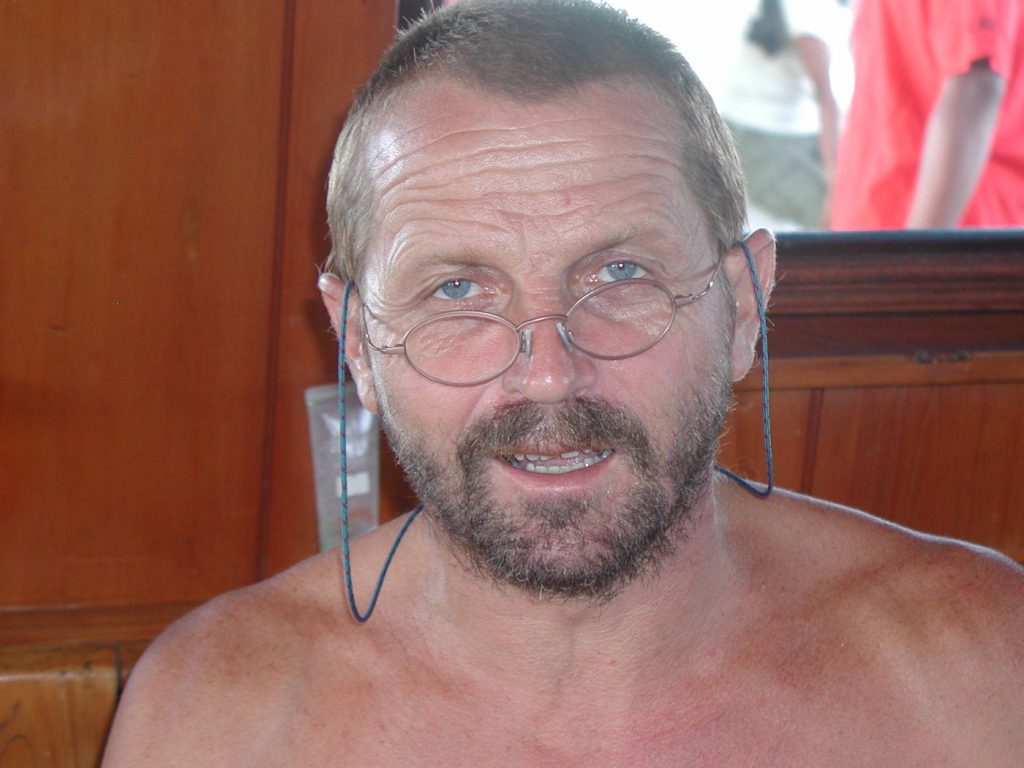
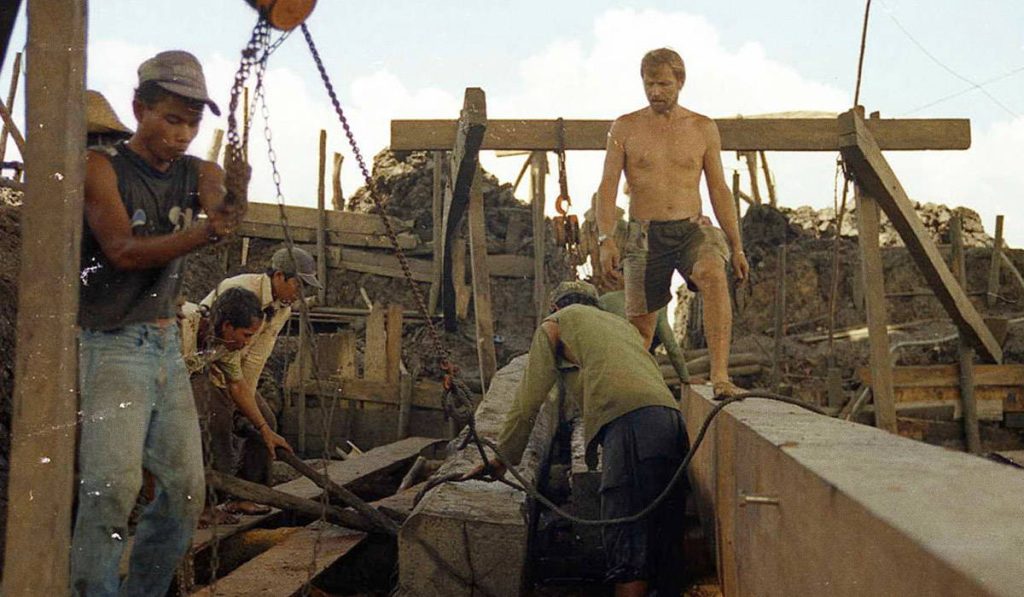
I first came across his name more than 25 years ago on a business trip to Indonesia, when I picked up Kal Mueller’s Diving Indonesia at Jakarta Airport. Mueller’s account explained how Edi Frommenwiler had effectively launched Indonesia’s liveaboard diving industry by building the Pindito in 1992 — an audacious project that required equal parts vision, nerve, and stubbornness.
What struck me most was that this Swiss outsider not only managed to secure one of the rare business licenses granted by President Suharto to a foreigner, but also designed and built a German Lloyds–certified vessel on a beach in South Kalimantan.
It would be another 22 years before I finally spoke with him — virtually, during the pandemic — when I interviewed him so I could tell his story. Later, when travel resumed, we met in Bali and soon became friends over beers and shared stories.
Earlier this year, I joined him aboard Pindito for an expedition through Halmahera and down the east coasts of both North and South Sulawesi. The more time I spend with Edi Frommenwiler, the more convinced I am that he is truly one of a kind.
Alone in Raja Ampat
When Edi Frommenwiler launched Pindito, he based it from Ambon in North Maluku — a perfect jumping-off point for both Raja Ampat to the north and the Banda Sea to the south. At the time, in the early 1990s, nobody was diving Raja Ampat, and virtually nothing was known about what lay underwater.
Edi had heard rumours of its dramatic scenery and, after studying charts of the area, reasoned that with so many islands there had to be some spectacular reefs. In September 1992, he sailed north for the first time to see for himself.
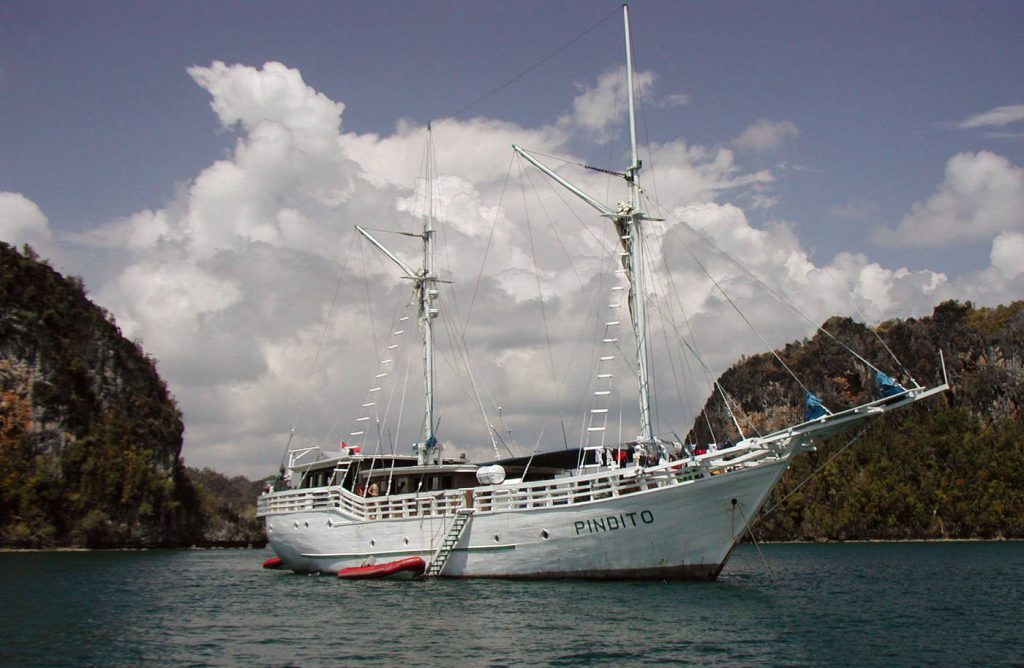
What he discovered far exceeded his expectations — a marine paradise teeming with life and coral gardens of staggering scale and colour. Convinced he had stumbled upon a jewel of global significance, Edi Frommenwiler began exploring the area in earnest. For nearly a decade, Pindito was the only liveaboard operating in Raja Ampat.
Word gradually spread, and soon adventurous divers from Europe and the United States began to follow in his wake. What began as a pioneering expedition vessel evolved into Indonesia’s first true liveaboard dive boat — opening Raja Ampat to the world and laying the foundation for everything that would follow, from ecotourism to large-scale conservation.
The Twin Scourges
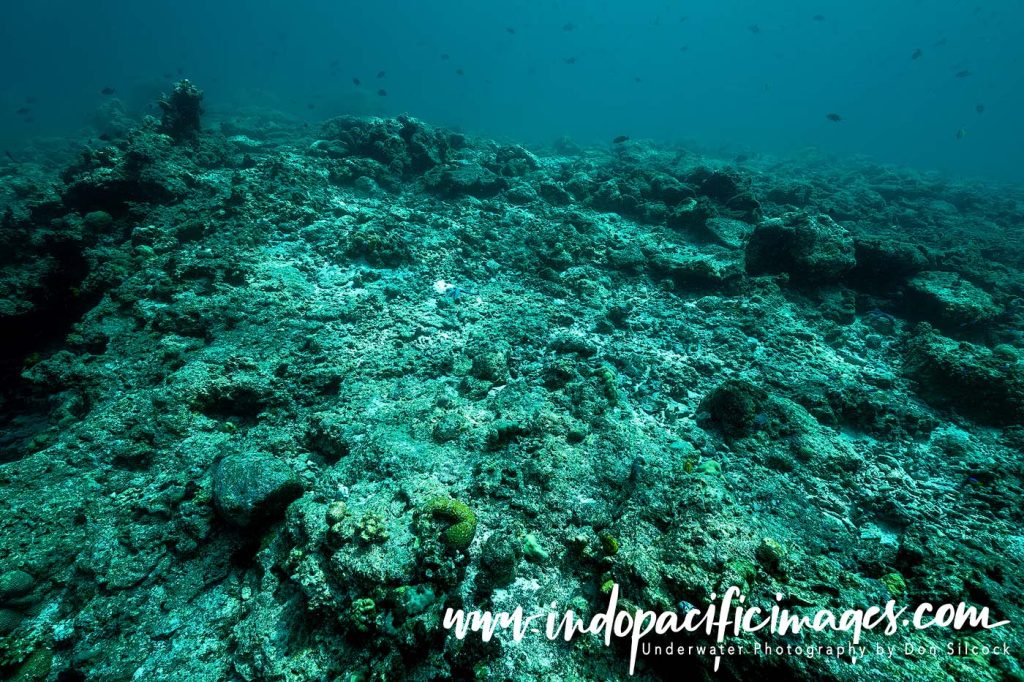
Raja Ampat’s extraordinary biodiversity has long faced two deadly threats: cyanide fishing and fish bombing. Cyanide is cruel and indiscriminate, but fish bombing is catastrophic, as the blasts kill everything within range — leaving behind unstable rubble where coral cannot regrow and once-vibrant reefs become barren wastelands.
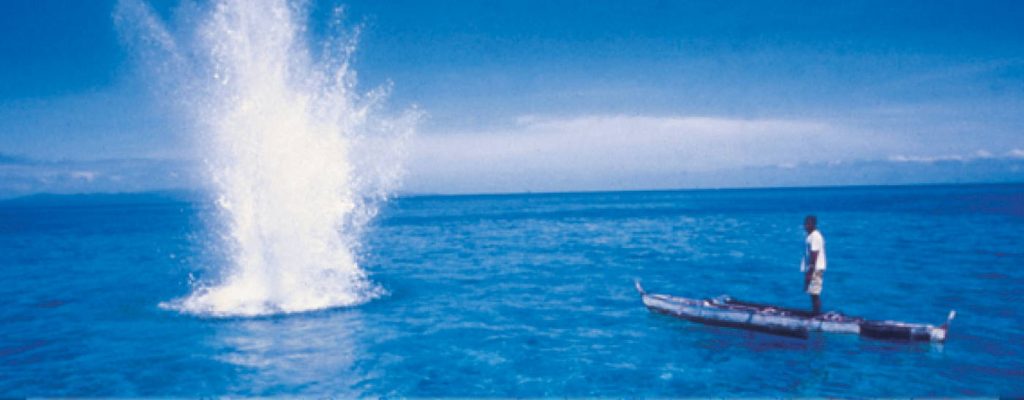
The practice began shortly after World War II, when villagers noticed how bombs dropped near reefs caused dead fish to float to the surface. At first, leftover munitions were used, but when those ran out, fishermen began making their own explosives from fertilizer — cheap and easily available because of government subsidies.
Edi had already seen the devastation such methods caused in South Sulawesi, around Taka Bonerate, where fish bombing had reduced entire reef systems to lifeless gravel plains. It was a grim preview of what could happen in Raja Ampat if the practice were allowed to take hold.
Edi Frommenwiler Raja Ampat – Meeting the Bupati
When Pindito first arrived in Sorong, the main port of Raja Ampat, it caused quite a stir. At the time, the only foreigners in town were a handful of expats working in oil, gas, and timber.
Over the following years, Edi became a familiar seasonal visitor. Then, in 1996, the local government head for Sorong — the Bupati — sent a police launch to Pindito, requesting Edi’s presence at his office. It was less an invitation than a summons, but Edi went willingly.
After the customary pleasantries, the Bupati asked why Edi kept bringing foreign guests to Sorong. Edi explained that they were not there for Sorong itself, but for the remarkable marine landscapes of Raja Ampat — places of extraordinary beauty both above and below the water.
His guests, he added, had travelled halfway around the world and spent a great deal of money to experience them.
Intrigued, the Bupati asked what he could do to attract more such visitors. Edi seized the moment and explained the paradox of Raja Ampat — that its incredible biodiversity was also its greatest vulnerability. Without protection, the very thing that made it special would be destroyed.
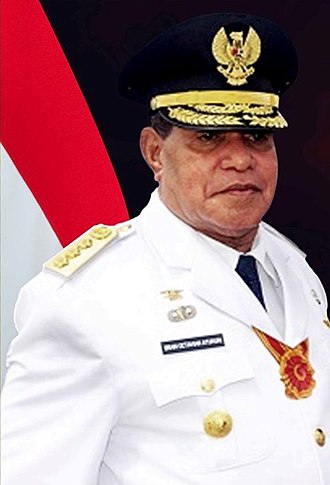
That conversation marked the beginning of an unlikely collaboration that would have far-reaching consequences. Over time, the Bupati asked which areas should be protected, and Edi drew circles on a map of Raja Ampat — recommendations that would later prove prophetic.
Edi Frommenwiler Raja Ampat – Rebuild or Protect?
In 2000, Edi Frommenwiler learned that the World Bank had made a US$5 million grant to Indonesian NGOs to try to restore reefs devastated by fish bombing in Taka Bonerate. Having witnessed the destruction there firsthand, he was deeply sceptical that such badly damaged reefs could ever truly recover.
Edi believed the focus should not be on rebuilding what was lost, but on safeguarding what was still intact. His message was simple and urgent: “If you really want to do something good, go to Raja Ampat — where there is still something left to save.”
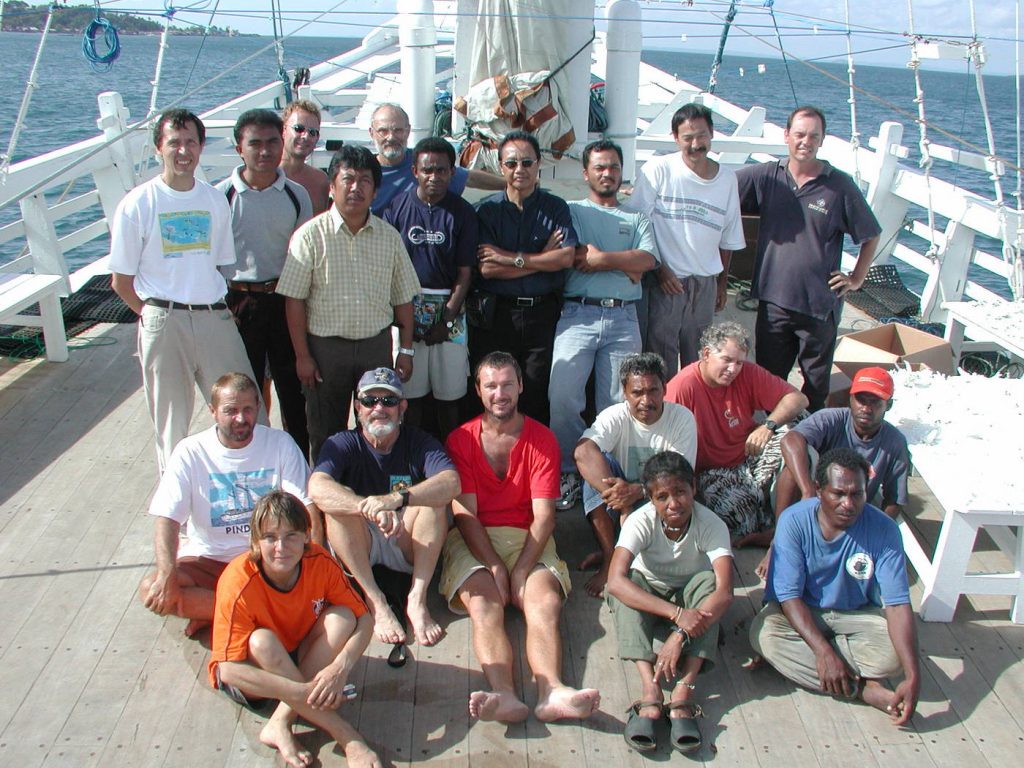
For more than two years, Edi Frommenwiler pressed his case, urging representatives from The Nature Conservancy, WWF, and Conservation International to see Raja Ampat for themselves. Eventually, in 2003, they agreed and chartered Pindito for a Rapid Ecological Assessment (REA) of the region, which Edi guided personally — taking their specialists to the same sites he had circled on the Bupati’s map.
The REA Report ultimately confirmed scientifically what Edi Frommenwiler had believed all along: Raja Ampat harboured the highest known marine biodiversity on the planet. That landmark assessment became the scientific cornerstone upon which Raja Ampat’s modern conservation strategy was built.
Legacy of a Conservation Whisperer
Edi Frommenwiler never set out to become a conservationist. His motivations were rooted in curiosity, adventure, and an unrelenting drive to explore. Yet his pioneering spirit — and his willingness to speak up when it mattered — helped spark a chain of events that forever changed the fate of Raja Ampat.
Today, as dive tourism thrives and the reefs of West Papua stand as a model for community-based conservation, it is easy to overlook those who blazed the trail. But beneath the success stories and statistics lies the determination of one man who, long before the scientists and NGOs arrived, saw the magic of Raja Ampat and understood that it must be protected.
Those hand-drawn circles on the Bupati’s map would prove prophetic. In 2004, Raja Ampat’s first Marine Protected Area (MPA) was established based on them. Today, the region boasts nine MPAs covering more than two million hectares — a living testament to how Edi Frommenwiler’s vision helped safeguard one of the richest marine ecosystems on Earth.
