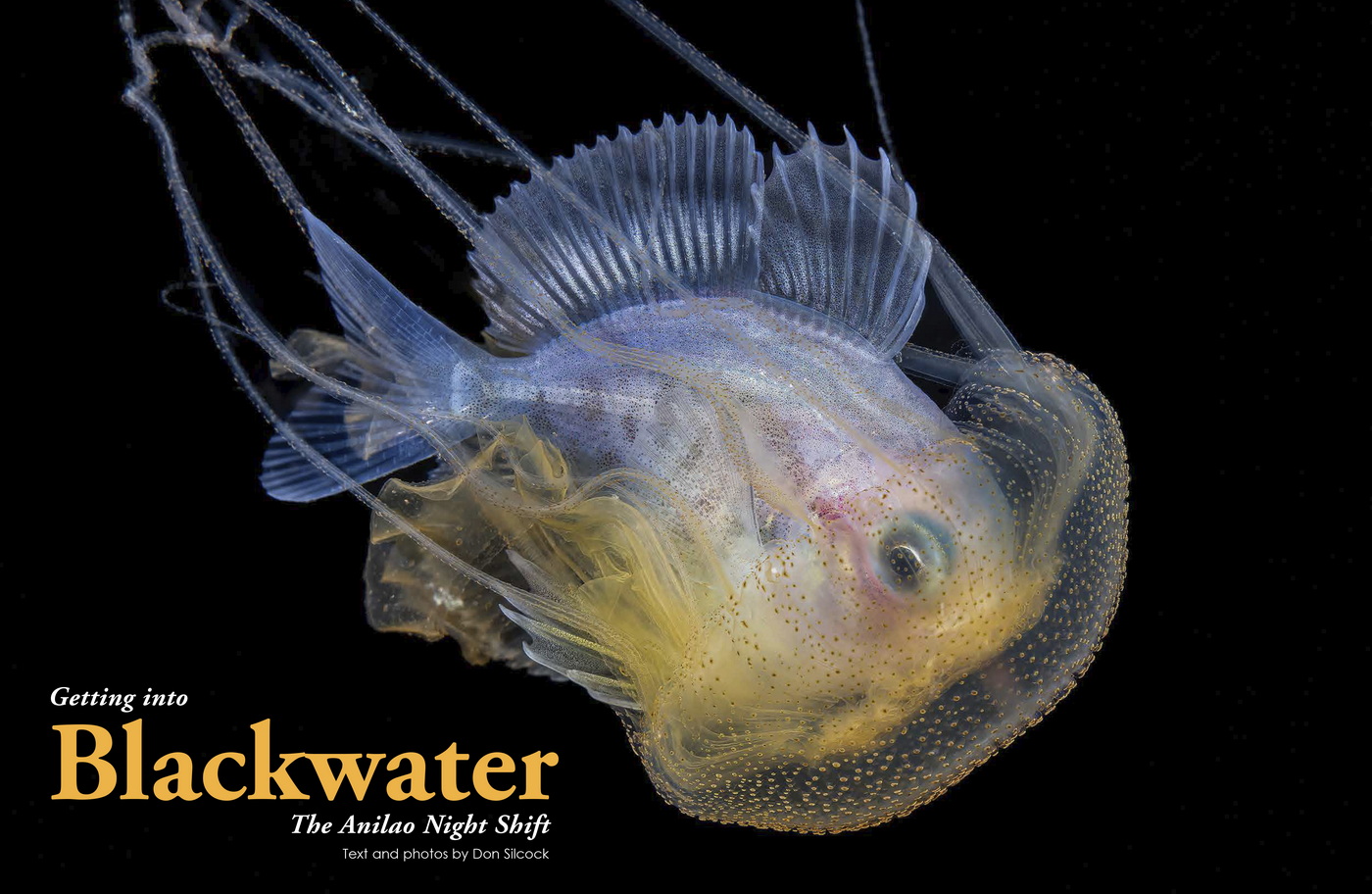
Getting into Blackwater Diving… For many, blackwater diving sits just beyond the edge of familiarity — intriguing, somewhat intimidating, and quite unlike anything experienced in “normal” diving.
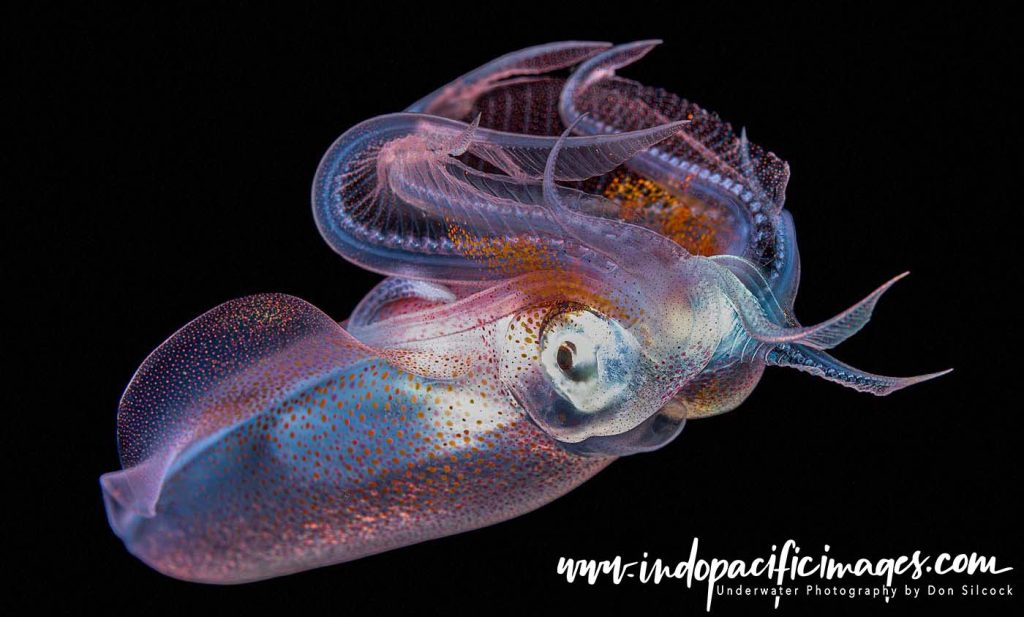
These strange forms, illuminated by light against the infinite blackness of open ocean, seem otherworldly – what are they and why are they there?
If you already understand what blackwater diving is, the next question becomes more personal – what is it actually like to do your first blackwater dive?
This article focuses on exactly that. Rather than re-explaining the fundamentals, it explores the experience of getting into blackwater diving in Anilao — what it feels like, how a dive unfolds, what surprises first-timers, and why this part of the Philippines has become one of the best places in the world to take that first step.
The First Step Beyond the Reef
The moment the boat leaves the shoreline at night, it becomes clear that blackwater diving is not simply an extension of reef or night diving. There is no destination reef, no navigation plan, and no bottom waiting below.
Instead, the dive site is the water column itself — suspended over hundreds or thousands of metres of open ocean. For divers accustomed to structure and reference points, this shift is profound. Getting into blackwater diving is as much a mental transition as it is a physical one, requiring trust in buoyancy skills, equipment, and the dive plan.
Why the “Night Shift” Is So Different
Also known as pelagic night diving, blackwater diving is essentially night diving on steroids. And, unlike conventional night dives, where the reef remains familiar even in darkness, blackwater diving removes all visual anchors.
The darkness below is absolute and the only fixed reference is the downline, illuminated by the powerful lights that attract the plankton and pelagic life.
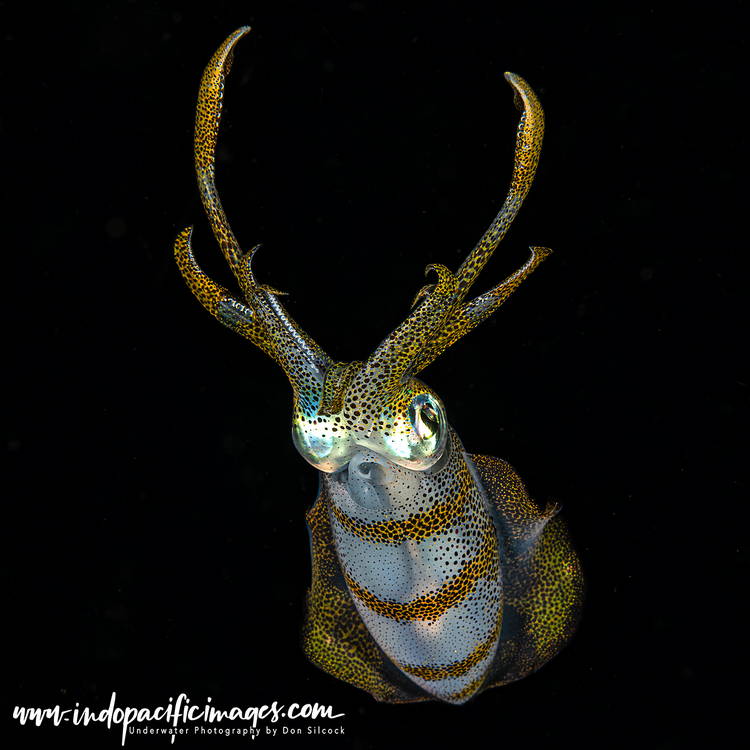
At first, the scale can feel disorienting and then the reason for being there appears out of the darkness – drifting shapes, flashes of movement, and creatures that seem almost impossible in form and behaviour.
This is why blackwater diving is often described as surreal: the environment is minimal, but the encounters are extraordinary.
What Appears After Dark: The Nightly Migration
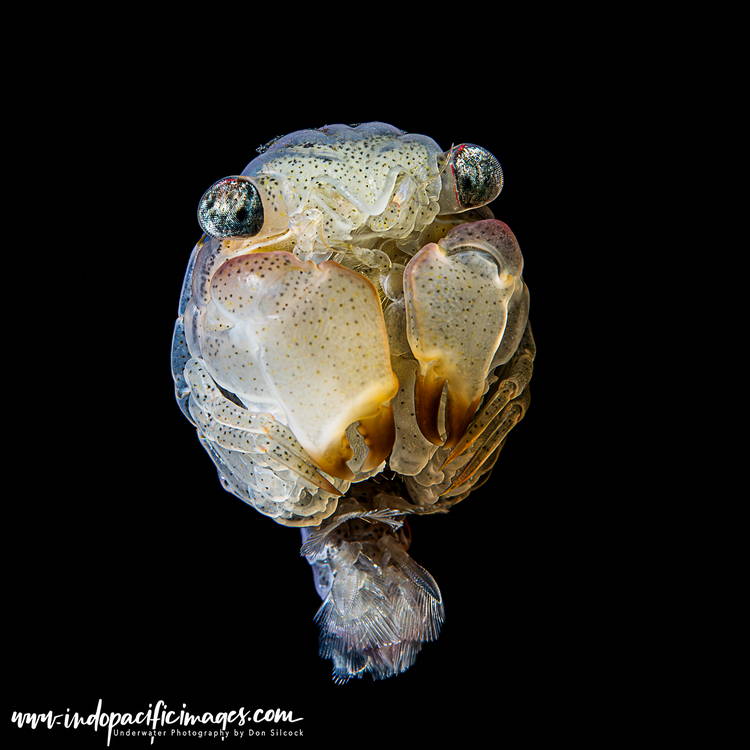
What divers witness on a blackwater dive is driven by the diel vertical migration, a nightly movement of marine life from the depths toward the surface. Larval fish, juvenile squid, jellyfish, crustaceans, and other pelagic organisms rise under cover of darkness to feed.
Rather than repeating the science in detail, what matters to the diver is the unpredictability. Subjects appear suddenly, drift past once, and vanish into the black. Every dive is different, and no two minutes are the same.
(For a more detailed explanation of the diel migration and why Anilao is so productive, see the in‑depth guide to Blackwater Diving in Anilao)
How Blackwater Diving Works
There are several approaches to blackwater diving. The original method, pioneered in Kona, Hawaii, involves a lighted downline suspended beneath the boat.
Divers are tethered to this line, with video lights drawing in the creatures. Which is apparently effective, but does restrict your movement and requires careful coordination to avoid tangling with other divers.
A second method, called the “bonfire dive,” takes place in shallower water with a strong light placed on the seabed and shining upward.
The third, and the one I experienced on my first trip to Anilao, was developed by Mike Bartick of Crystal Blue Resort Resort (CBR) and is an innovative system that allows more freedom.
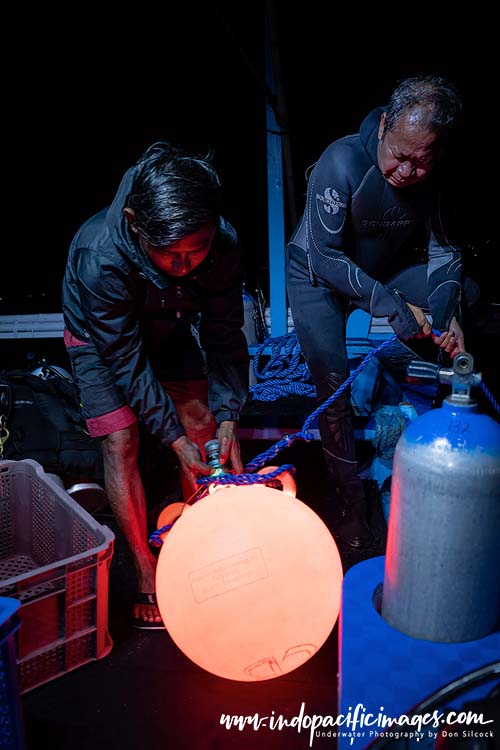
At its core is the “pumpkin,” a bright orange buoy supporting a 25-metre weighted downline equipped with powerful video lights every five metres. The pumpkin drifts naturally with the current, while divers follow beneath it, illuminated by the light trail.
The surface crew keeps a safe distance, tracking the pumpkin’s glow as divers move through the dark waters below. For anyone getting into blackwater diving, this setup provides both safety and mobility — essential for photographing elusive subjects in total darkness.
The First Dive – Facing the Darkness
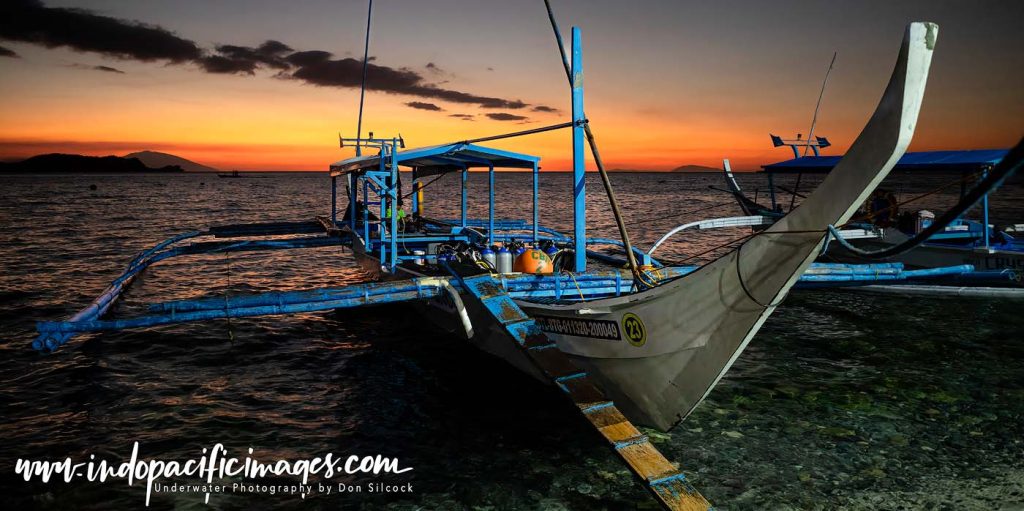
It starts with a 7 p.m. departure from CBR. After up to an hour’s journey, the engines stop, and as the darkness settles in the crew deploys the downline, lights, and pumpkin.
And then it’s time to enter the water.
It’s hard to describe what it feels like the first time you get into blackwater diving. Being suspended in open water by your buoyancy and surrounded by blackness, with only the lights on the downline as a reference, is really quite surreal.
How It Feels…
For most divers, the first few minutes are the most challenging as the absence of a bottom, the depth below, and the darkness beyond the lights can feel quite confronting.
You can’t help but imagine what might be lurking in the dark and you experience a mix of curiosity and unease that quickly gives way to fascination once the first tiny creature appears.
What follows is a gradual shift in focus. Attention moves away from the void and onto the small pool of illuminated water in front of you.
Most divers report say that once their buoyancy stabilises and breathing slows, the dive becomes quite calm — even meditative.
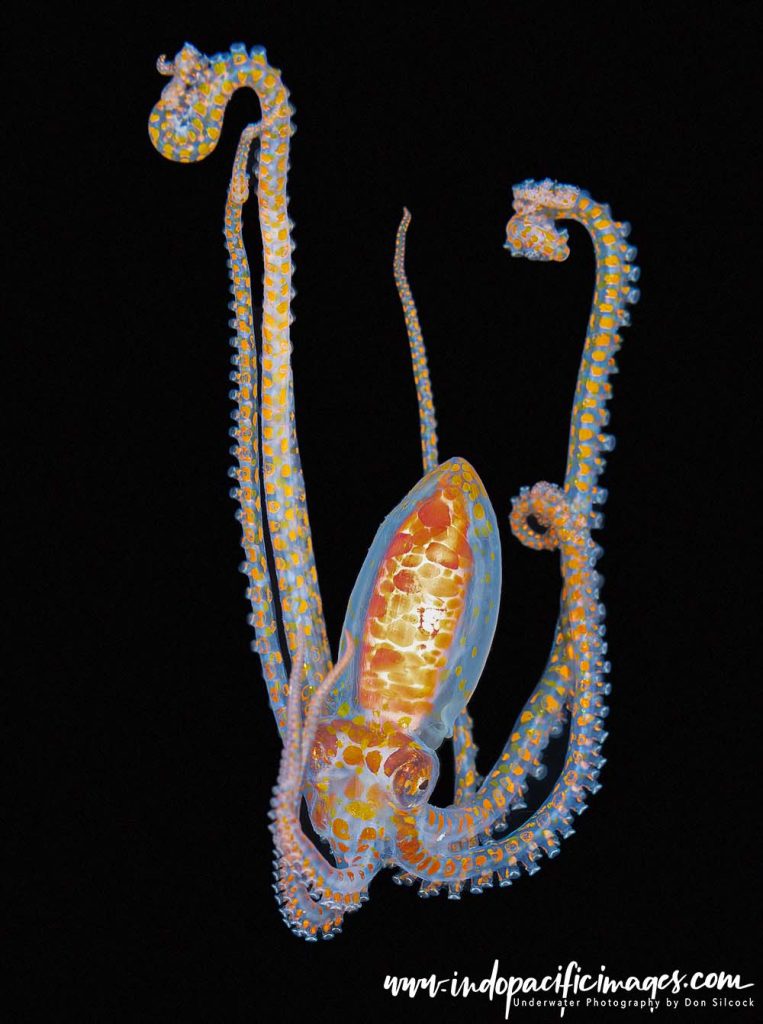
Photographing those strange creatures is no easy feat as they are small, translucent, and almost constantly in motion.
Each dive lasts around an hour, with divers surfacing near the pumpkin and signaling with a torch that they are ready to be picked up by the boat.
Initially you can’t see the boat, so hearing the engines as it makes its approach is a most reassuring and comforting sound.
For safety reasons, as there may still be divers below, you are required to swim away from the pumpkin to be picked up.
After the first dive, there’s a one-hour surface interval before venturing into the darkness once more.
Two dives a night are the norm and it’s not uncommon to return to CBR around 01:00 in the morning…
Which is why I think of it all as the Anilao Night Shift…
Getting into Blackwater Diving – Is it Safe?
Safety is a common concern for those getting into blackwater diving, and rightly so as it pushes close to the limits of recreational diving and is not something to attempt with a casual operator.
Only dive with experienced professionals who have the right crew and equipment. You should be a confident diver, comfortable with night diving, excellent buoyancy control, and spatial awareness in open water.
During my nine days in Anilao, the first five were spent on day dives before easing into blackwater on the 5th night. The initial dives felt strange but never unsafe. By the fourth “night shift,” I was completely hooked — and the unease had turned into pure excitement.
Final Thoughts – Why You Should Try Blackwater Diving
Reflecting on my experience in Anilao, I realise that blackwater diving was an itch I didn’t know I needed to scratch – until I did…
To be precise, it’s the combination of blackwater diving and underwater photography that truly captivated me. The otherworldly subjects, the challenge of shooting in motion, and the calm intensity of drifting through the dark make it utterly unique.
Blackwater diving offers a rare glimpse into a part of the ocean that few divers ever experience. It is unfamiliar, challenging, and profoundly rewarding — particularly for those interested in marine life beyond the reef.
For divers considering getting into blackwater diving, Anilao provides one of the safest, most accessible, and most compelling introductions available anywhere in the world. Many who try it once find that it permanently changes how they think about night diving — and about the ocean itself.
Getting into Blackwater Diving X-Ray Article
The excellent global diving magazine X-Ray just published a seven-page article of mine on Getting into Blackwater Diving and you can use the link to download a copy from their site.