
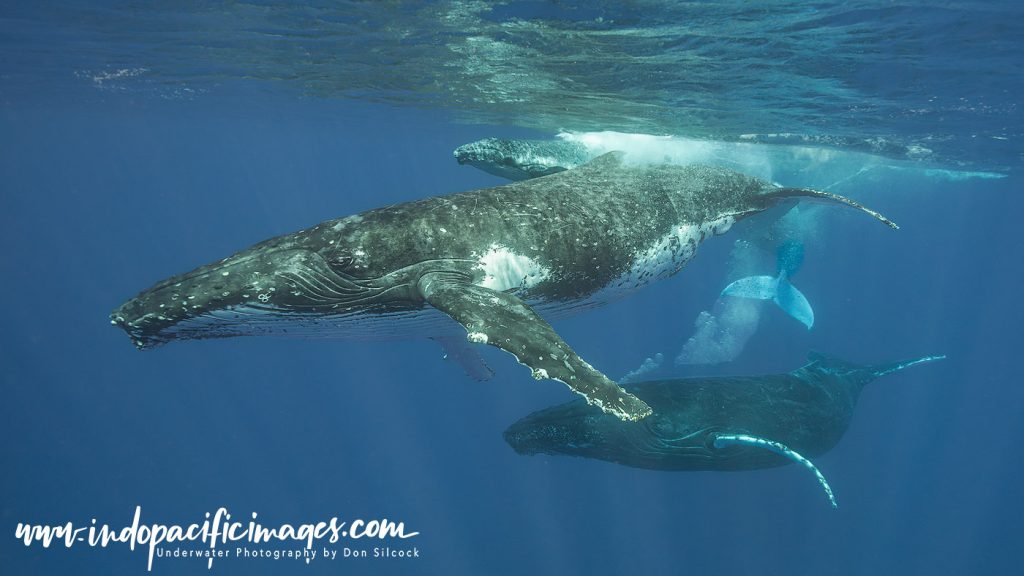
A Humpback Whale heat run is one of the most dramatic and energetic behaviours you can witness in the water with whales.
And Tonga is one of the few places on Earth where it can be experienced – if you are lucky…
If mother-and-calf encounters are calm and intimate, a heat run is the polar opposite: fast, chaotic, loud, and driven by raw biological urgency.
When it happens around you, everything changes in an instant.
What is a Heat Run?
A heat run occurs when a single female humpback whale is pursued by multiple competing males, often at high speed and in tight formation.
These males jostle, collide, trumpet, tail-swipe, and body-check each other as they attempt to position themselves closest to the female.
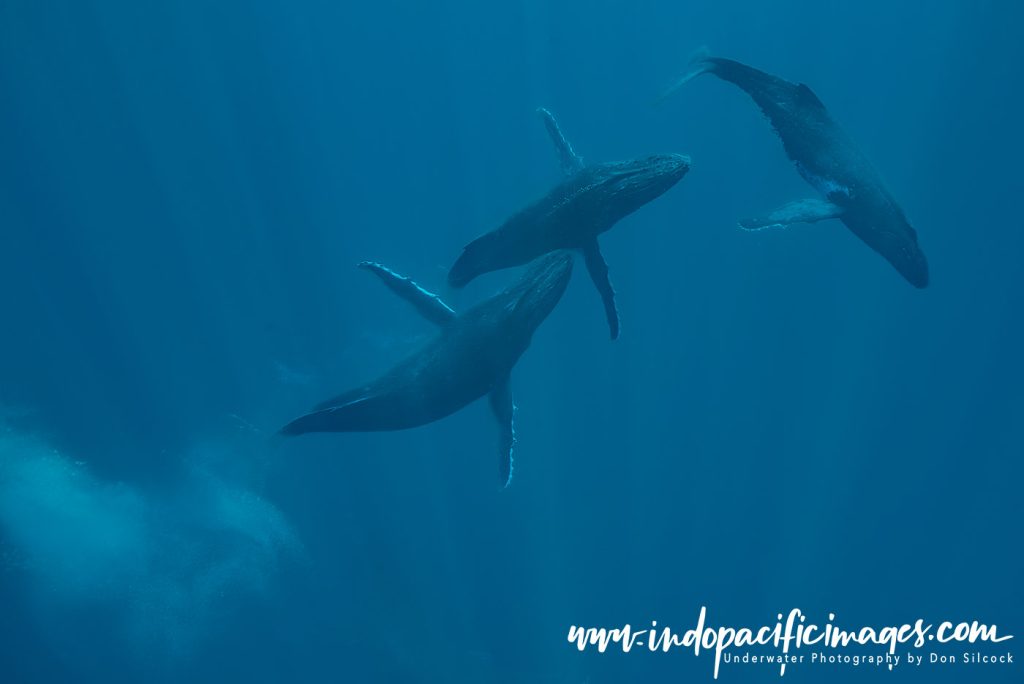
Despite the name, scientists are not entirely certain that the female is always in oestrus. Many researchers now believe that heat runs may also be about establishing dominance, assessing competitors, or social hierarchy, rather than immediate mating alone.
Regardless of the precise trigger, the behaviour is unmistakable — and unforgettable.
Humpback Whale Heat Run Encounters
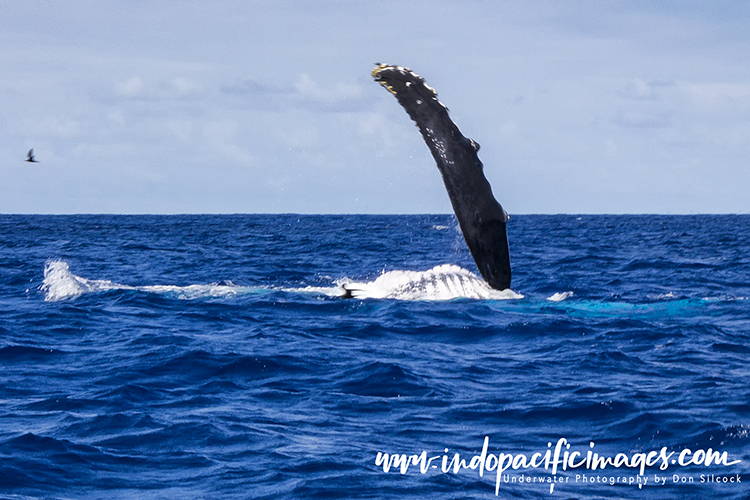
Heat runs are typically initiated by a female humpback whale signalling that it “might” be ready to mate. Which they do by slapping the surface of the water with their huge pectoral fins – sending a very clear signal to any male humpbacks in the vicinity.
Extremely dynamic in nature, heat runs involve anywhere from 3 to more than 10 competing males pursueing that single female. And occasionally a dominant escort will be part of the pack attempting to fend off his rivals.
The female leads the way, swimming hard and fast at speeds of up to 10 knots, while the males follow and jostle for position in the pack.
It’s an almost perfect example of natural selection and the survival of the fittest. Only one male will win the grand prize and get to mate with the female – maybe… and to be successful that male will have had to eliminate the other challengers, which involves some complex underwater manoeuvres…
The quality of the humpback whale heat run encounters really boils down to the ability of your boat’s skipper to read the situation and get you in the water in the right position – safely and without creating a problem for the oncoming whales.
It is a very exciting experience as you can tell from all the surface activity that under the water there is some serious stuff going on… You will be sat on the side of the boat, fins and mask on and camera in hand, waiting for the signal from the skipper and then suddenly the engines are killed and all you hear is GO, GO, GO!
The next thing you know is that you are in the water and out of the blue comes the pack, which is a truly awe-inspiring site as the female leads the way. And the males compete to stay in the race by charging each other or by diving below another male to blow a bubble curtain and disorientate him so that he drops out.
Are Humpback Whale Heat Run Encounters Dangerous?
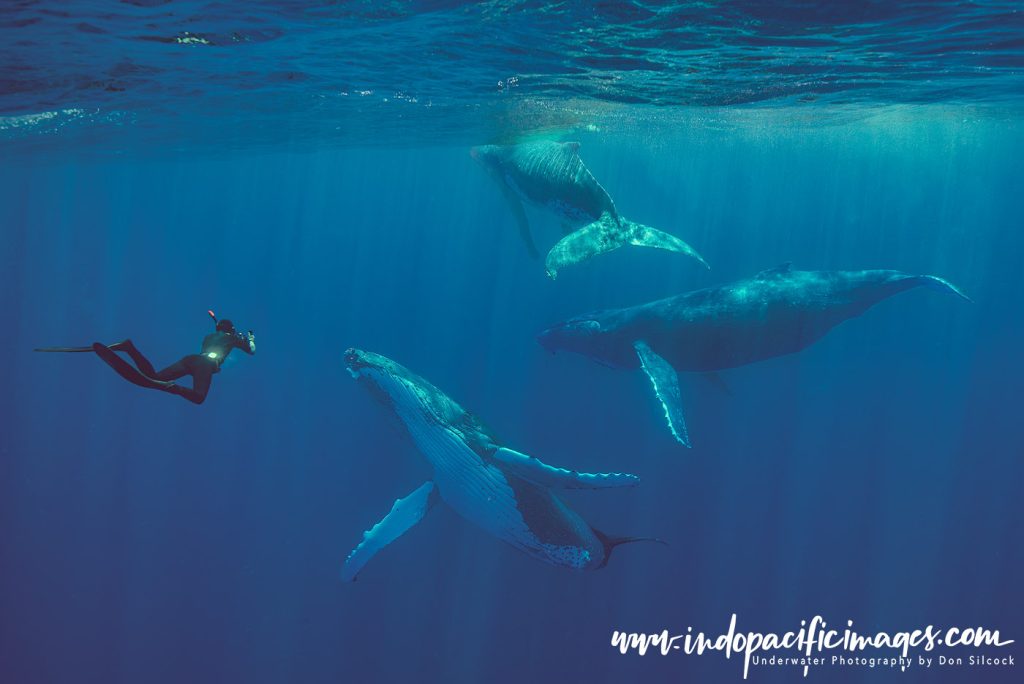
Incredibly, despite their seemingly intense focus on procreation, the whales seem to know where you are and avoid you. Which is pretty reassuring given the potential impact of a 35 ton creature travelling at speeds of up to 10 knots could have on the human frame.
Heat runs can go on for hours and hours. So it’s quite possible to have multiple encounters by being picked up and then dropped in again in front of the pack!
Humpback whale heat run encounters are an amazing spectacle. And Tonga is one of the few places in the world where you can be in the water watching the whole thing unfold as these huge creature perform a three dimensional underwater ballet in front of you!
Back To: Humpback Encounters Main Menu