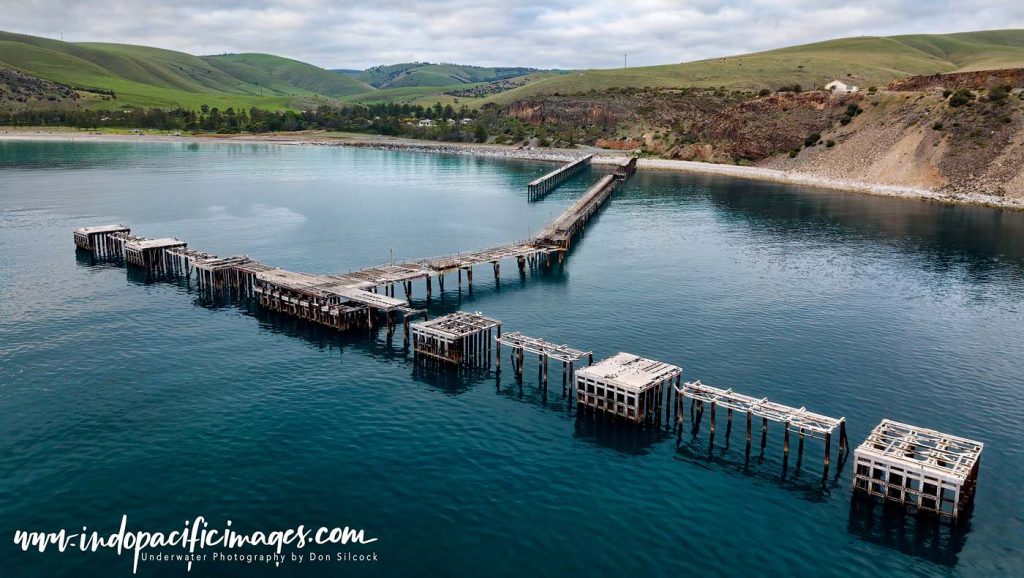
Diving Rapid Bay Jetty… These two large, side-by-side, jetties in Rapid Bay on the Fleurieu Peninsula are possibly the most popular shore dive in South Australia!
Their convenient location, some 100km south of the state capital Adelaide, together with their sheltered position and great marine life really does make them hard to beat!
A Tale of Two Jetties…
The two distinct structures tell the story of the region’s history:
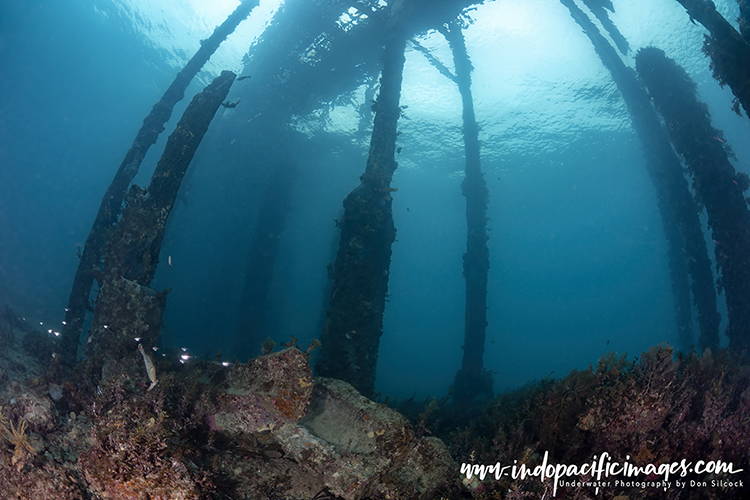
The Old Jetty: Built in 1940 to export limestone from the nearby quarry, this massive structure is now closed to the public but has become a thriving artificial reef.
The New Jetty: A $3.9M investment by the State Government in 2009 to provide safe pedestrian access and a dedicated divers’ platform with stairs for easy entry.
While you enter the overall site via the divers’ platform on the new jetty, the best diving by far is found among the encrusted pylons of the old jetty. So you will need to make a short underwater transit of about 50m to cross over.
Diving Rapid Bay Jetty – The Backstory…
The location is named after Colonel William Light’s survey ship the Rapid. William Light was the South Australia Colonial Surveyor General, who made his first landfall on mainland South Australia there in September 1836.
Industry came to Rapid Bay in 1938 when the “Big Australian” BHP began quarrying limestone there, which was to be used as flux for its steel smelters at Whyalla, Newcastle and Port Kembla.
The original “BHP jetty” with its bulk loading capability entered service in 1941 and continued through to 1988. When work was scaled down in favor of the company’s Klein Point Quarry over on the Yorke Peninsula.

The ship loading facilities were dismantled and the quarry left as a rather large hole in the ground… No real records are available on the biodiversity of the jetty prior to it closing. But without industrial interference, the BHP Jetty has bloomed into one of the most biodiverse marine habitats in the St. Vincent Gulf.
However as it aged, it also became increasingly less safe and was finally closed to the public on Christmas Eve 2004. The new jetty was built after an intense lobbying campaign, strongly supported by local divers, but the South Australian Recreational Fishing Advisory Council (SARFAC) were the driving force behind it all (I fish and I vote…)
Diving Rapid Bay Jetty – What’s Underwater?
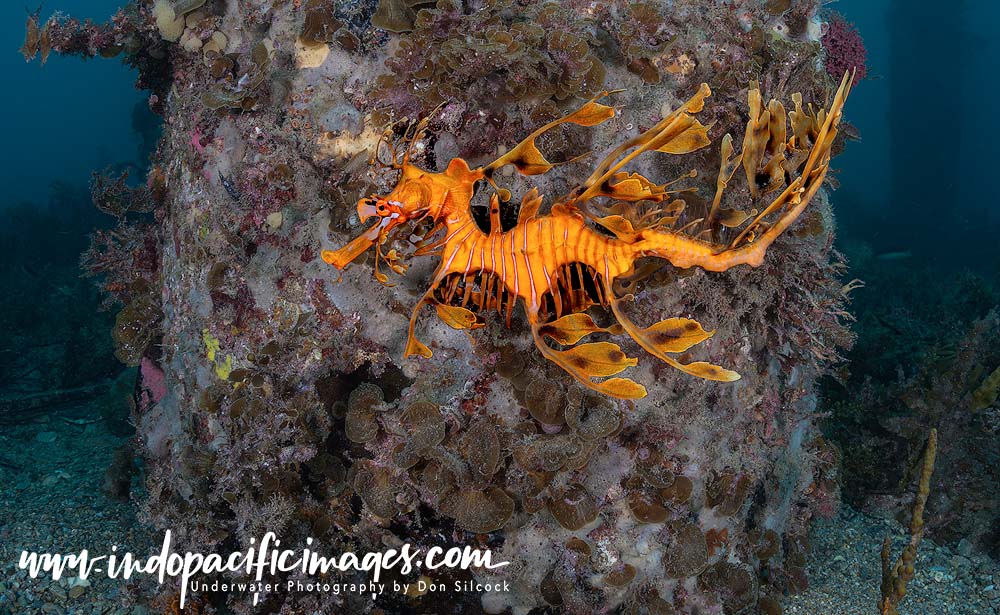
Rapid Bay Jetty is widely known as one of the best places in South Australia to see the Australian Leafy Seadragon and sightings of these quite unique creatures are indeed quite common.
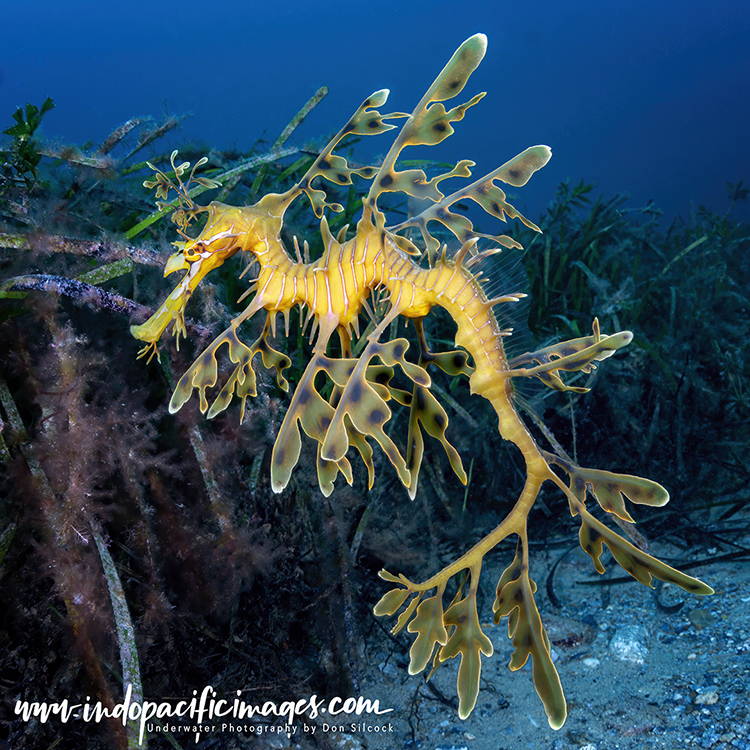
Leafy Seadragons (Phycodurus eques) often hang out around the pylons of the old jetty and in the seagrass beds on either side.
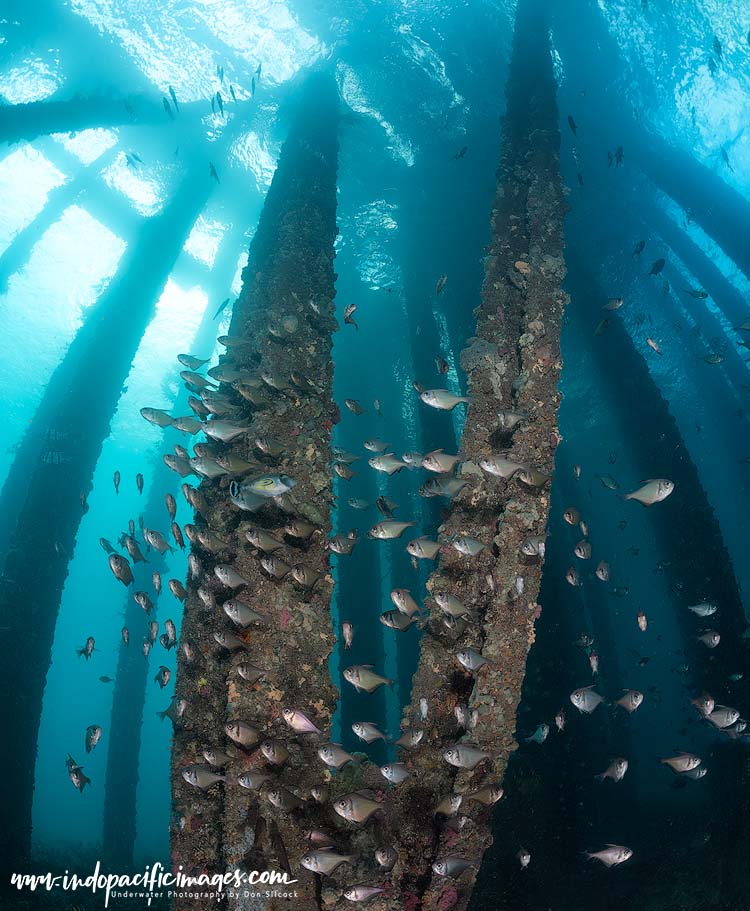
The pylons themselves have a rich covering of Culicia cup coral and also host numerous species of nudibranchs.
It’s very easy to end up spending most of the dive around the pylons in the middle of the old jetty but, if you do, you will miss the best part of the dive!
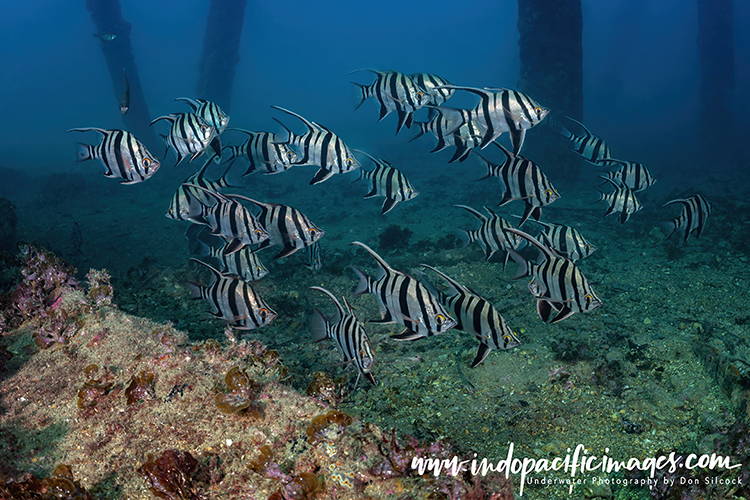
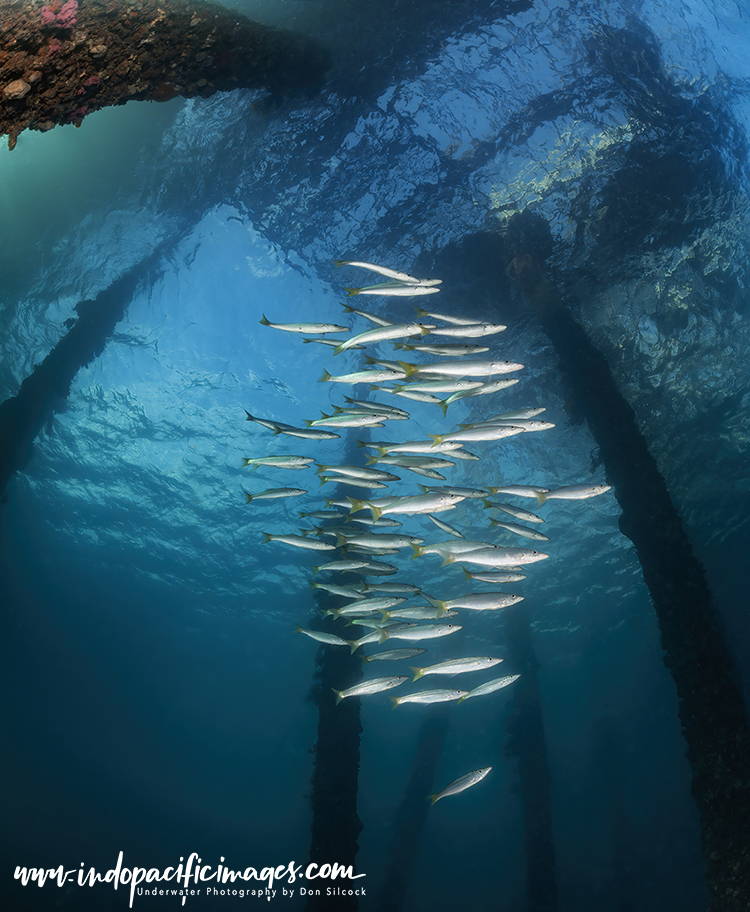
The “Tee” is the T-section, at the very end the jetty, where you will find large schools of Old Wives, Zebra Fish, and Yellowtail Scad. Also known as the Äquarium” or the Gallery, the area is a must-do!
Weedies Too!
While I have yet to see any myself, I have seen the photographs of those who have encountered the other Australian seadragon at Rapid Bay – the less flamboyant, but almost as photogenic “weedy” (Phyllopteryx taeniolatus) or common seadragon!
Weedies are harder to find it seems, (certainly for me…) indicating they may be less of them than there are leafies – or that they don’t hang out where the leafies do.
Navigation and Dive Safety
Diving Rapid Bay Jetty is straightforward but requires a degree of physical stamina…
The Long Haul: The new jetty is 240m long, so bring a trolley for your gear! Visitors without one are easy to spot – they’re the ones sweating before they even hit the water.
The Transit: Follow the “star dropper” posts on the seafloor to navigate from the new jetty stairs to the old jetty. At the old jetty you turn right and start the 250m journey out to the Tee. There you have the decision of turning left or righ and it’s 100m to the end either way and unlikely that you will have enough air to do both and get back to the new jetty.
Air Management: If you are going to make the long swim to the “Tee” be sure to monitor your air closely as the swim back against a tide can be taxing.
Depth: Max depth is around 10m at the Tee, making for long bottom times but requiring careful navigation through the forest of pylons.
All said though, Rapid Bay truly is a great dive and well worth all the effort involved!

Diving Rapid Bay Jetty – The Wind…
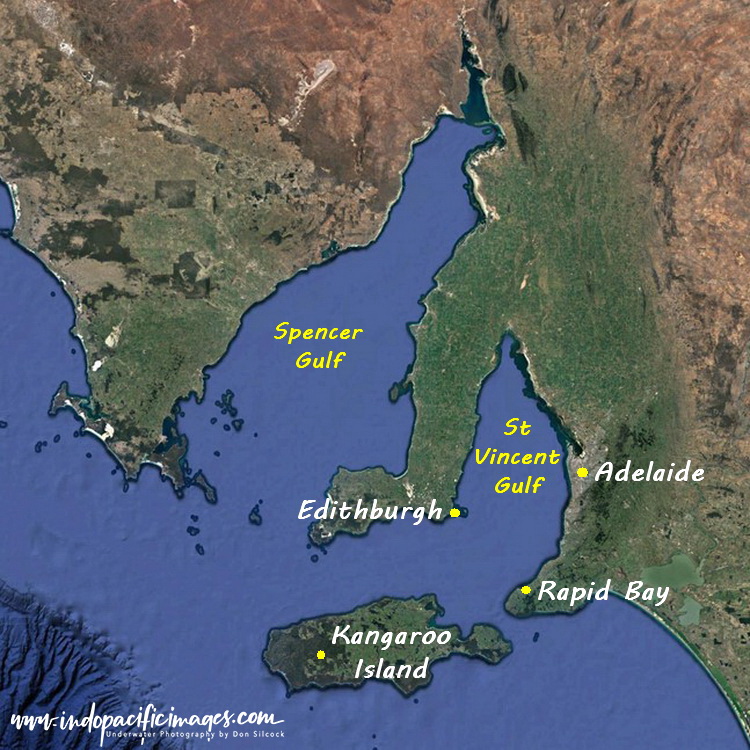
For local divers it’s a given, less so for visitors – but the basic thing is that some of South Australia’s best shore dives are on opposite sides of the St. Vincent Gulf.
With Rapid Bay being the #1 site on the eastern side and Edithburgh jetty the best on the western side.
The prevailing winds are principally from the south to south-east. So when it’s good at Rapid Bay it’s a really bad day at Edithburgh and vice-versa!
So, if you are planning to dive Rapid Bay you really need to check the weather forecast and understand what the wind is doing. Combine that info with the tide tables and you have what you need to know for diving Rapid Bay jetty at its best!
Logistics
The nearest dive shop is in Adelaide, so you need to arrive at Rapid Bay with everything you need, including snacks and drinks as there is nothing at the site.
It used to be that if you were spending a couple of days diving Rapid Bay, at some point in time (depending on the number of divers/cylinders involved…) a “tank run” would have to be made to Adelaide.
But that changed when local diver Peter Corrigan opened Sea Dragon Dive Lodge in nearby Second Valley. A new Bauer compressor complete with storage tanks mean that refills are now quick and easy!
In Summary
There are several very good reasons why Rapid Bay is such a popular site… Pretty close to Adelaide, it’s a great place to see and photograph leafy seadragons, there are numerous other things to see and while it’s a straightforward dive it is also very interesting and has a nice touch of adventure too!
It gets very busy at the weekend if the wind and tides are good. Which means the car park can get a bit jammed up, but it’s such a big site there is plenty of room underwater…
Dive it during the week and you may well have it to yourself!!
Diving Rapid Bay Jetty – X-Ray Article
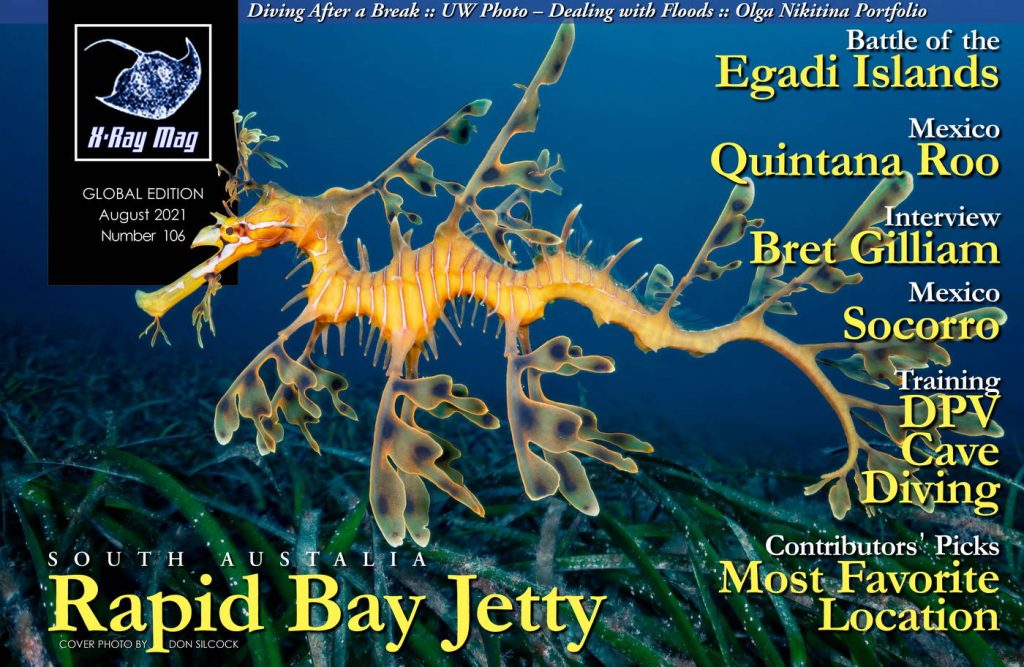
The highly respected global diving magazine X-Ray recently published a six-page article of mine on Rapid Bay Jetty. Plus… my image of an Australian leafy seadragon from the article got the front cover!
You can use this link to download Diving Rapid Bay Jetty…