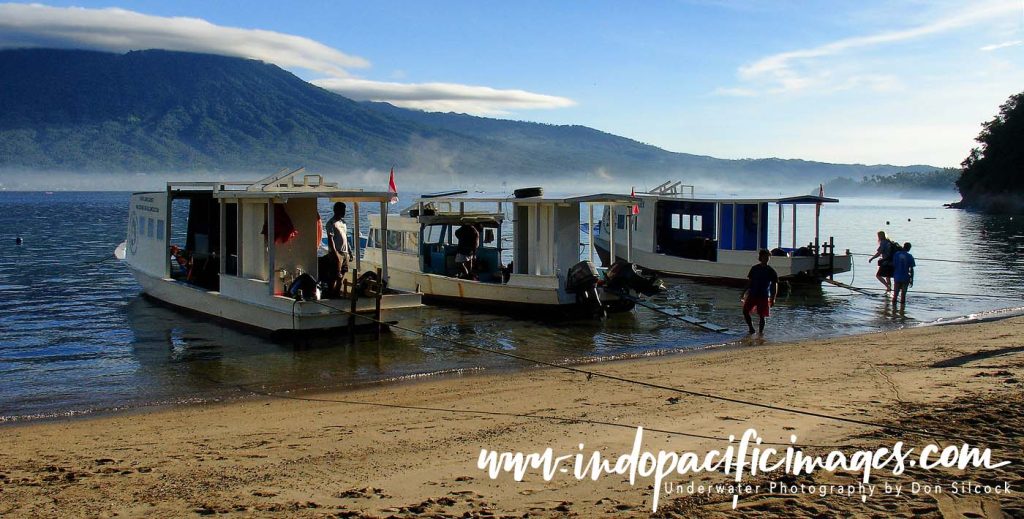
How to dive the Lembeh Strait… Located on the northeast tip of North Sulawesi, the Lembeh Strait has long held a special place in the hearts of divers and underwater photographers. Barely 12km long and just 2km wide, this narrow stretch of water has earned a global reputation as the muck-diving capital of the world. A place where some of the ocean’s strangest and most sought-after critters thrive in seemingly unremarkable habitats.
But for all its fame, knowing how to dive the Lembeh Strait properly can make the difference between a good trip and a truly exceptional one. With its fragile marine life, soft substrates, and close-up photography opportunities, Lembeh rewards divers who understand its rhythms and approach it with care, patience, and the right techniques.
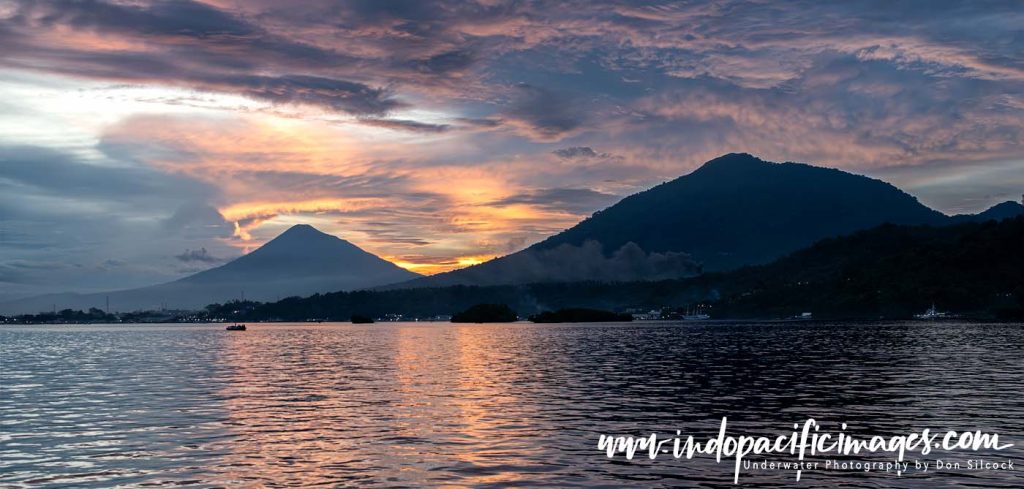
Why the Lembeh Strait Is So Unique
Lembeh is renowned not for coral landscapes, but for its black-sand slopes, rubble patches, and debris-strewn bottoms that create perfect micro-habitats for rare macro species. This is where you’ll find many of the bucket-list critters photographers dream about: flamboyant cuttlefish, wonderpus and mimic octopus, hairy frogfish, ornate ghost pipefish, nudibranchs galore, blue-ringed octopus, frogfish of every size… the list seems endless.
These habitats are incredibly delicate, which is why knowing how to dive the Lembeh Strait the right way matters so much.
Getting There – The Easy Part
Most visitors fly into Manado (MDC), the gateway to North Sulawesi. The airport is serviced by flights via Jakarta, Bali, and Singapore, making access reasonably straightforward.
From Manado, it’s about 90 minutes by car to the port town of Bitung, followed by a quick boat transfer to your resort.
Many dive resorts are located directly across the Strait on Lembeh Island, while others sit on the mainland.
Either way, transfers are seamless and well-coordinated.
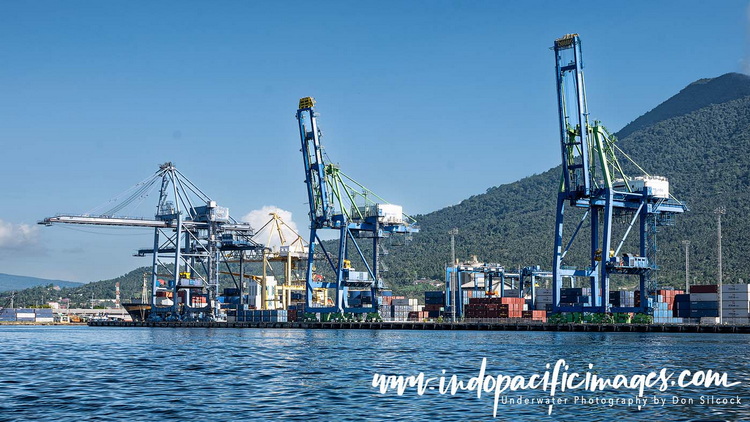
Compared to some of Indonesia’s more remote diving regions, Lembeh is refreshingly easy to reach!
When to Dive the Lembeh Strait
One of the big advantages of Lembeh is that you can dive it year-round. Conditions are generally calm, with only occasional seasonal changes that influence visibility, temperature, or critter behaviour.
- Water Temperature: ~27–30°C
- Visibility: typically 5–15m (occasionally better)
- Peak Season: March–November is traditionally the most popular
- Rainier Months: December–February (often excellent for rare macro life)
Critter activity changes slightly with the seasons, but great sightings are possible at any time of year.
Dive Conditions — What to Expect
Diving in the Lembeh Strait is best described as slow, deliberate, and highly focused. The underwater terrain is generally shallow, sloping between 5m and 30m, with gentle currents.
- Bottom composition: black volcanic sand, rubble, silt, discarded objects turned into critter condos
- Dive style: slow swimming or stationary observation
- Currents: typically mild
- Depth: most sites 5–25m
Because you’re often close to the substrate, good buoyancy and careful finning are essential — both to protect the life below and to avoid creating clouds of black silt.
How to Dive the Lembeh Strait – The #1 Skill You Need
The fine volcanic sand is extremely light, with a texture similar to talcum powder. Stir it up, and you’ll quickly envelop your subject, yourself, your camera, and everyone nearby in a cloud of silt.
To avoid that, you need to be able to hover above that black sand and use flutter kick finning technique. Plus take care to gently ascend about a meter or so when you have finished photographing a critter – then carefully move away without ruining the scene for the next person.
Patience is important when diving Lembeh. At first, it can be hard to even spot the critters hiding in plain sight — which is why having a good local guide is such a worthwhile investment. But by far, the #1 skill you need for diving the Lembeh Strait is excellent buoyancy control combined with that careful finning technique.
Etiquette – Don’t be “That Guy”…
There’s an old saying in dive travel that is as true today as it was when I first heard it – “if you don’t know who the dick on the trip is, it’s probably you”. The point being that we all want the image but is it worth alienating everybody with you by hogging the subject and then ruining the visibility with poor finning techniques when you finally do relinquish it?
How to Dive the Lembeh Strait – Get Your Own Boat and Guide
Although it can be an expensive option, from an image productivity perspective, by far the the best thing you can do in Lembeh is to get your own boat and guide.
Even if you share a guide, stating the obvious, that means you will almost certainly be sharing the subjects too. And… even if the person you are sharing the guide with happens to have almost saintly behaviour underwater, it will still be frustrating waiting for them to move over. If that person is somewhat less that a saint, your frustration may get the better of you!
Dive times in the Lembeh Strait are typically around one hour, so about 50 minutes of productive critter spotting and image making. If there are two of you, that means 25 minutes each as best. More than two dramatically reduces image productivity and greatly increases frustration!
How to Dive the Lembeh Strait – Where to Stay
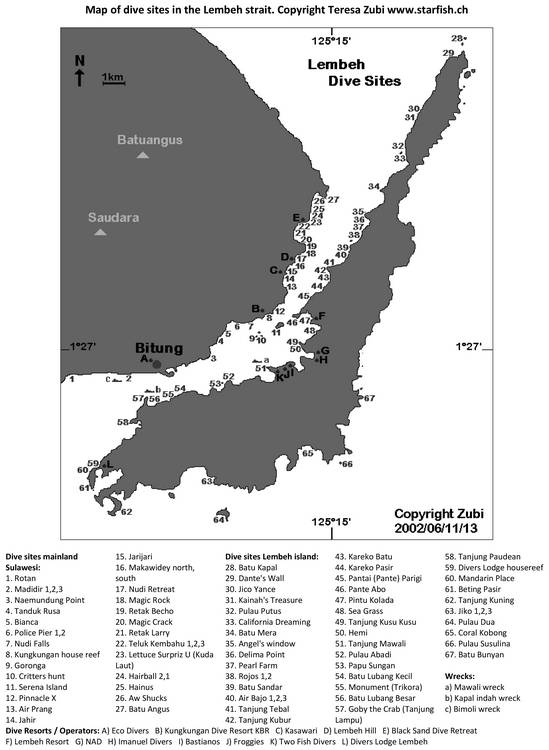
There is no shortage of places to stay and dive with in Lembeh and, to the best of my knowledge, it seems that all the operators do a good job and do whatever they can to preserve evrything that is truly special about it.
Plus there are about 55 dive sites within the sheltered confines of the Strait. So, overall you cannot really go wrong and it all kind of boils down to your budget…
Personally I have done all my land-based trips to the Lembeh Strait with Divers Lodge which is located on its own small peninsula next to Walenekoko Lagoon on the southern tip of Lembeh Island.
Owned and operated by Rob Sinke and his family, I really like Divers Lodge because you always get your own boat and guide but it won’t break the bank.
The guides know the sites well and are camera friendly, which allows me to take two complete systems, set up differently, in to the water – one with me and the other with the guide.
The size of the critters in the Lembeh Strait varies from tiny (pygmy seahorses) to quite large (mimic octopus) so having two different systems means that I am always ready for the unexpected encounter.
Image productivity wise, it’s absolutely the way to go!