
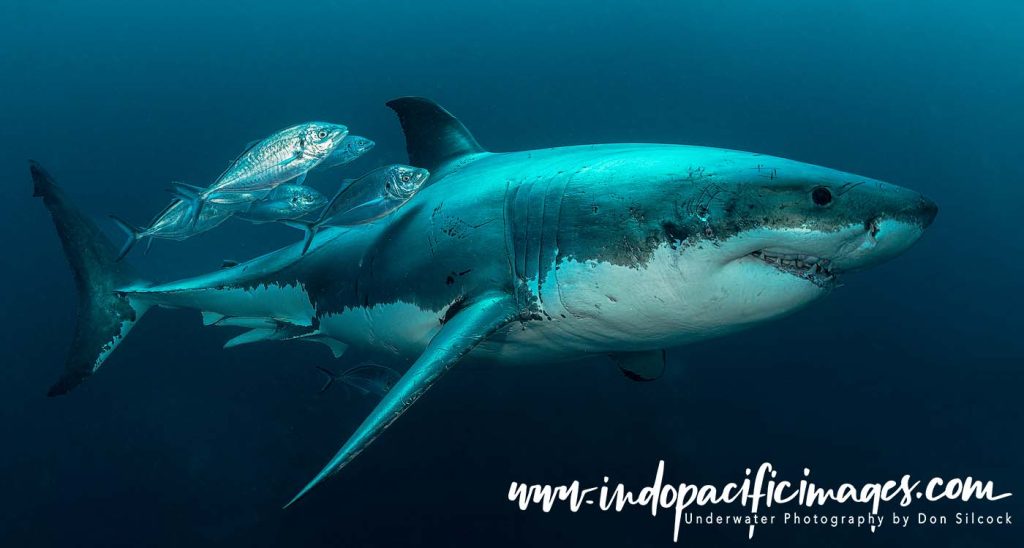
The Australian Great White Shark (Carcharodon carcharias) is one of the world’s most impressive apex predators — a species perfectly adapted over millions of years to rule the open ocean. Sleek, powerful and highly intelligent, the Great White commands both respect and curiosity. Yet despite their fearsome reputation, much of what defines this species is remarkable biology rather than aggression.
Great Whites have a streamlined torpedo-shaped body, powerful tail and robust musculature that enables bursts of speed exceeding 40 km/h. Their dentition is equally impressive: large, serrated teeth evolved to slice through flesh and bone.
But far more interesting than raw power are the subtler adaptations that make the Great White such an effective predator. One of the most fascinating features is their ability to regulate body temperature, allowing them to maintain a warmer internal temperature than the surrounding water. This makes the Australian Great White an exceptionally capable hunter in cooler temperate waters — including those fringing the southern half of the continent.
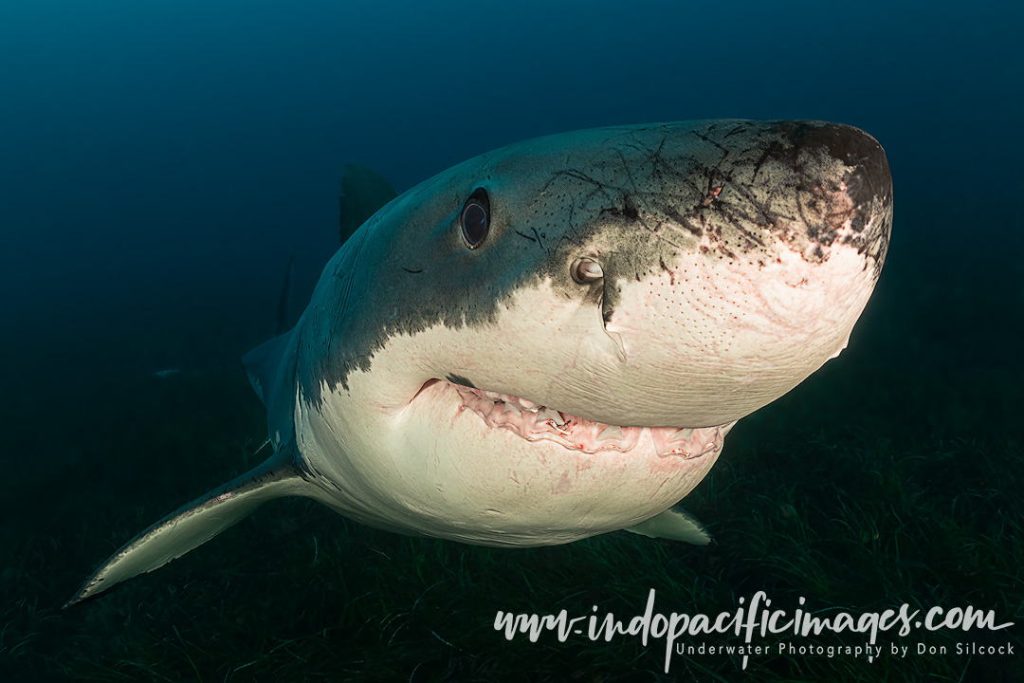
Their senses are equally refined. Great Whites have acute vision, an extraordinary sense of smell, and a specialised electrical-sensing organ known as the ampullae of Lorenzini.
Which allows them to detect faint electromagnetic fields produced by prey.
Combined, these adaptations give them a level of environmental awareness that few marine species can match.
While males may reach around 4–5 metres in length, mature females can exceed 6 metres and weigh well over a tonne.
Yet they grow slowly and reproduce infrequently.
Females give birth to small litters of well-developed pups after a long gestation, meaning populations recover slowly from human impact.
Far from mindless predators, Australian Great Whites play a critical ecological role, helping maintain balance in marine ecosystems by controlling populations of seals, sea lions and large fish. Healthy oceans depend on healthy apex predator populations — and the Great White is one of the most important.
The Australian Great White and the Tabloid Media…
Australian media coverage of great white shark incidents often leans heavily toward drama and fear-driven narratives. Headlines frequently use emotive, exaggerated language — “monster shark,” “rogue killer,” “horror attack,” “lurking predator” — to amplify the sense of danger well beyond what the data supports. This framing reinforces the idea of great whites as deliberate man-hunters, even though scientific evidence shows these events to be rare, accidental cases of mistaken identity.
Television news and tabloids commonly focus on the most shocking details: the size of the shark, the violence of the encounter, or graphic injury descriptions.
Reports often foreground personal trauma and witness accounts, giving less space to context such as shark behaviour, environmental factors (like baitfish aggregations or whale carcasses), or seasonal patterns that explain why sharks may be present.
Another hallmark of sensationalism is the tendency to present attacks as part of a growing “crisis,” even when long-term data shows no upward trend in fatalities.
Media narratives frequently suggest sharks are “coming closer,” “more aggressive,” or “increasing in number,” despite the lack of evidence and the fact that great white populations remain threatened or vulnerable.
Experts are sometimes included for balance, but their explanations are often overshadowed by images of breaches, open jaws, and dramatic music in broadcast packages.
This storytelling style fuels public fear, promotes calls for culls or drumlines, and can distort perceptions of risk — even though the statistical likelihood of a shark attack in Australia remains extremely low compared with other everyday hazards.
Overall, sensationalised reporting creates a skewed image of great whites, prioritising clicks and ratings over accuracy, nuance, and conservation awareness.
The Australian Great White – The Facts
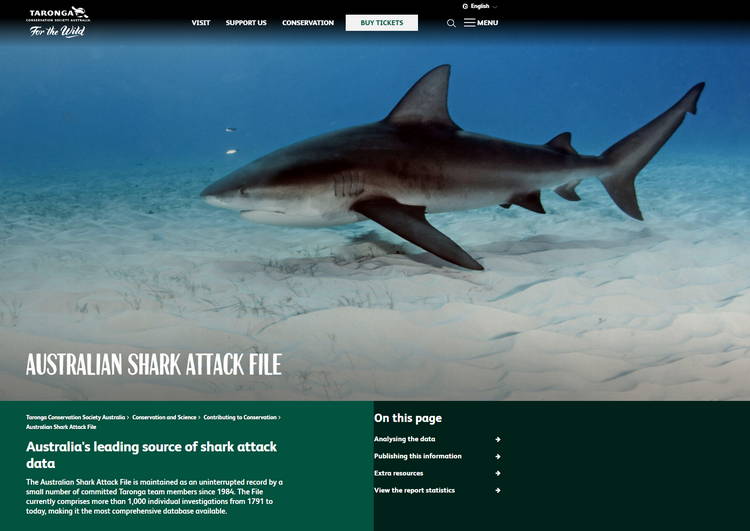
The reality however is significantly different and the Australian Shark Attack File data compiled by Sydney’s Taronga Zoo provides a much clearer picture.
Here is how they summarize the overall situation:
“Sharks often occur close to beaches when they come in looking for prey. They may be following schools of fish or looking for cooler water nearer the coast where there is likely to be more food.
Many Australians and tourists to Australia visit the beach each year.
Surf Life Saving Australia’s annual National Coastal Safety Survey found that in the last 12 months 16.3 million Australians (aged 16+) visited the coast on average 3.3 times per month suggesting there were about 600 million individual visits to the coast last year.
Over the last 10 years there were, on average, 20 shark incidents each year where people were injured. There were on average 2.8 fatalities each year and seven incidents where the person was uninjured.
In 2023 there were 4 fatal shark bites in Australia. Over the same period Surf Life Saving Australia reported 125 coastal drowning deaths and there were 1,266 fatalities on Australian roads over the same period“.
The Australian Great White – The Rules…
Australia is a generally progressive and forward looking first-world country. We do however tend to resent anything that looks, or even smells like, over-regulation… On the other hand, putting people in the water with dangerous creatures like the great white is not really something that can be left to happenstance!
First of all there is the obvious risk to the humans involved. Less obvious though is the impact on the sharks and the immediate environment where the interactions are taking place. For example, will “feeding” the sharks change their normal behaviour? And, will that behavioural change negatively impact other creatures in the general area?
The responsibility for regulating the shark cage diving operators (SCDO’s) falls to the South Australian state government. Specifically the Department of Environment, Water and Natural Resources and it’s an onerous task… There are currently two operators, who between them employ around 70 people and bring in over $11m in the state. And, it has to be said… a strong element of excitement in to South Australia – a state often considered as a bit on the dull side.
The Australian Great White – The Science
Thankfully, our first-world status means that we do have some significant expertise to draw upon.
Marine scientists like Barry Bruce of the CSIRO and Charlie Huveneers of Flinders University have conducted numerous studies, with the strong support of the SCDO’s, to better understand the impact of cage diving.
Probably the two most relevant ones are the Effects of Berleying at the Neptune Islands by Barry Bruce and Russell Bradford. Together with Interacting with Wildlife Tourism by a team led by Charlie Huveneers.
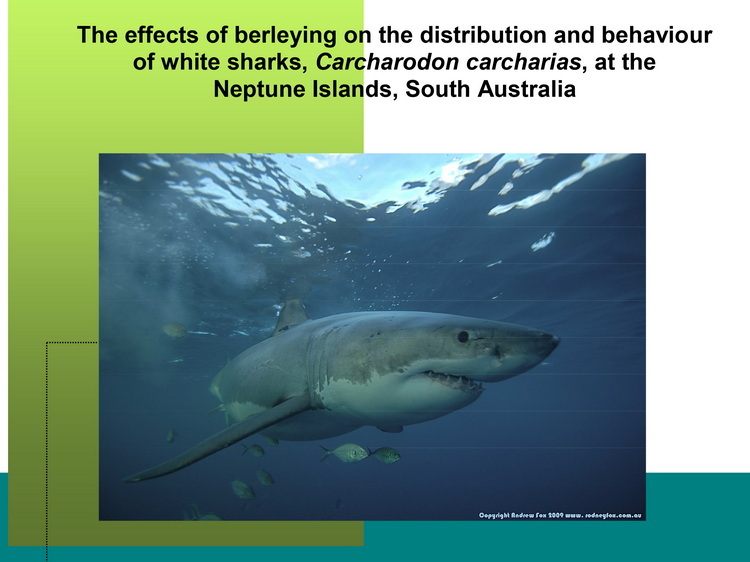
You can access those papers with the links provided. Both are (in my opinion…) very well done, but be warned, they are quite “dry reading”. The CSIRO study by Bruce and Bradford became the basis for the Licensing Policy described below. While the Huveneer paper provides valuable additional insight in the behaviour of great whites at the Neptune Islands
The Australian Great White – Licensing Policy
South Australia’s Department of Environment, Water and Natural Resources has to perform somewhat of a balancing act with great white shark cage diving.
The Neptune Islands are one of just three places in the world where in-water encounters with these animals are possible. The others are Gansbaai in South Africa and the South Island of New Zealand.
Cage diving brings in important and significant tourism revenue to Port Lincoln. Plus it provides jobs and a degree of “razzmatazz” the state badly needs. But the tabloid media has made the great white sharks feared and loathed, plus there are valid concerns about altering the great white’s natural behaviour.
The department has gone about that balancing act quite well – in my opinion… In that it has accepted the three key recommendations that came out of the CSIRO report:
- Reduce the berleying and provisioning (feeding…) efforts at the Neptune Islands
- On-going monitoring of shark behavious (such as the Huveneer study)
- Implement an education and awareness program for the industry
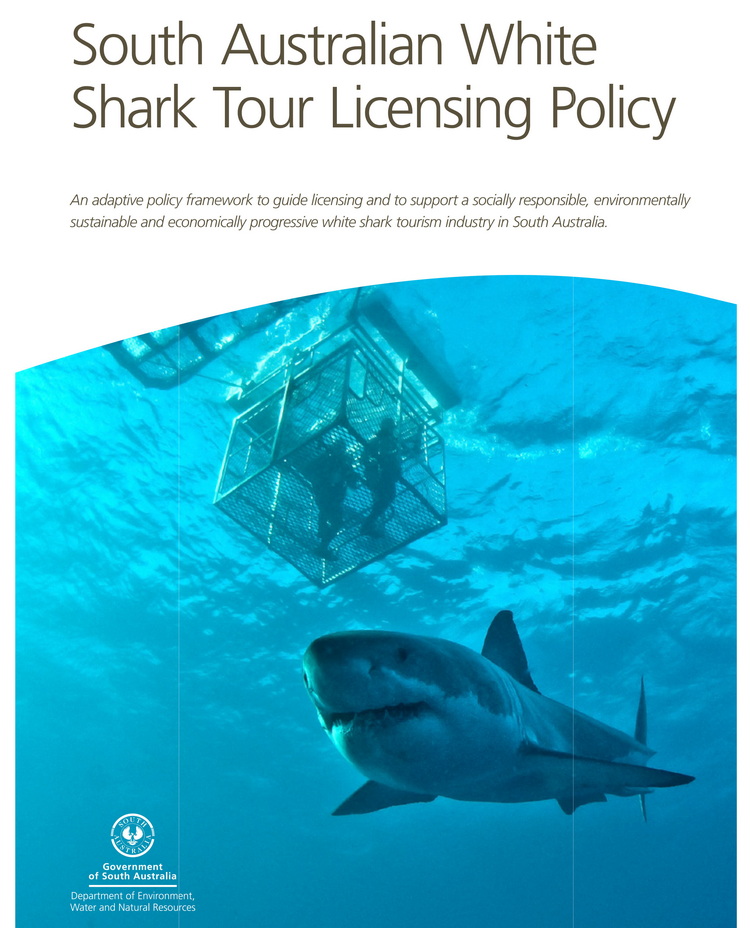
And, it appears to have worked closely with the SCDO’s to achieve that balance. All of which has come together in their South Australian White Shark Tour Licensing Policy.
In Summary
Sharks exist to keep the oceans healthy and there are over 500 species of them. All have the same basic role of removing the dead, the dumb and the dying… At the very top of that shark hierarchy is the great white. Which are superbly evolved apex predators but have been responsible for attacks on swimmers, surfers and divers. However the facts illustrate that statistically the chances of being attacked are incredibly low.
So low infact, that one study in the USA estimated that the chance of being attacked was 1 in 11.5m, and the chance of being killed by at less than 1 in 264m! Perhaps a better perspective is that each year in New York City, people bite other people 10 times more than sharks bite people worldwide…
Those extremely long odds become even longer if you factor in that the majority of those attacks were cases of mistaken identity. Great whites simply do not eat humans – we are just not nutritious enough for them to bother.
Back To: A Guide to Australian Great Whites