
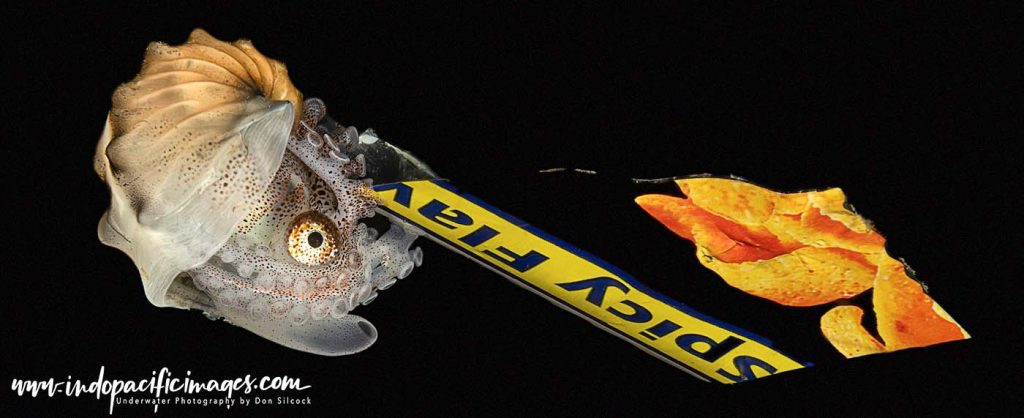
Blackwater diving in Anilao has rapidly become one of the most compelling night-time dive experiences in the Philippines.
Conducted far from any reef or seabed reference, these dives offer a rare window into the pelagic world as deep-water organisms rise toward the surface under cover of darkness.
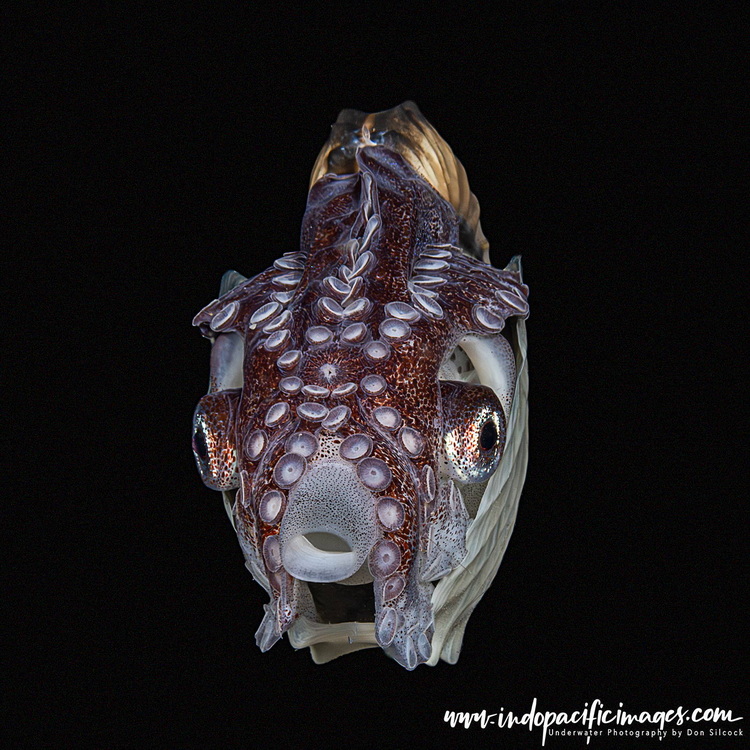
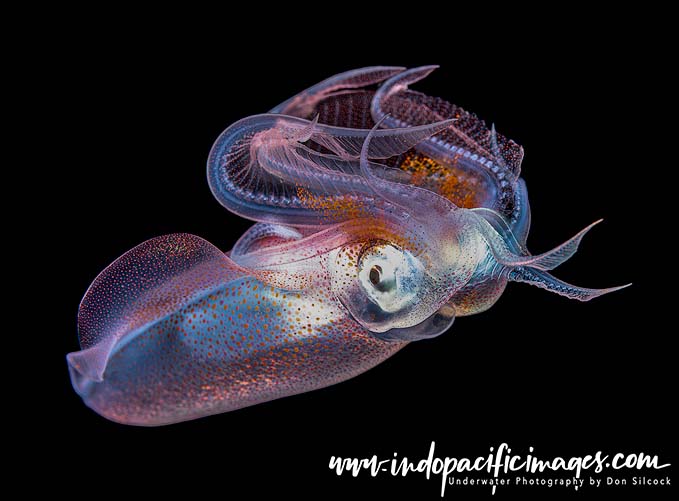
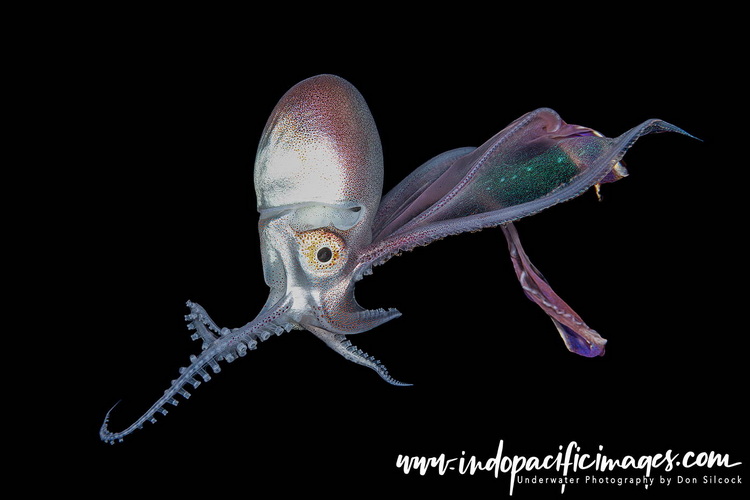
Suspended in open water above the deep waters of Balayan Bay, divers encounter an ever-changing procession of larval and juvenile marine life — creatures rarely seen, even by experienced divers.
For underwater photographers, Anilao’s blackwater dives represent a unique opportunity to document some of the ocean’s most elusive life stages.
What Is Blackwater Diving?
Blackwater diving is a specialised form of night diving conducted in open ocean, typically over very deep water.
Instead of exploring a reef or wreck, divers descend along a weighted downline and drift freely in the water column, using powerful lights to attract planktonic organisms.
These organisms are part of the diel vertical migration, the largest daily movement of biomass on the planet.
Each night, countless pelagic creatures ascend from the depths to feed near the surface, before retreating again before dawn.
First described in the 19th century by French naturalist Georges Cuvier, it’s no small phenomenon. In terms of biomass, it’s considered the largest synchronous migration on Earth, and it happens every night in every ocean. During World War II, the U.S. Navy even detected the dense layer of migrating organisms on sonar and initially mistook it for enemy submarines. This layer became known as the deep scattering layer and is the signature of the DVM.
Nature’s Carbon Pump
Fueling this entire cycle is phytoplankton, the “plants” of the plankton world. These microscopic organisms thrive near the surface, using sunlight to photosynthesise – converting carbon dioxide into glucose and oxygen.
Collectively, phytoplankton absorb as much carbon dioxide and release as much oxygen as all the plants and trees on land combined.
When zooplankton consume phytoplankton, they also ingest that absorbed carbon. Each morning, as they return to deeper water, they release waste that helps lock carbon away on the ocean floor – a crucial process scientists describe as nature’s carbon pump. This incredible system of life and recycling is the unseen engine that powers blackwater diving’s nightly spectacle.
Why Anilao Is Exceptional
Anilao’s reputation as a macro diving hotspot is well established, but its suitability for blackwater diving is less widely understood — and arguably just as impressive.
Located on the edge of Balayan Bay, Anilao benefits from immediate access to deep offshore water, strong nutrient flow, and proximity to the Verde Island Passage, one of the most biologically productive marine corridors in the world. These factors combine to deliver:
- High plankton density
- Consistent pelagic larval diversity
- Calm, protected surface conditions
- Short boat rides to deep water
Unlike many blackwater destinations that require long offshore transits, Anilao allows operators to reach suitable sites quickly and reliably — making blackwater diving a practical and repeatable experience rather than a rare bonus dive.
What Will You See in Anilao?
Every blackwater dive is unpredictable, but Anilao consistently delivers an extraordinary range of subjects.
Typical encounters can include:
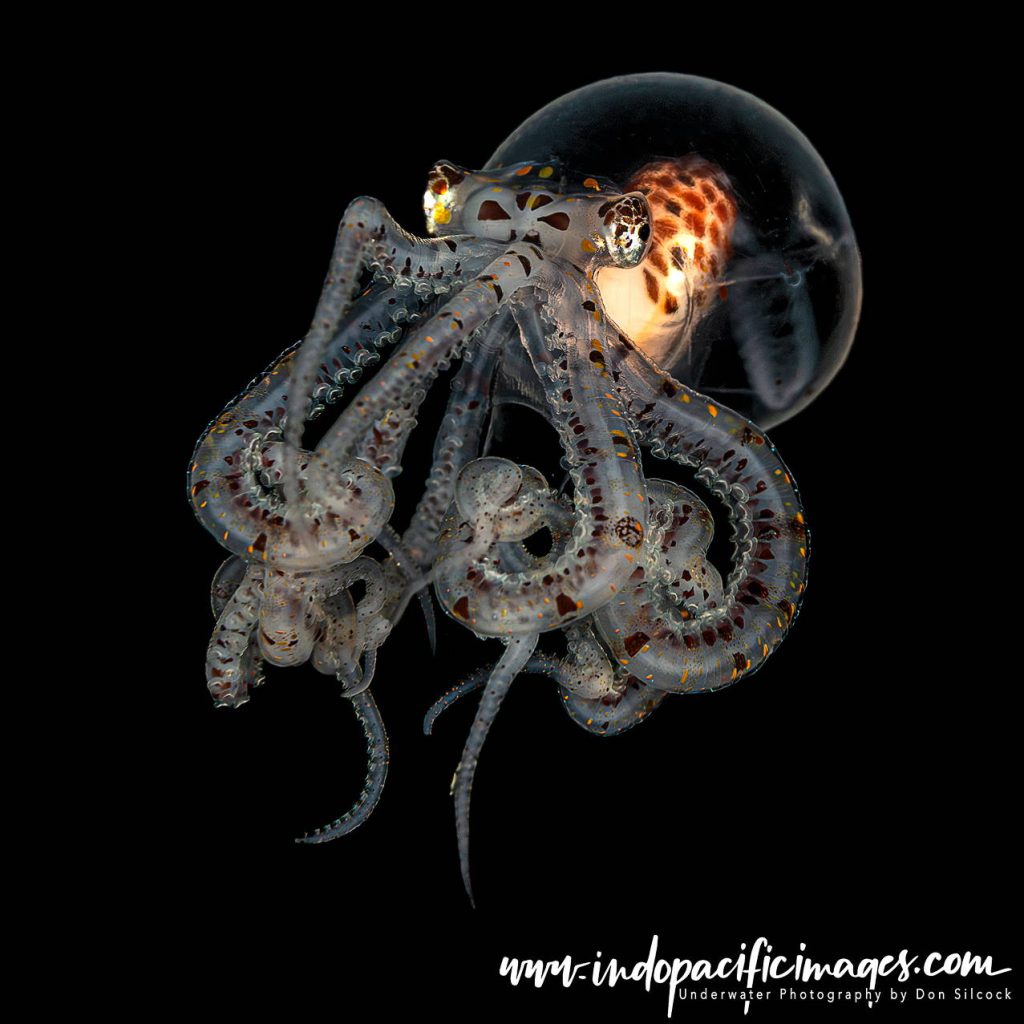
- Larval and juvenile squids and octopus
- Paper-thin larval fish in translucent forms
- Pelagic nudibranchs drifting in mid-water
- Comb jellies and siphonophores
- Crustacean larvae with exaggerated eyes and appendages
- Salps and other gelatinous zooplankton
Many of these organisms exist only briefly in these larval forms, making blackwater diving one of the few ways to observe, and photograph them, alive. For underwater photographers, these encounters are not about rarity alone, but about revealing life stages almost never seen by human eyes.
Best Time to go for Blackwater Diving in Anilao?
Blackwater diving in Anilao is possible year-round, but conditions are usually at their best during the main diving season from October to June, when seas are calmer and visibility is more predictable. While blackwater dives can be successful at any moon phase, many operators prefer darker nights around the new moon, when ambient light is minimal and planktonic organisms are more strongly attracted to dive lights.
Calm surface conditions and minimal current are more important than moon phase alone, and experienced local operators monitor these factors closely.
Blackwater Diving Articles
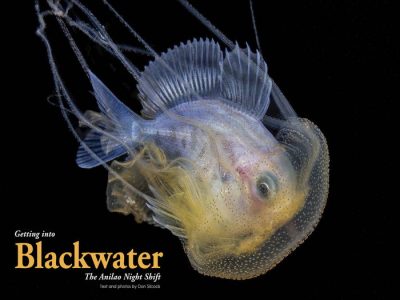
Blackwater Diving – The Anilao Night Shift
Getting into Blackwater Diving… For many, blackwater diving sits just beyond the edge of familiarity — intriguing, somewhat intimidating, and quite unlike anything experienced in “normal” diving. These strange forms, illuminated by light against the infinite blackness of open ocean, seem otherworldly – …
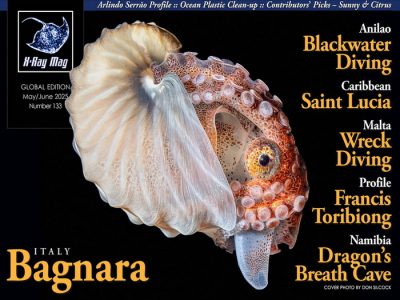
Anilao Blackwater Diving – Season II
Anilao blackwater diving… It really is an unusual way to spend an evening — less of a night dive and more of a nocturnal sojourn into another world. This is Anilao blackwater diving, where you descend into the dark waters of Balayan Bay to witness creatures few divers ever see. Beneath you lies deep water. …