
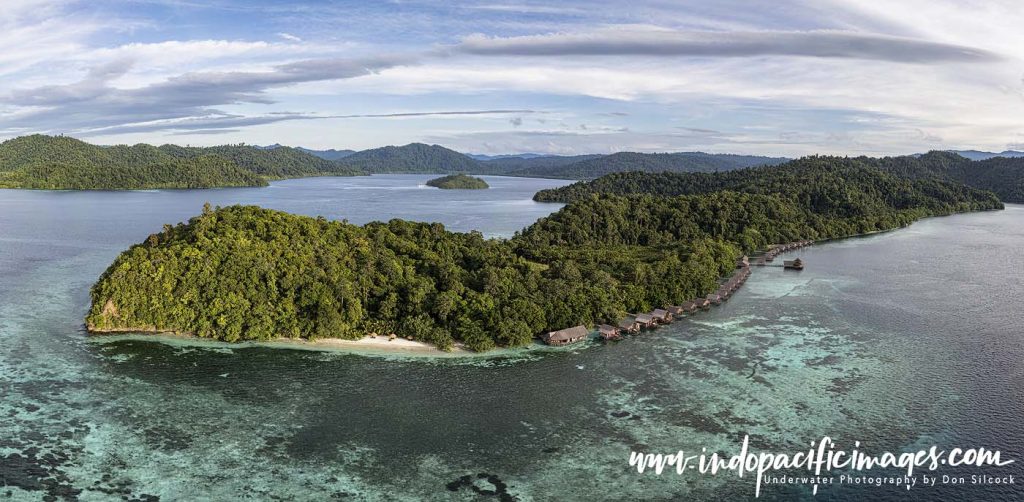
Diving Batanta Island… Lying in the northeastern reaches of the vast Indonesian archipelago, the Dampier Strait – named after the English explorer William Dampier – is widely regarded as the epicenter of Raja Ampat.
Renowned for its extraordinary biodiversity, dive sites such as Cape Kri, Chicken Reef, Sardine Reef and the village reef at Sauwandarek have become truly iconic and almost household names within the global diving community.
There are, broadly speaking, two ways to experience Raja Ampat – by liveaboard or from a land-based resort. Each has its own advantages. Liveaboards offer range and flexibility, allowing divers to visit a wide variety of sites, while land-based operations focus on those within reach of their day boats.
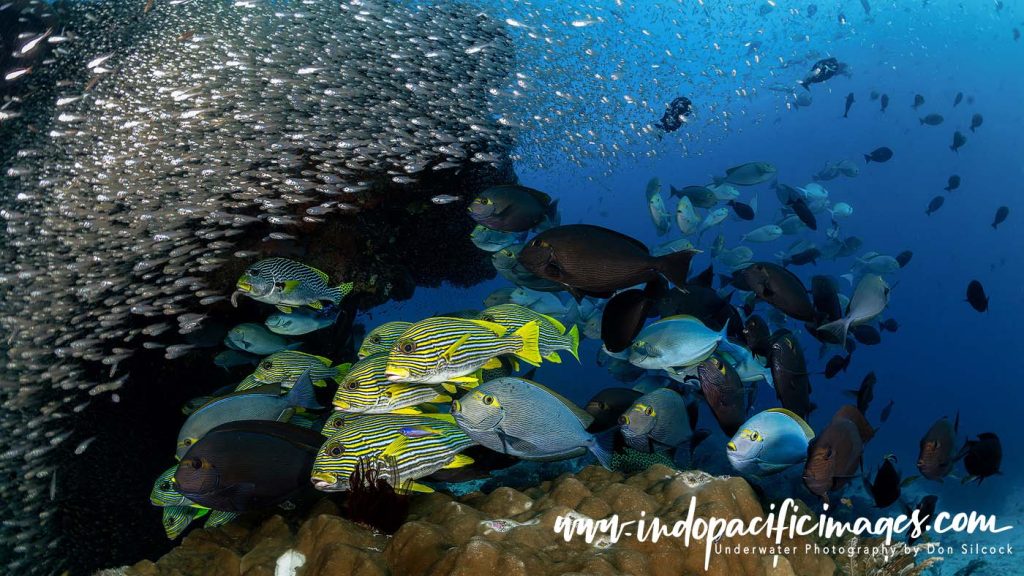
A useful way to think about the difference is that liveaboards tend to cover many sites, but often without deep familiarity. Land-based operators, by contrast, return to the same locations’ day after day, building an intimate knowledge of their rhythms, conditions, and marine life.
Yet despite these differences, most operations – whether floating or shore-based – share a common focus on the celebrated sites on the northern side of the strait. And as exceptional as those sites are, it raises an obvious question: what lies beyond the well-known?
Nature’s Supply Chain
The answer to that question begins with the Indonesian Throughflow.
This immense movement of water – the largest of its kind on Earth – is driven by the complex interplay of planetary rotation, equatorial currents, and the labyrinth of more than 17,000 islands that make up the Indonesian archipelago.
Which, in simple terms, creates a difference in sea level between the north-western Pacific Ocean and the south-eastern Indian Ocean. Resulting in a vast and continuous flow of water through Indonesia, drawing up cold, nutrient-rich water from the deep basins and trenches of the archipelago. Fuelling marine productivity on an extraordinary scale.
Trace the path of this Throughflow and you will find Indonesia’s most vibrant marine ecosystems – and one of the very first places it surges through is the Dampier Strait.
Understanding the Dampier Strait
Like all powerful natural systems, the Throughflow does not distribute its energy evenly. In the Dampier Strait, underwater topography determines where the true biological “hotspots” occur.
Bounded in the north by the large islands of Waigeo and Gam. And to the south by Batanta Island and the mainland of West Papua, the strait stretches for around 90 km and is about 45km wide in the east, narrowing to just 20km at its western exit.
Beneath its often-calm surface lies a complex underwater landscape. At its eastern entrance, the seabed drops away to depths approaching 5,000m. Moving westward, those depths rise to around 500m before rapidly shallowing further to approximately 100m – creating a powerful venturi effect.
It is here that the flow begins to divide.
The largest volume is directed north, where the nutrient-rich waters fuel those iconic reefs around Kri and Mansuar Islands. But a significant – and often overlooked – portion of that same flow is deflected south, towards the island of Batanta.
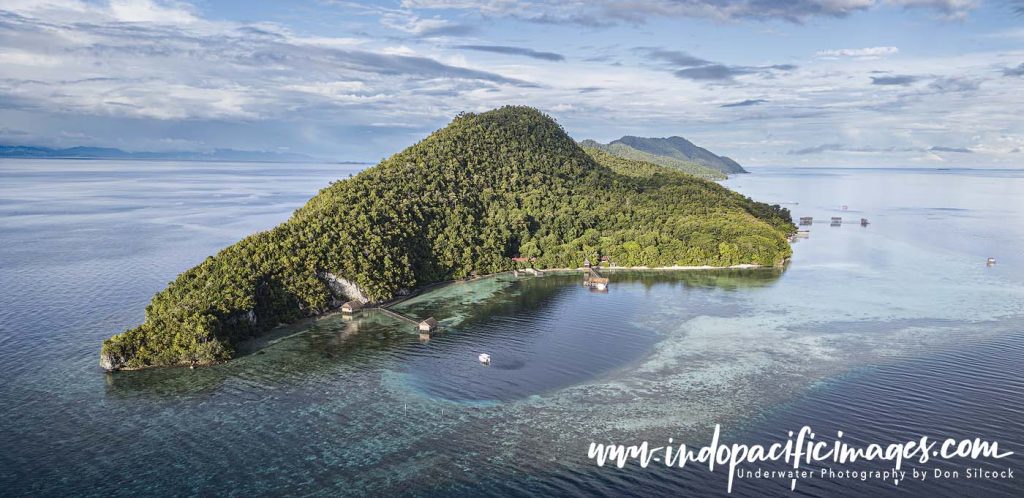
Diving Batanta Island – Raja Ampat’s The Secret Place…
It is that southern flow that defines the diving along the north coast of Batanta. And it manifests itself in two distinct ways.
The first lies offshore. Where, as the current flow passes over the 100m depth contour, the seabed rises rapidly to around 40–50m. Where it meets a series of reefs and sandbanks around Pulau Wai, and further west, the seamounts and reefs of Pulau Tapok.
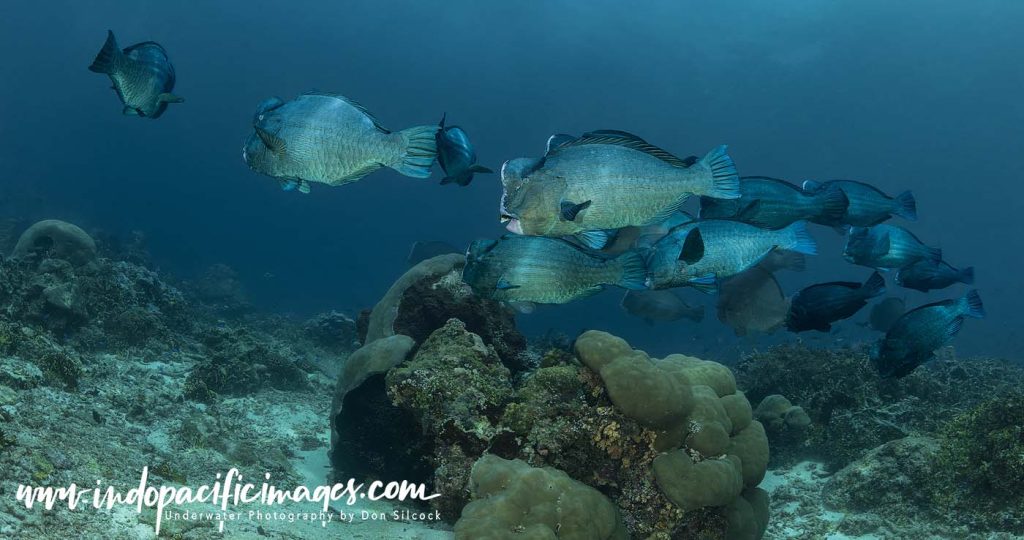
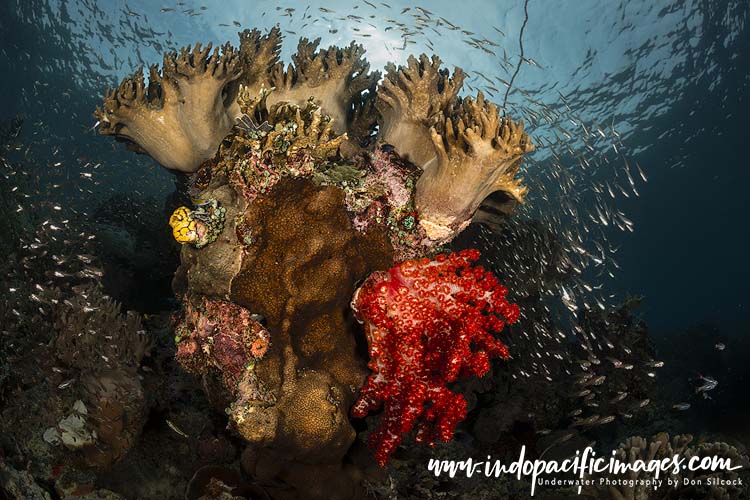
That nutrient-rich water is forced upward across structure, fueling reefs that, while less celebrated than those of the northern strait, are no less vibrant. Fish life is abundant, currents can be lively, and the sense of energy in the water is unmistakable.
The key difference is not quality, but exclusivity. As these sites are rarely visited, and it is entirely possible to have them to yourself.
The second expression of this system lies along Batanta’s deeply indented north coast. Here, a series of small bays, headlands, and streams carve into the island’s steep, and densely forested interior.
Periodic rainfall washes organic material down from the mountainous hinterland, delivering a constant supply of nutrients into the sea. As the Throughflow-driven currents are pushed inshore, they mix with this coastal input and create a rich and highly productive environment.
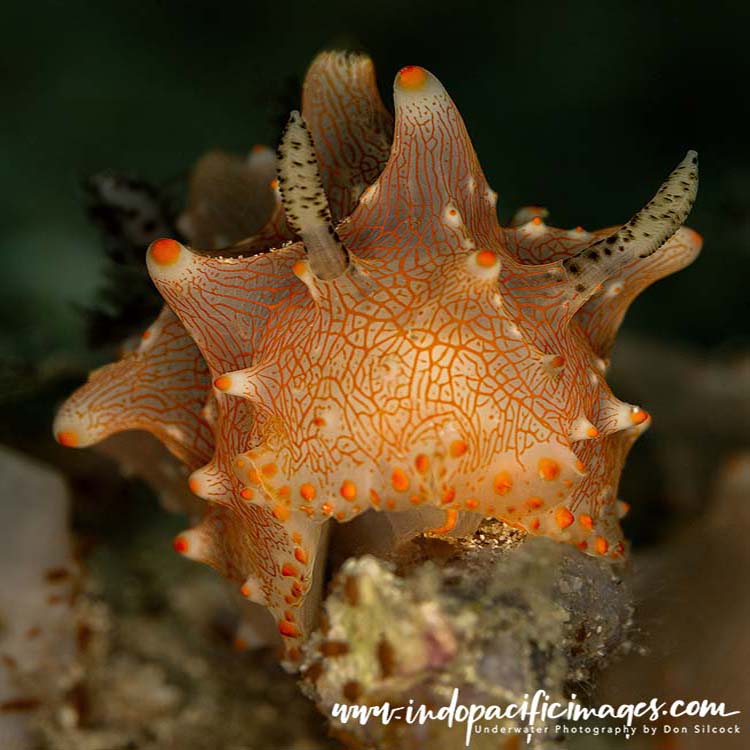
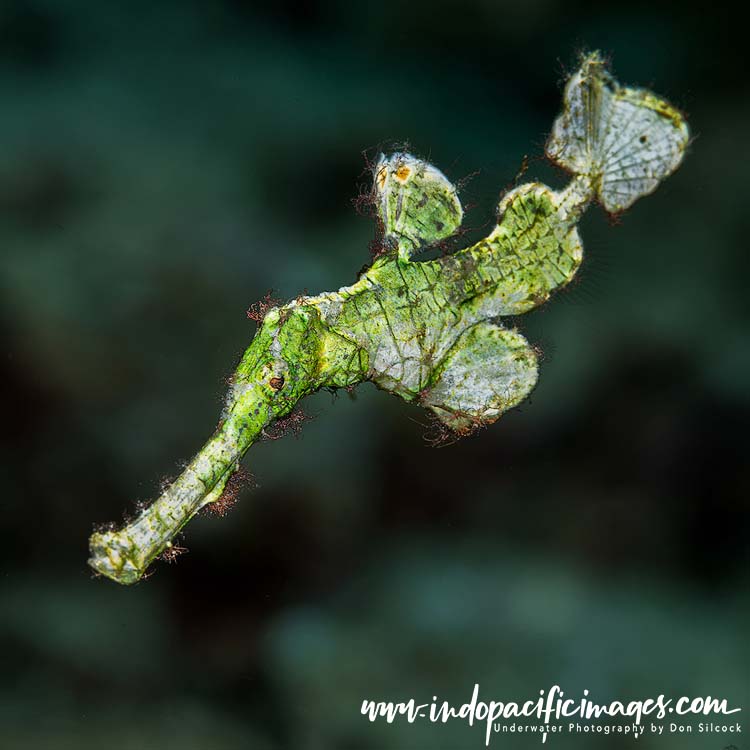
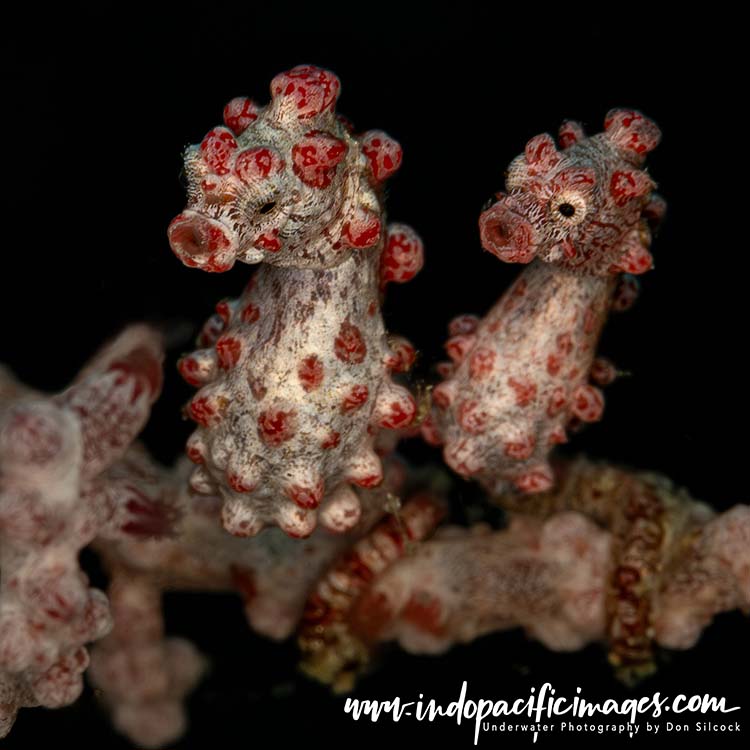
The seabed reflects this. Reefs give way to darker substrates – sand, rubble, and detritus – while visibility becomes more muted. But within this seemingly subdued landscape lies an extraordinary density of life.
This is classic Indonesian “critter” territory. Comparable in character to renowned locations such as the Lembeh Strait, Ambon, and the north coast of Bali.
Offshore – Mantas, Reefs, Seamounts, and Aircraft Wrecks
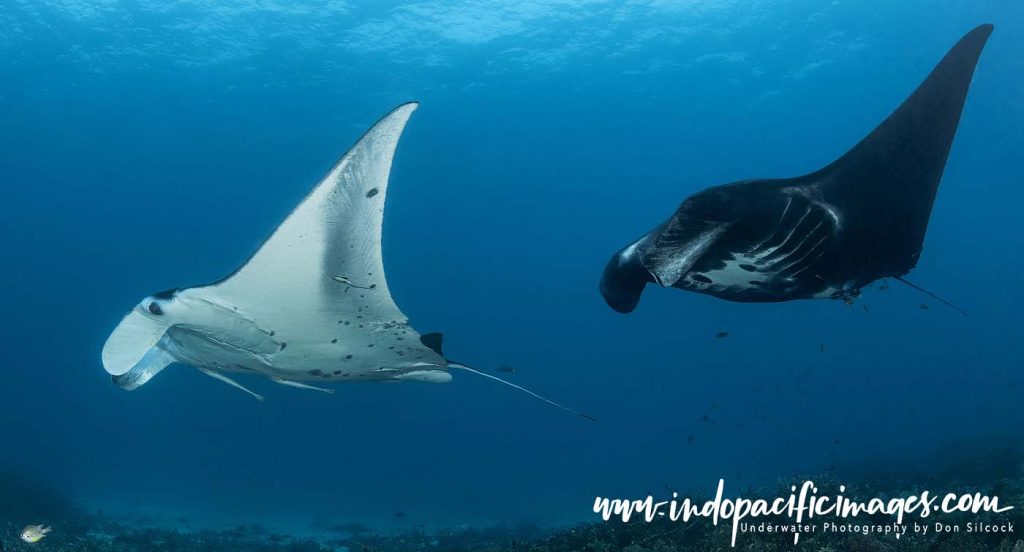
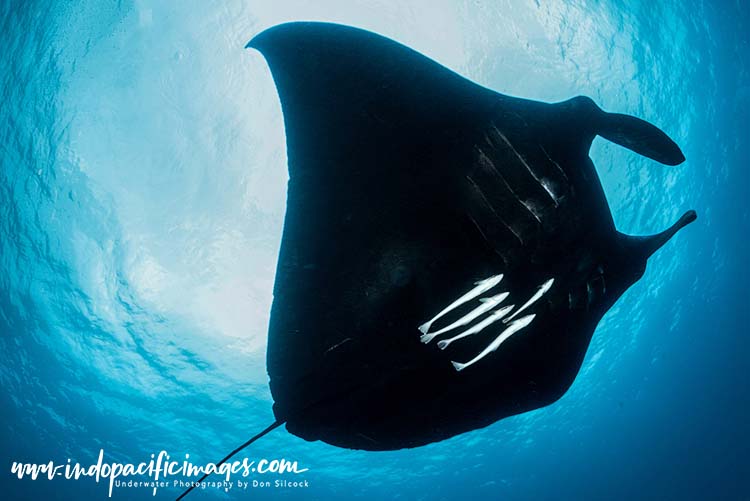
There is much to see in this offshore system, but the highlight for many is the presence of manta rays. Reef and oceanic mantas frequent cleaning stations near Pulau Wai, circling patiently above bommies as cleaner fish go to work.
During my own dives there, mantas were consistently present. Sometimes arriving moments after descent – offering encounters that felt both intimate and unhurried.
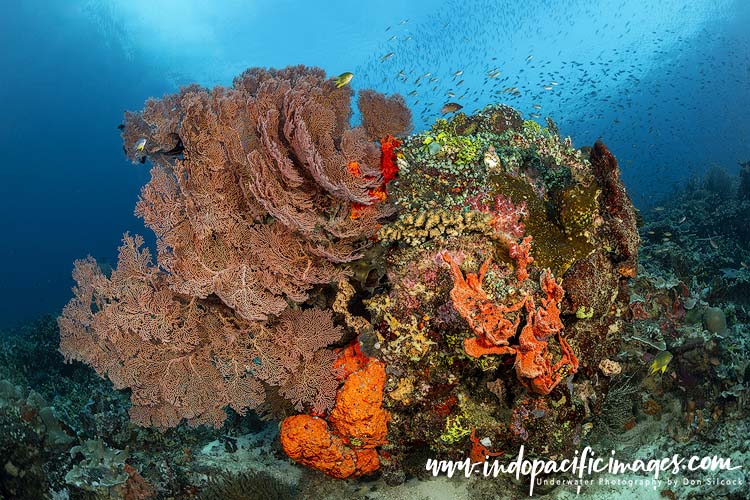
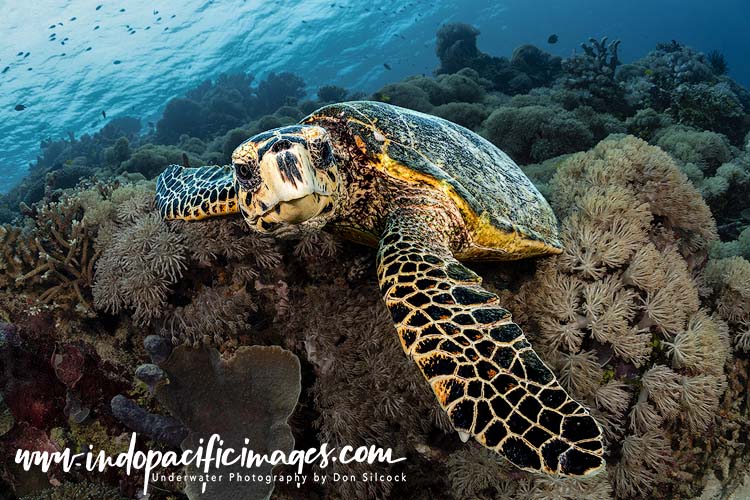
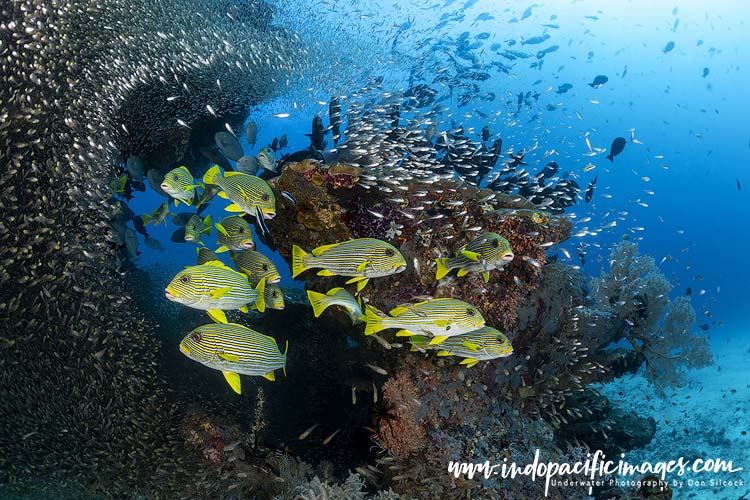
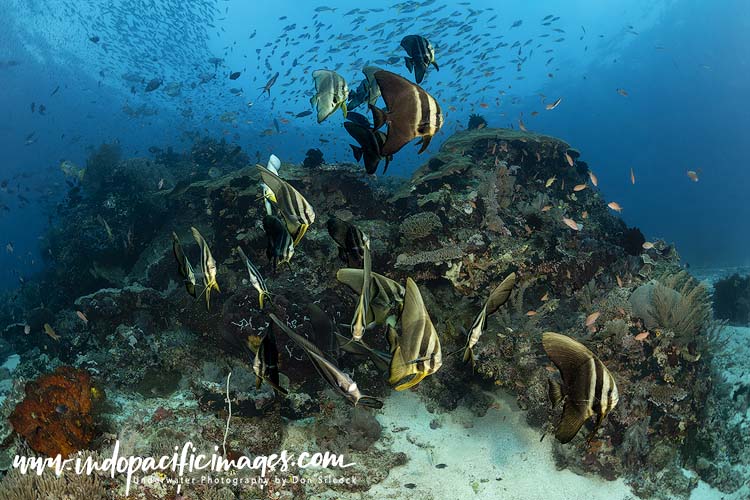
Some of the reefs and seamounts are spectacular, with healthy coral growth and dense fish life. One site in particular lived up to its name, Fish Heaven, with so much activity it was difficult to know where to focus.
Then there are the Royal Australian Air Force P47-D Razorback wreck(s) on the southern tip of Pulau Wai… Ditched after almost running out of fuel at the end of a bombing mission during WWII, the one most commonly dived is on the reef slope in about 30m.
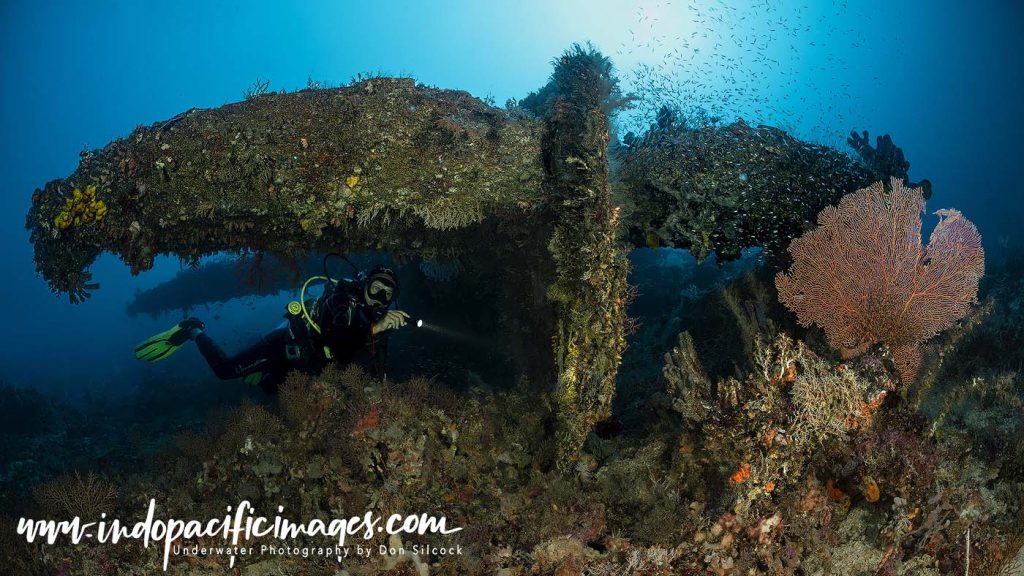
The second is close by, but at 36m, and is rarely visited because of its depth. Both are upside down, largely complete and in remarkably good condition despite eight decades underwater.
Diving Batanta Island – Wide Angle Gallery
Inshore – Atmospheric Muck…
Muck diving is often described as diving where there is no pretty scenery. Which (almost…) describes the diving on the inshore areas of Batanta perfectly!
The small bays, narrow inlets, and headlands of northern Batanta are impressive when viewed from afar. And incredibly so when navigating through them to one of the many inshore dive sites.
Seen from that perspective, the north coast of Batanta Island feels raw and almost untouched. As there are few local settlements and the dense tropical rainforest seems forbidding and impenetrable.
Dived on an incoming tide the inshore sites can seem bright and colorful. But when the tide retreats if brings with it those organic nutrients and the water is dark and filled with particles.
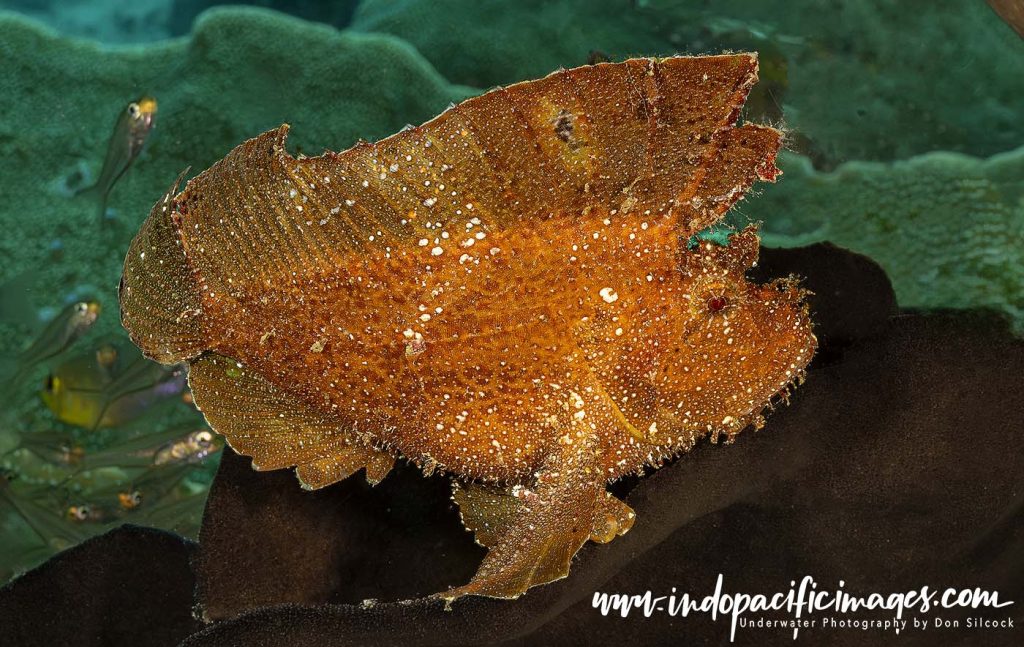
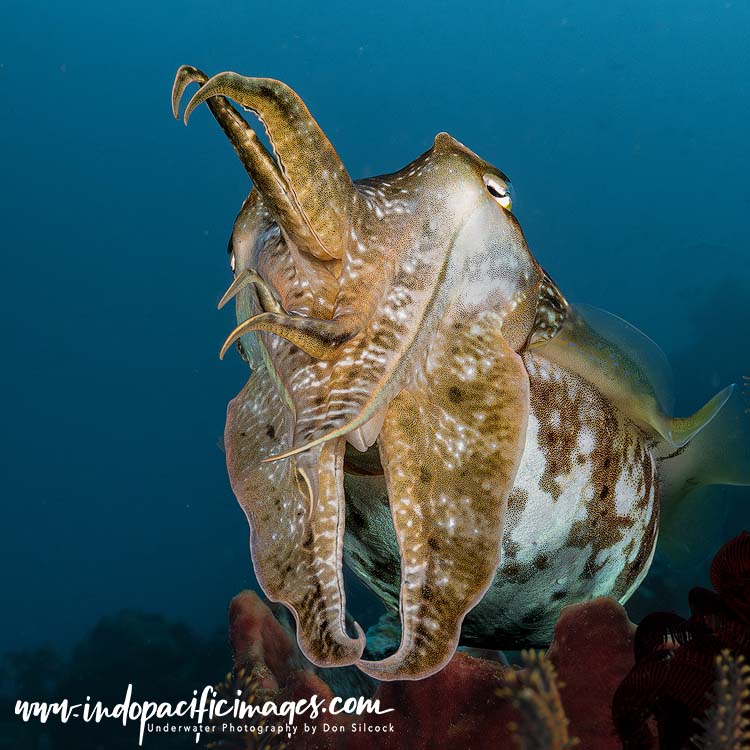
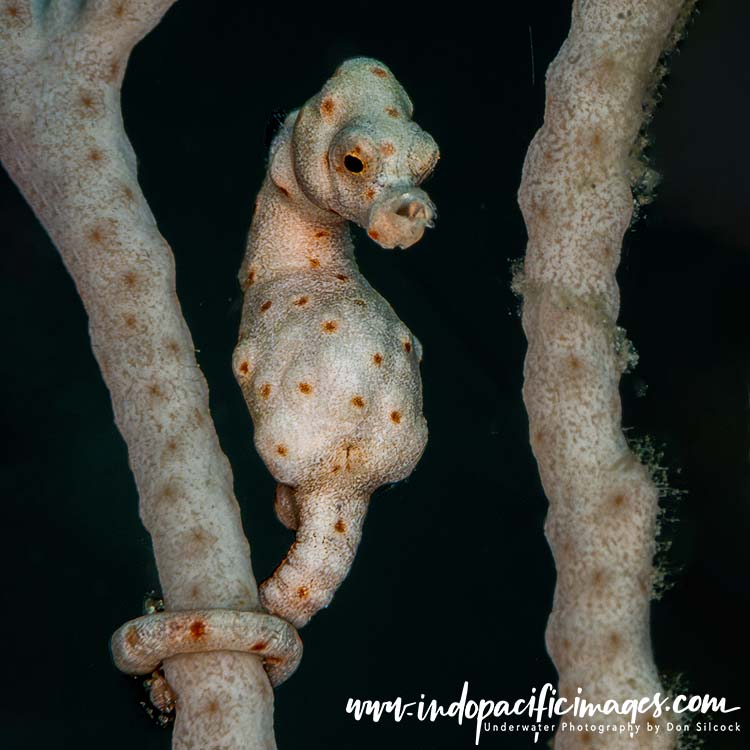
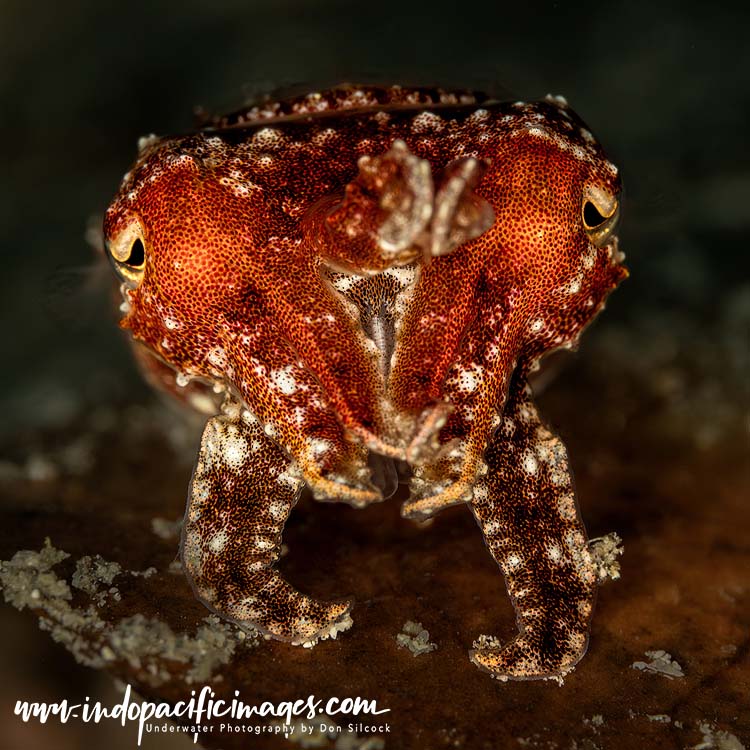
But scenic wide-angle photography is not why you dive there. It’s the multitude of critters you can find there that is the main attraction.
Your guide is the key to success and mine, Welson from Manado, was incredibly skilled at finding everything from photogenic pygmy seahorses to colorful candy crabs!
Diving Batanta Island – Critters
Diving Batanta Island – How to?
Like the rest of the Dampier Strait, diving Batanta island is possible either by liveaboard or from a land-based resort.
While some liveaboards include Batanta in their itineraries, time in the area is usually limited. For a more immersive experience, a land-based stay offers better access to both offshore and inshore sites.
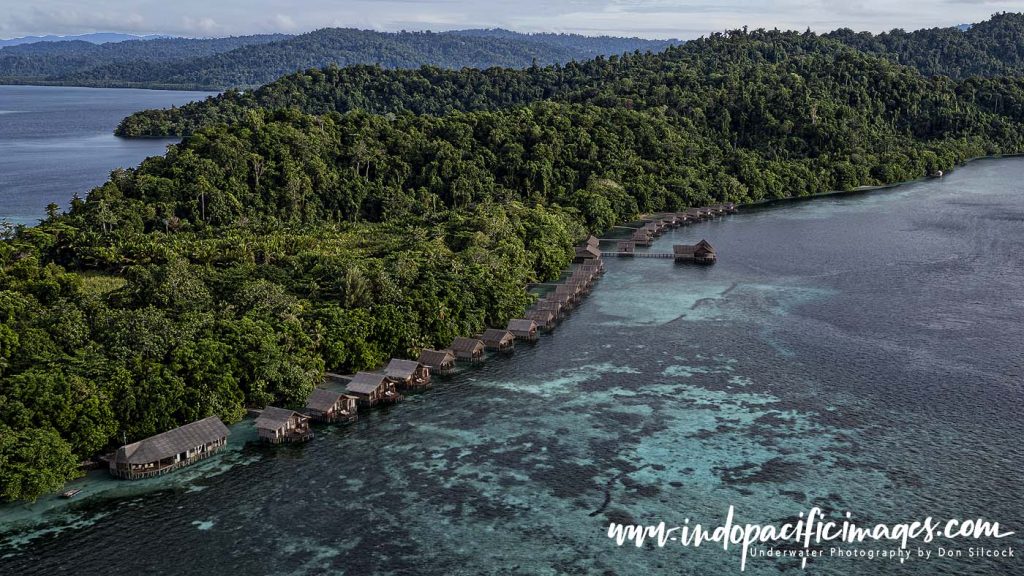
Options are limited, with Papua Paradise Eco Resort being one of the very few fully established operators in the area. Located on Birie Island, the resort provides access to Batanta’s southern dive sites. While still offering excursions to the northern reefs.
With a strong focus on conservation and community engagement, it provides a well-positioned base for exploring this lesser-known side of Raja Ampat.
Diving Batanta Island – Summary
I first dived the Dampier Strait more than 20 years ago, when only a handful of operations explored its waters.
Today, during the main season from November through March, dozens of liveaboards operate alongside an increasing number of land-based resorts and homestays. Resulting in ever growing pressure on the iconic northern sites.
Diving Batanta island offers a compelling alternative and what lies to the south is not simply different – it is essential. Healthy reefs, productive seamounts, reliable manta encounters, and excellent critter diving combine to create a balanced and richly rewarding experience.
Batanta is not the Raja Ampat of postcards and perfect visibility. It is something more fundamental.
It is where the energy of the Indonesian Throughflow is transformed into life. Where nutrients become biomass, and where the foundations of the region’s extraordinary biodiversity are laid down.
For those willing to look beyond the well-known, Batanta does not just offer different diving… It offers a deeper understanding of what makes Raja Ampat so exceptional.