
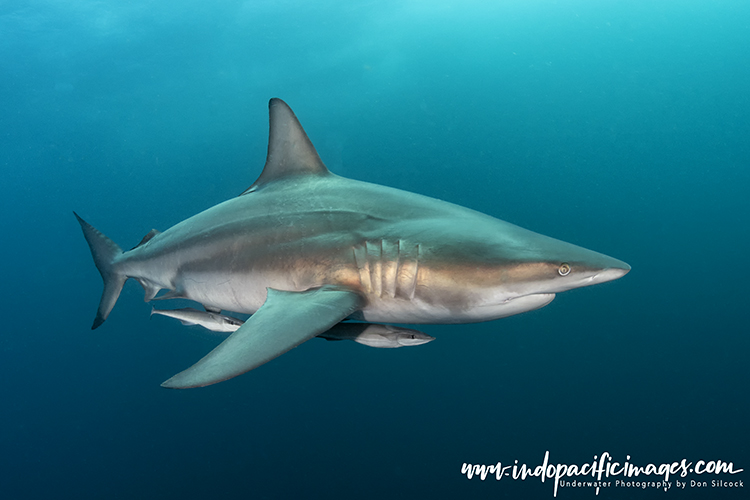
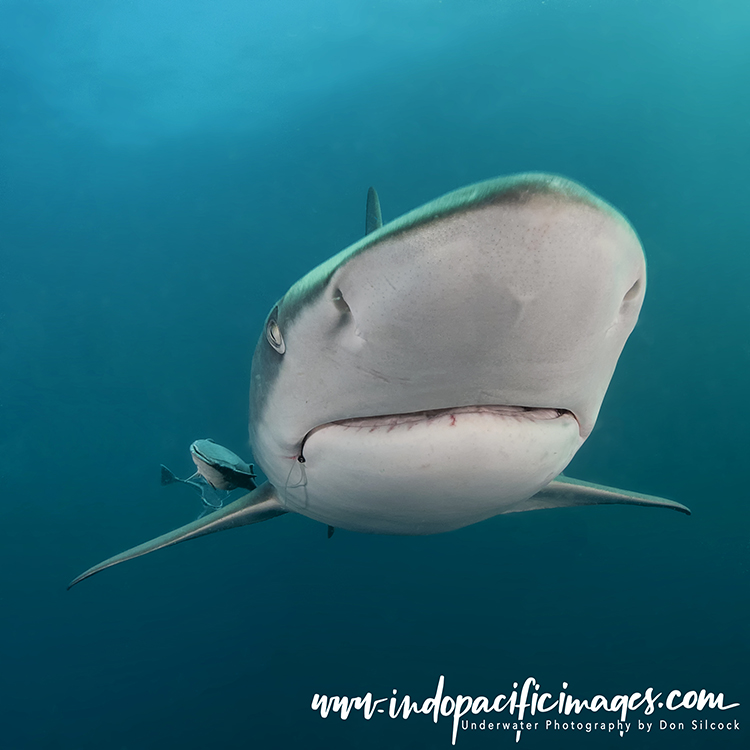
Oceanic Blacktip sharks (Carcharhinus limbatus) are the signature sharks of Protea Banks, and encounters with them are one of the defining experiences of diving this remarkable offshore reef system.
They are sleek, powerful and highly recognisable, with their dark-tipped fins and distinctive bronze-grey colouring. At Protea Banks, they are frequently encountered in open water, cruising around the reef or appearing during ascents and safety stops.
For many divers, however, it is the baited shark dives that provide the most memorable encounters. Once the bait box is deployed, these normally wary sharks can become considerably more confident, circling the divers at close range as they investigate the source of the food.
Oceanic Blacktip Sharks Vs The Reef Variety…
The name can cause some confusion because the Oceanic Blacktip is a completely different species from the much smaller Blacktip Reef shark (Carcharhinus melanopterus).
Which, as their resepective names suggests, the reef variety are found on and around coral reefs – typically in warmer waters.
While the “Oceanic” version gets it name from the fact that it spends most of its time in more open water.
Although not a true pelagic shark like the Oceanic Whitetip. Oceanic Blacktips spend a great deal of time hunting in the waters in around the Protea Banks.
Often appearing both during ascents to the surface and at the safety stop.
The two species can look superficially similar, particularly because both have conspicuous dark markings on their fins.
But their body shape, size, habitat and behaviour are quite different.
At the Protea Banks, it is Carcharhinus limbatus that provides the characteristic blacktip shark encounters.
Oceanic Blacktip Sharks – Are They Dangerous?
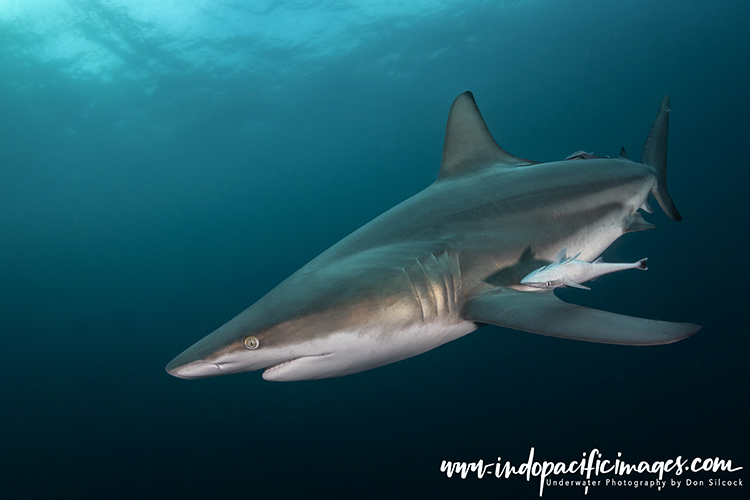
Oceanic Blacktips are stout bodied, medium sized sharks that grow to about 2.5m in length. They have a distinctive bronze-grey to grey-brown coloration along the upper body, contrasting with a much lighter underside. A pale band along the flanks is particularly noticeable and helps give the species its characteristic appearance. Which, together with their tall dorsal fin and pointed snout makes them easy to identify…
They typically feed on smaller sharks, rays, cuttlefish, lobster and bottom fish. In contrast though, they are also notorious for stealing fishermen’s catch. And are not exactly popular among the fishing community of Margate…
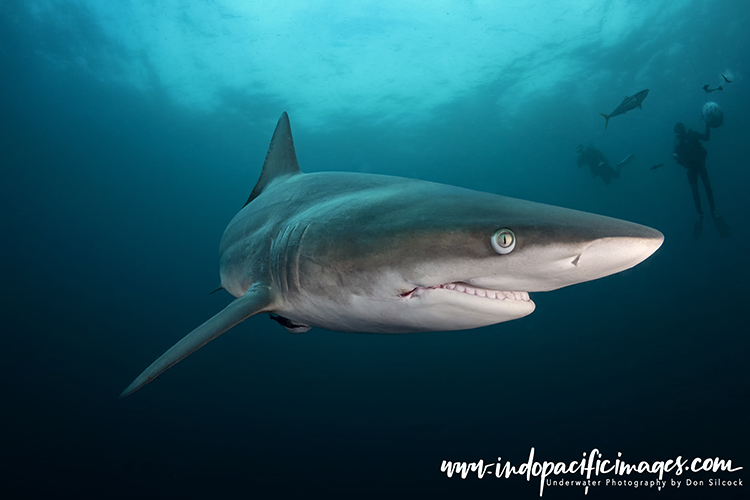
Oceanic Blacktip sharks generally show very little aggression and appear to be quite wary of divers. They are however easily enticed in by baiting. And are the main attraction for the regular baited dives on the Protea Banks. In the presence of food, they are much less cautious and can become quite “sporty” around the bait box.
Oceanic Blacktip Sharks – Hook Damage…
The Protea Banks are not a fully protected marine sanctuary, and a lot of fishing takes place in the area.
Oceanic Blacktip sharks are notorious for taking hooked fish from fishermen’s lines, which inevitably brings them into conflict with the fishing community.
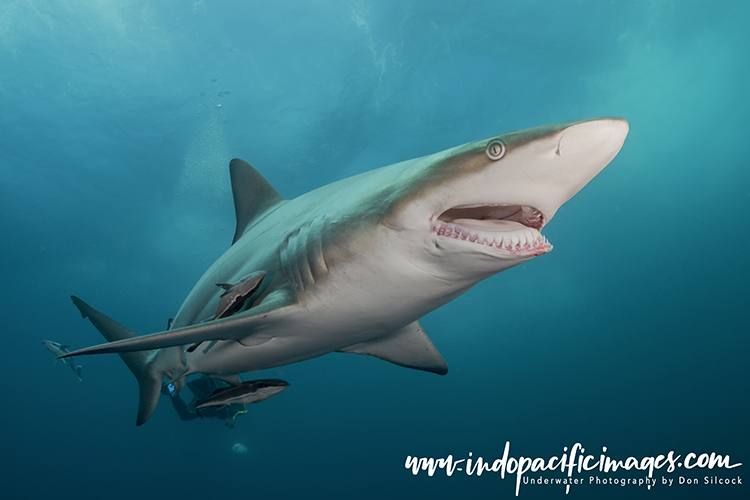
The consequences are sometimes visible when the sharks appear on baited dives.
Many blacktips have hooks lodged in or around their mouths, while some carry much more serious injuries. Seeing a powerful, otherwise healthy shark with fishing gear embedded in its mouth is deeply disturbing.
The problem is particularly frustrating because these are animals that are simply doing what they have evolved to do — taking advantage of an available food source.
For divers, the sight of hooks and injuries provides a sobering reminder that the sharks we encounter in the blue are living in an environment increasingly affected by human activity.
Back To: Diving the Protea Banks