Introduction
Tubbataha Reefs Natural Park… Rising from the deep waters of the Sulu Sea, Tubbataha’s atolls and reefs are widely regarded as one of the finest and most pristine dive destinations on the planet.
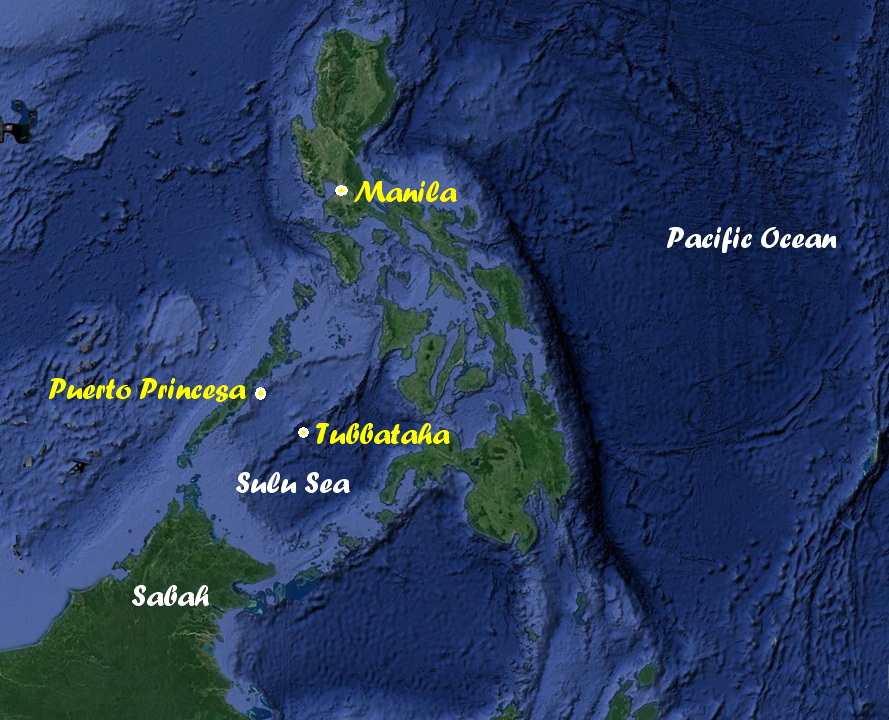
Located roughly 150 kilometres southeast of Puerto Princesa in Palawan, this remote marine sanctuary lies at the very heart of the Coral Triangle, the global epicentre of marine biodiversity.
Declared a UNESCO World Heritage Site, Tubbataha is protected by strict no-take regulations and can only be visited for a short seasonal window each year.
For divers fortunate enough to reach it, the reward is truly exceptional: sheer coral walls plunging into blue water, dense fish biomass, regular pelagic encounters, and reefs that remain largely untouched by human impact.
Can You Spell That Again?
Pronounced “Toobahtaaha” – the name means “long reef exposed at low tide” in Sinama – the language of the nomadic Sama-Bajau sea gypsies of the southern Philippines, who are believed to have been the people who first discovered the atolls and reefs of Tubbataha.
Exactly when they made that discovery is not known, but one can imagine their joy to find such a rich and reliable source of food!
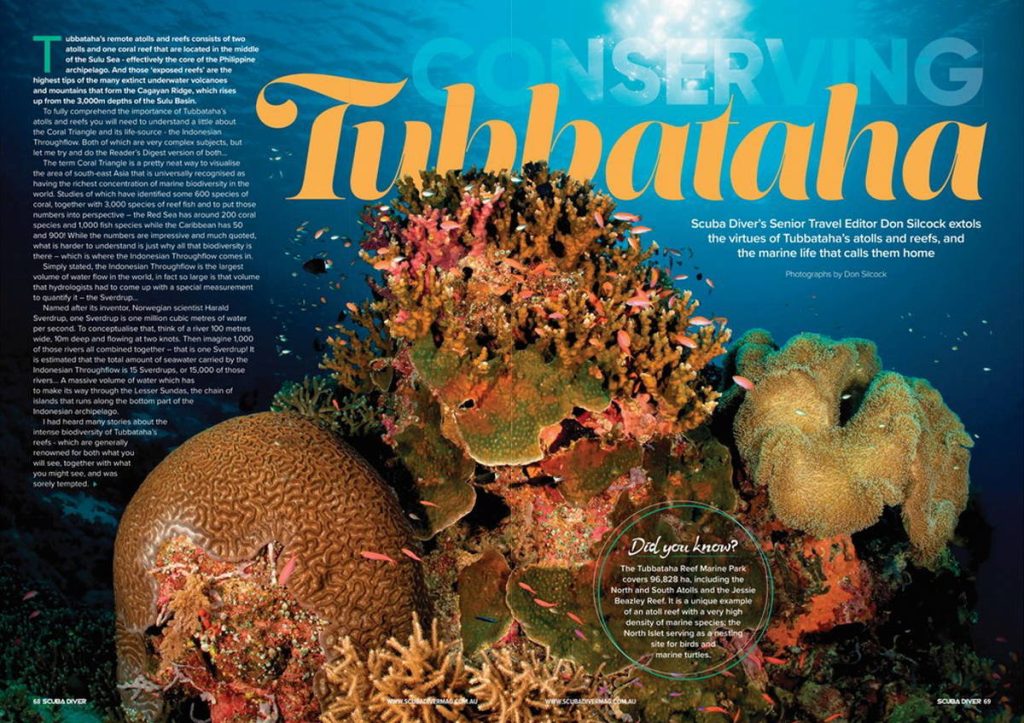
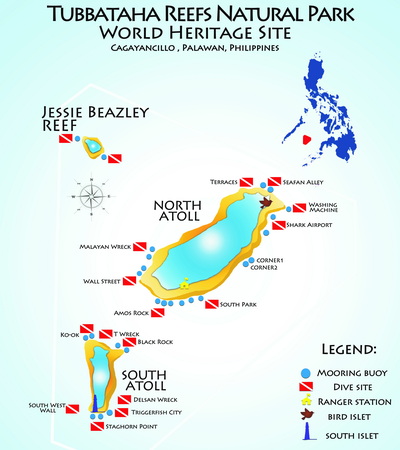
Physically the Tubbataha Reefs National Park consists of two atolls and one coral reef, which are located in the middle of the Sulu Sea. Effectively the core of the Philippine archipelago.
And those “exposed reefs” are the highest tips of the many extinct underwater volcanoes and mountains that form the Cagayan Ridge, which rises up from the depths and divides the Sulu Sea into two basins. The 2000 m deep northwest basin and the 5000 m deep southeast basin
The two atolls are (rather prosaically…) named the north and south atolls, while the reef is named after a long forgotten English mariner named Jessie Beazley
What is so Special About Tubbataha Reefs Natural Park?
What sets Tubbataha apart is not just biodiversity, but ecological balance. Predator-prey relationships remain intact, coral cover is high, and fish populations exist in natural densities rarely seen elsewhere in Southeast Asia.
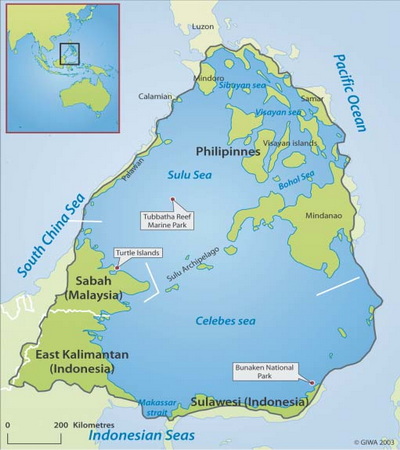
It starts with the Sulu Sea, the huge body of water, bounded on three sides by the Philippine archipelago, and to the south by the Malaysian province of Sabah.
Marine biologists classify the Sulu Sea as a Large Marine Ecosystem (LME), because its extremely rich marine biodiversity.
Key highlights of the Tubbataha Reefs Natural Park include:
- Over 360 species of coral
- More than 600 recorded fish species
- A complete reef system from shallow coral gardens to vertical walls exceeding 100 metres
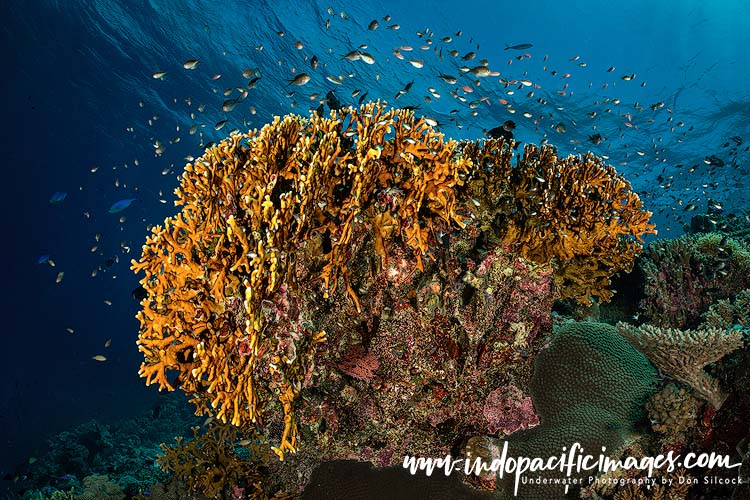
- Critical habitat for sharks, turtles, rays, seabirds, and pelagic fish
This ecological integrity is the primary reason Tubbataha was nominated as a UNESCO World Heritage Site and continues to be a benchmark for marine conservation worldwide.
Tubbataha Reefs Natural Park – The 1980’s…
Tubbataha is some 150km from the nearest landfall on the large, narrow island of Palawan. Which, up to the 1980’s, meant that is was well beyond the range of traditional fishing boats. Plus with no fresh-water available, permanent habitation was impossible.
So, the isolated atolls evolved into almost a marine version of the Garden of Eden with only natural predation occurring. Then in the early 1980’s first motorized fishing boats arrived… Driven from the more accessible fishing grounds in the Sulu Sea by over-fishing and the dramatic depletion of fish stocks. The rich bounty of Tubbataha’s atolls made the long and perilous journey worth the risk!
But to maximise their returns those boats also introduced cyanide and dynamite fishing.
And by the mid 1980’s that Garden of Eden was no longer what nature had made it.
Good governance was rarely associated with the Philippines in the 1980’s… But through the efforts of a few key, highly motivated individuals the government was stirred into action.
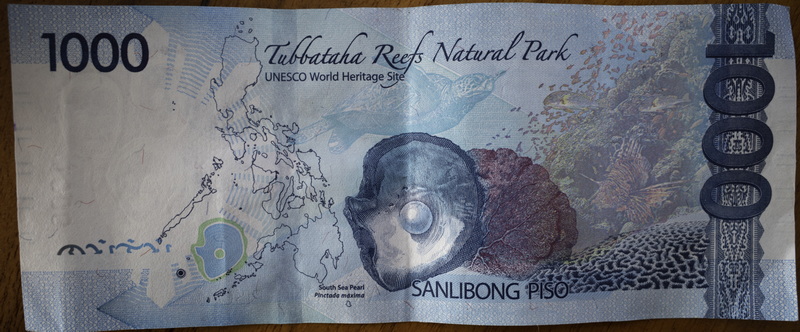
In 1988, then President Corazon Aquino designated Tubbataha a national marine park. The first in the country and five years later UNESCO inscribed it as a World Heritage Site.
Nature is an incredibly powerful thing when we humans let it do its job and by 2015, scientific studies of those badly decimated reefs on both atolls found that they had been restored to a near-pristine and truly natural state! So effective has been the management of the TRNP it is often referred to as a role-model for similar initiatives elsewhere.
Diving Tubbataha Reefs Natural Park
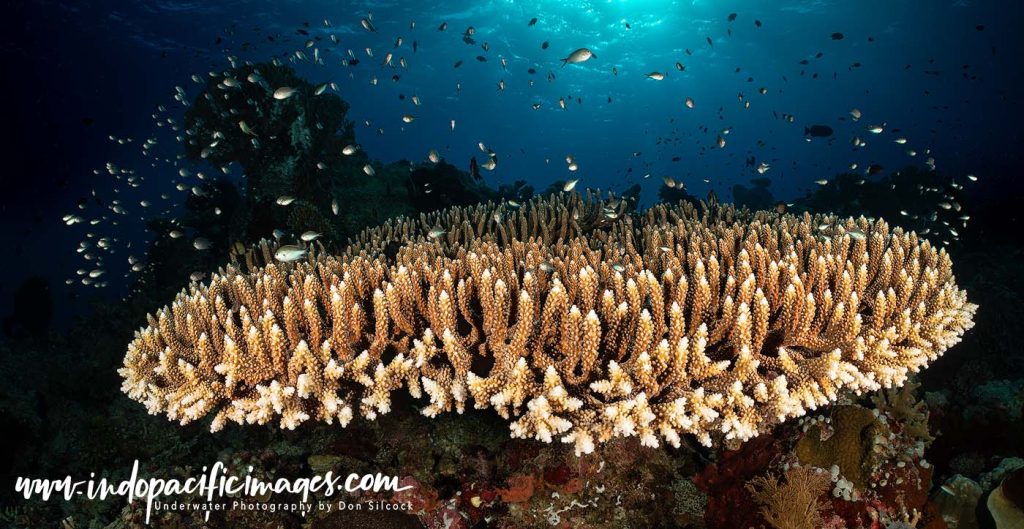
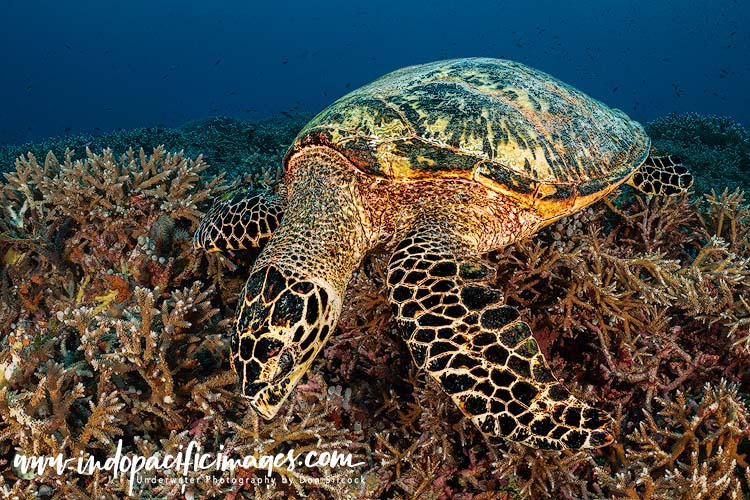
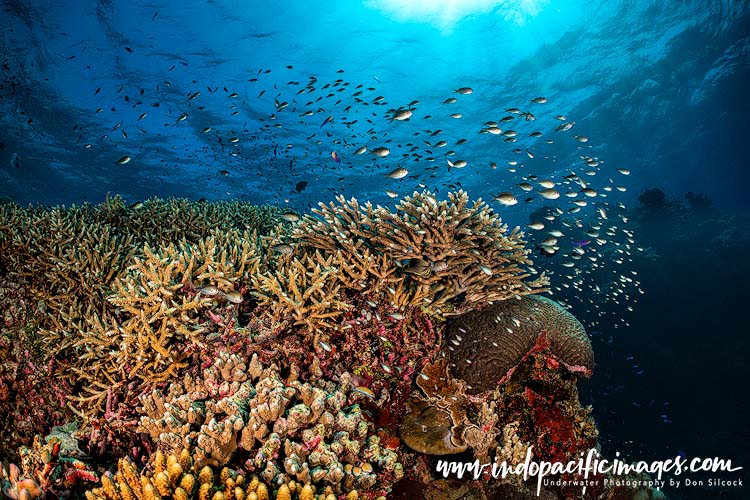
If you like tropical reef diving and who doesn’t… Imagine, if you will, rolling backwards into blue water that is so clear, the visibility seems to stretch out to infinity. Then arrayed below you on the upper reef margin are vast rolling dunes of staghorn coral. With schools of resident anthias swimming up into the light and then darting back down for protection as an endangered green turtle forages for food among the branches.
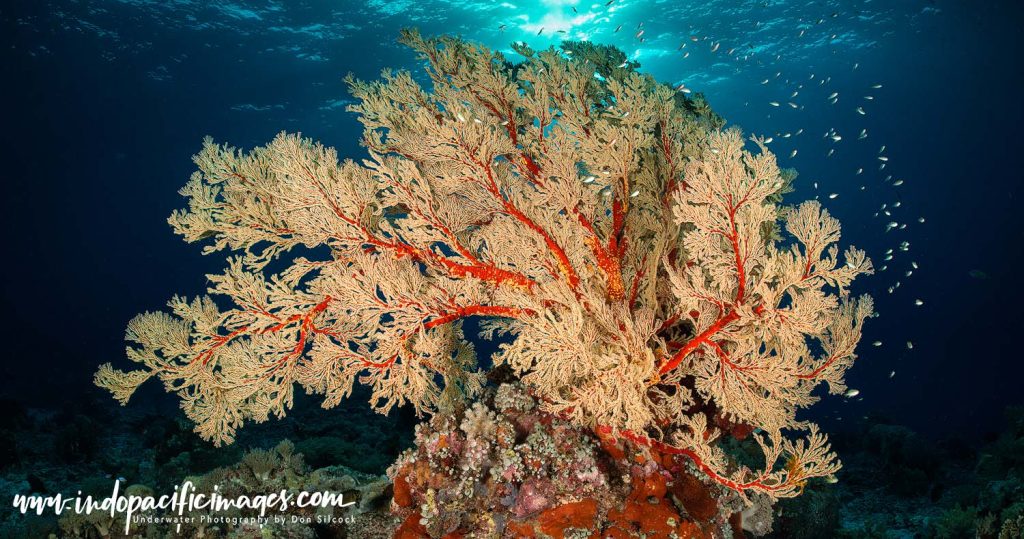
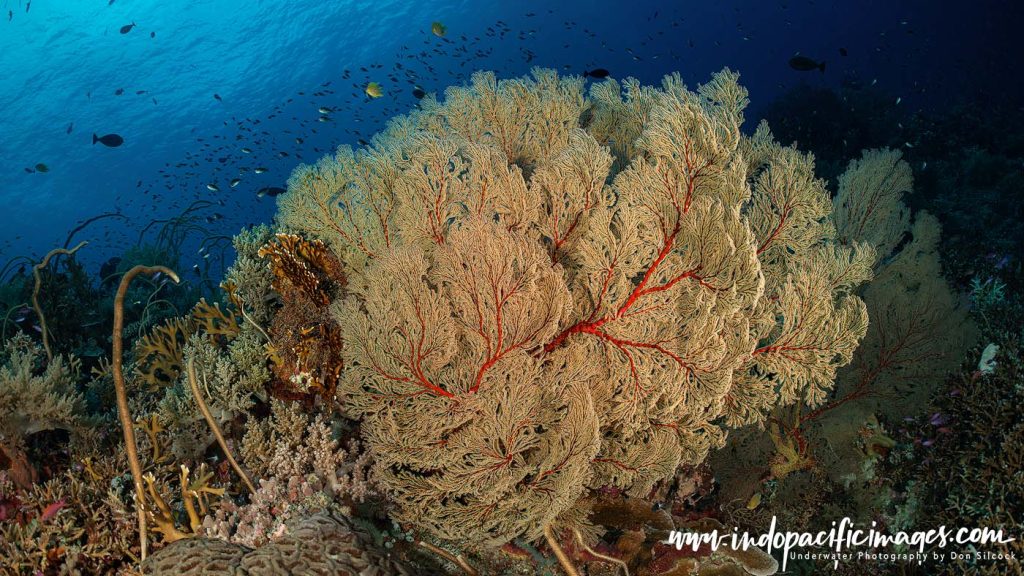
Then head down to about 15m where the margin ends, and the reef slope begins its descent into the depths of the Sulu Sea. Arranged to perfection along the slope are rows of huge gorgonian fans that stretch out into the current and feed on the passing nutrients. Each one a mini ecosystem of its own with permanent residents like sea stars, brittle stars, ghost gobies, pygmy seahorses and the pygmy’s nemesis the long-nosed hawkfish.
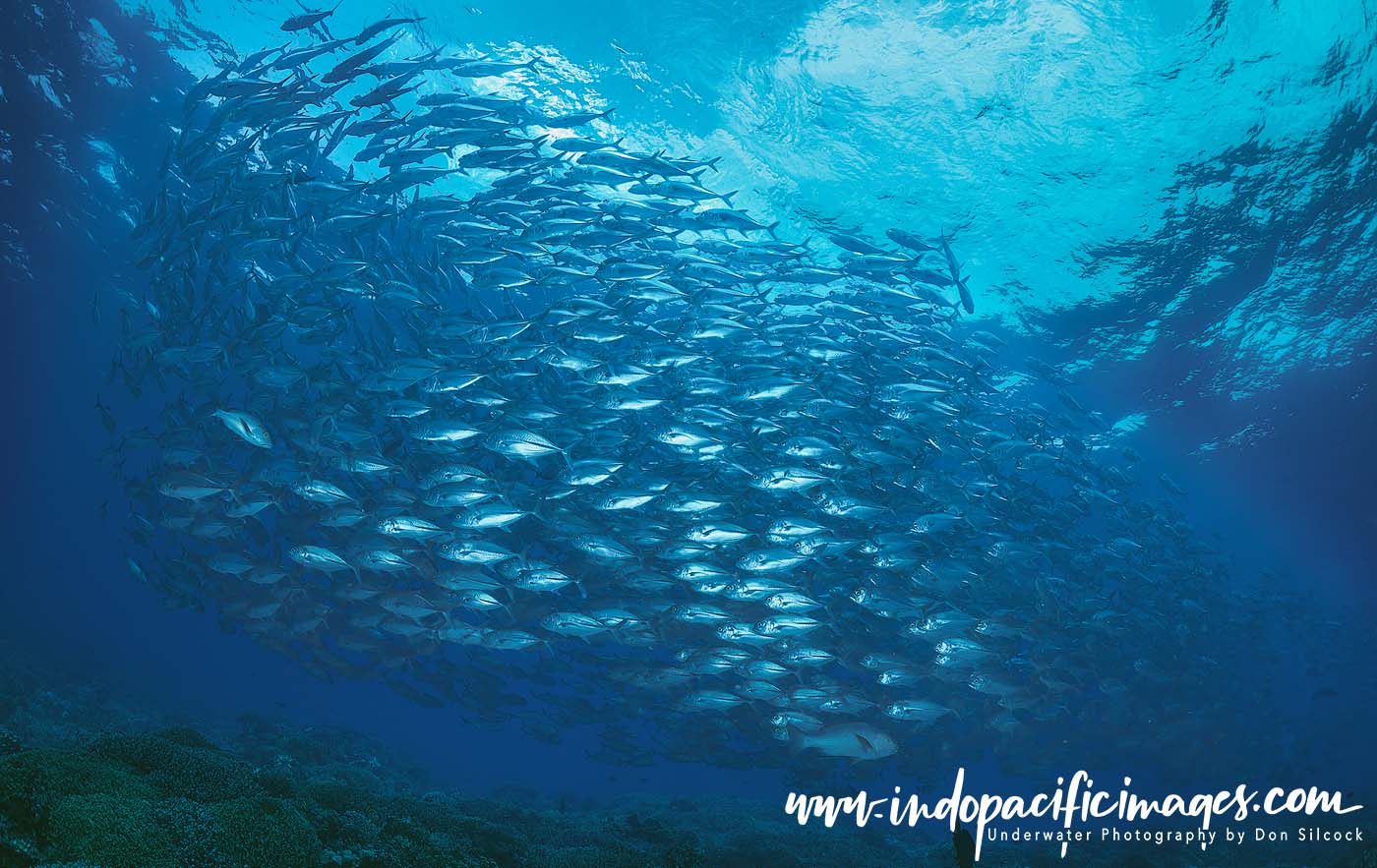
Look up and there is a good chance of seeing the massive schools of jacks that patrol the upper parts of the reef. And then out into the blue where schools of barracuda move up and down the reef wall. Concentrate on the blue and you will see large groups of black-tip reef sharks hunting in the current. Often with individual sharks working tag-team with a giant trevally.
At this point you tend to have to make a decision… Stay focused on the blue on the chance of a pelagic encounter with one of the regular open-water animals that visit Tubbataha – whale sharks, giant oceanic mantas and tiger sharks. Or you stay focused on the beautiful and wonderfully biodiverse reef slope because, believe me, it’s hard to do both!
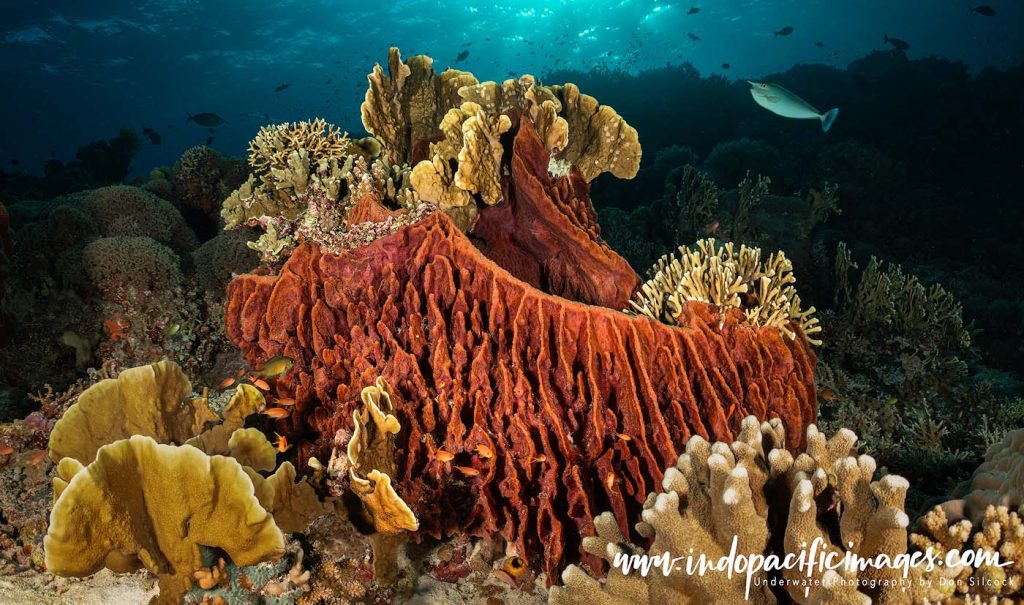
And, that’s just my description of one of my personal favourite sites; Staghorn Point on the southern tip of the South Atoll. There are another 16 other sites to choose from at Tubbataha and of them at least 7 are absolutely world-class in terms of their biodiversity.
Best Time to Dive Tubbataha Reefs Natural Park
Access to Tubbataha is strictly limited to a short annual season, typically from mid-March to mid-June, when sea conditions in the Sulu Sea are calm enough for safe passage.
Outside this window, the park is completely closed to protect the reef and because of rough sea conditions.
Because permits are limited and liveaboards sell out quickly, booking 12–18 months in advance is strongly recommended.
How to Get There
There is no land-based access to Tubbataha Reefs Natural Park.
All trips depart via liveaboard vessels from Puerto Princesa, Palawan. Crossing time to the reefs is typically 10–12 hours overnight.
Conservation and Protection
Tubbataha Reefs Natural Park is one of the most rigorously protected marine areas in the Philippines. Fishing, anchoring, and unsanctioned access are strictly prohibited.
A permanent ranger station operates within the park during the open season, supported by the Philippine Navy, Coast Guard, and international conservation partners. Fees paid by visiting divers directly support reef protection, enforcement, and research.
Tubbataha stands as a rare example of marine conservation done right — proof that when ecosystems are fully protected, they can thrive.
Why Tubbataha Matters
For divers, Tubbataha represents what reefs used to be — and what they can become again under proper protection. For photographers, it offers clean water, healthy coral, and animal behaviour rarely seen in heavily dived locations. For conservationists, it is a global reference point.
Few places on Earth deliver such a powerful combination of remoteness, biodiversity, and ecological integrity.
Scuba Diving ANZ Diving Tubbataha Article
Scuba Diver ANZ have published a six-page article of mine on Diving Tubbataha and you can download a copy on the link. Also, check out the follow-up article on Conserving Tubbataha.