
The Ultimate Underwater Travel Lens… Perhaps the hardest part of any trip is deciding what underwater photography equipment to take with you. It’s rarely an easy task and a degree of compromise is almost always involved. As you simply cannot take everything with you without breaking the bank.
Sometimes the decisions are straightforward. For example a dedicated macro trip means you can leave the big dome port at home. While a pelagic-focused expedition, involving only snorkelling, allows the strobes and macro gear to stay safely in the cupboard. But most dive destinations are far less predictable. One day may offer sweeping reefscapes and schooling fish. The next manta rays or sharks in blue water, followed by pygmy seahorses, nudibranchs, and intricate macro subjects.
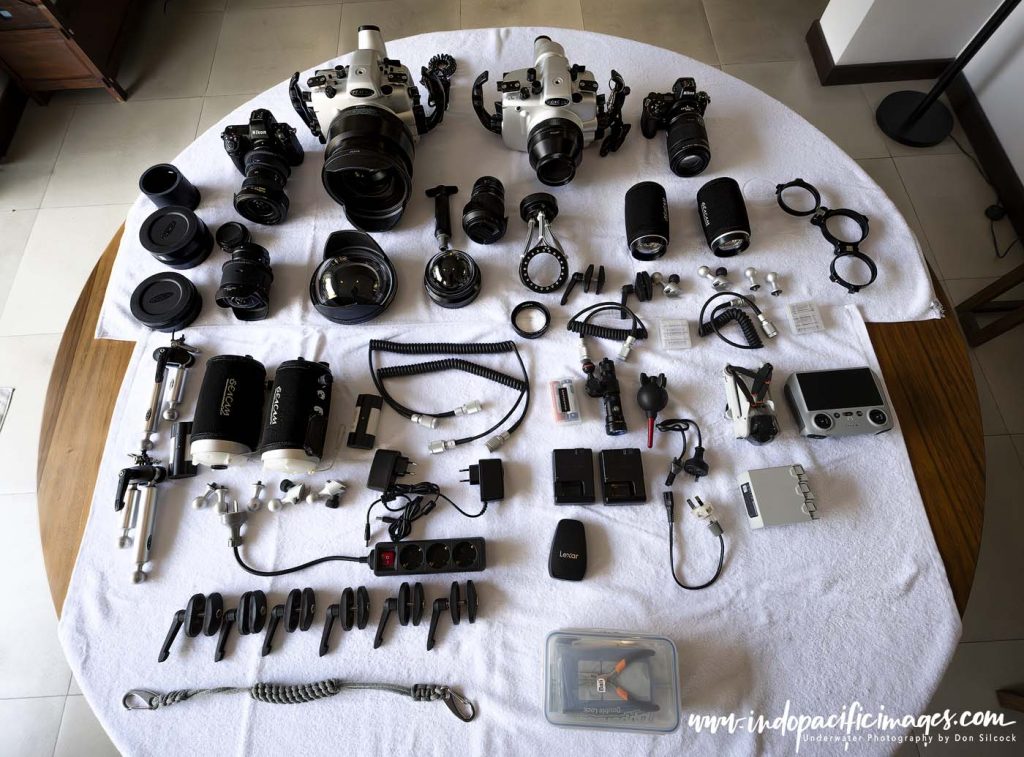
Modern underwater photography demands versatility and most of us want to capture every opportunity at the highest image quality possible. That usually involves specific lens and port combinations for each photographic genre. And therefore more equipment to carry.
Airline baggage restrictions continue to tighten and squeeze… So, multiple domes, extension rings, macro ports, lenses, strobes, and accessories quickly add up to a significant logistical challenge.
For years, underwater photographers have accepted this balancing act as unavoidable – until now…
On Assignment in Northern Indonesia
Earlier this year, a fairly unique combination of circumstances came together that resulted in the longest trip I have ever undertaken. Nine weeks in total, covering four locations back-to-back.
The journey began in the Dampier Strait with three weeks at Papua Diving’s Sorido Bay Resort. Where I serve as Operations Manager for the Raja Ampat SEACAM Center (RASC). I spend about three months each year at Sorido Bay, which has given me an intimate understanding of the reefs and seamounts on the northern side of the Dampier Strait, where the resort is located beside the renowned Cape Kri dive site.
The next phase marked the beginning of an extended assignment for Scuba Diver Magazine, where I serve as Senior Travel Editor. That assignment took me to Papua Paradise Dive Resort on Batanta Island in the southern Dampier Strait — an area I had long wanted to explore.
From Papua Paradise, I transferred to the Mailaillo liveaboard. For a trip that traversed the Dampier Strait to the Fam Islands. Before heading north to Halmahera and then exploring both the eastern and western coasts of the remote island of Morotai. Finally, I transferred to Metita Dive Resort for another two weeks of diving in southern Morotai.
You get the picture — multiple locations, many of which are rarely dived, together with demanding logistics. Plus a huge number of unknowns about what we might encounter underwater. And, therefore… what equipment to pack.
Camera Choices
The camera decision itself was relatively straightforward. My primary system is the Nikon Z8 which, even after two years of near-continuous underwater use, still surprises me with just how capable it is. Its dynamic range, autofocus performance, and overall image fidelity make it my clear choice for wide-angle photography.
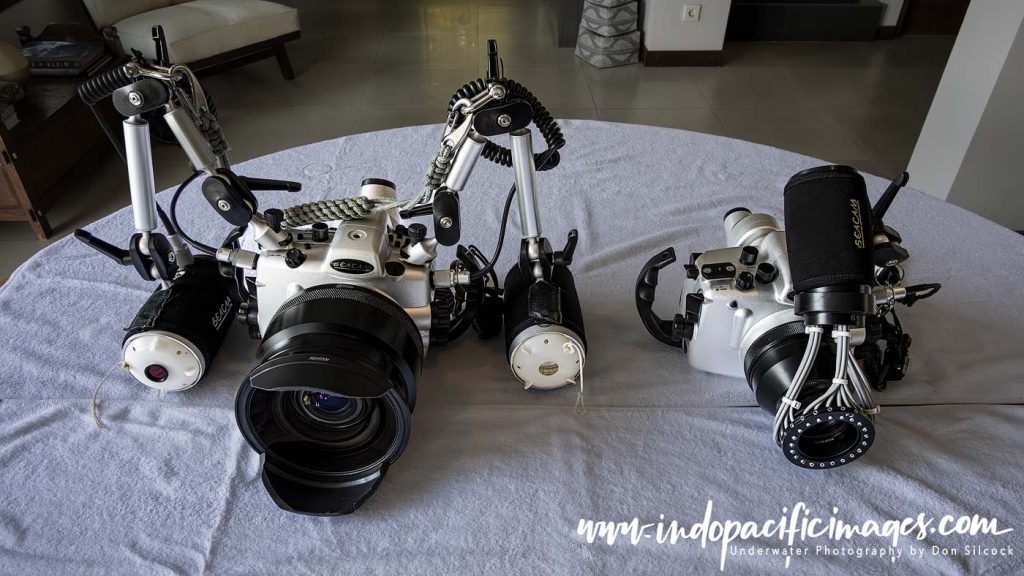
My secondary system is more macro-focused and built around the Nikon Z7. While it lacks the autofocus sophistication of the Z8, its image quality remains superb for macro photography. Soon to be replaced by a Z7II to improve overall autofocus performance, it nevertheless remains an excellent underwater camera.
Both cameras are housed in SEACAM systems. And I decided that with so much diving in front of me, the logistical penalty of carrying two complete housings was worthwhile. As it meant avoiding rushed lens changes and repeated strobe reconfiguration between dives.
Lens and Port Choices
The primary lenses for the trip were also relatively easy decisions. For ultra-wide angle photography, I chose the Nikon 8-15mm fisheye zoom (used predominantly at 15mm) with the FTZ II adapter. Which pairs beautifully with the SEACAM Compact Port.
At the opposite end of the spectrum, my macro setup centred around the Nikon Z 105mm macro lens paired with the SEACAM Macro Port. And often combined with the +2 Achromat close-up lens and a home-made ring flash.
For everything in between, from super-wide to semi-macro, I used the SEACAM Optical Precision Port – aka the OPP.
Ultimate Underwater Travel Lens – The OPP Explained…
The Optical Precision Port is designed around the key elements of the Ivanoff-Rebikoff optical principles. Which relate to how light behaves underwater because of the refractive index of water – as opposed to the refractive index of air, which is different.
It’s complicated stuff and far beyond both me and the scope of this article… But the basic concept is that rather than trying to manage the effects of that behaviour (as dome ports basically do). The OPP uses optical elements that have been specifically designed to work with water’s refractive properties.
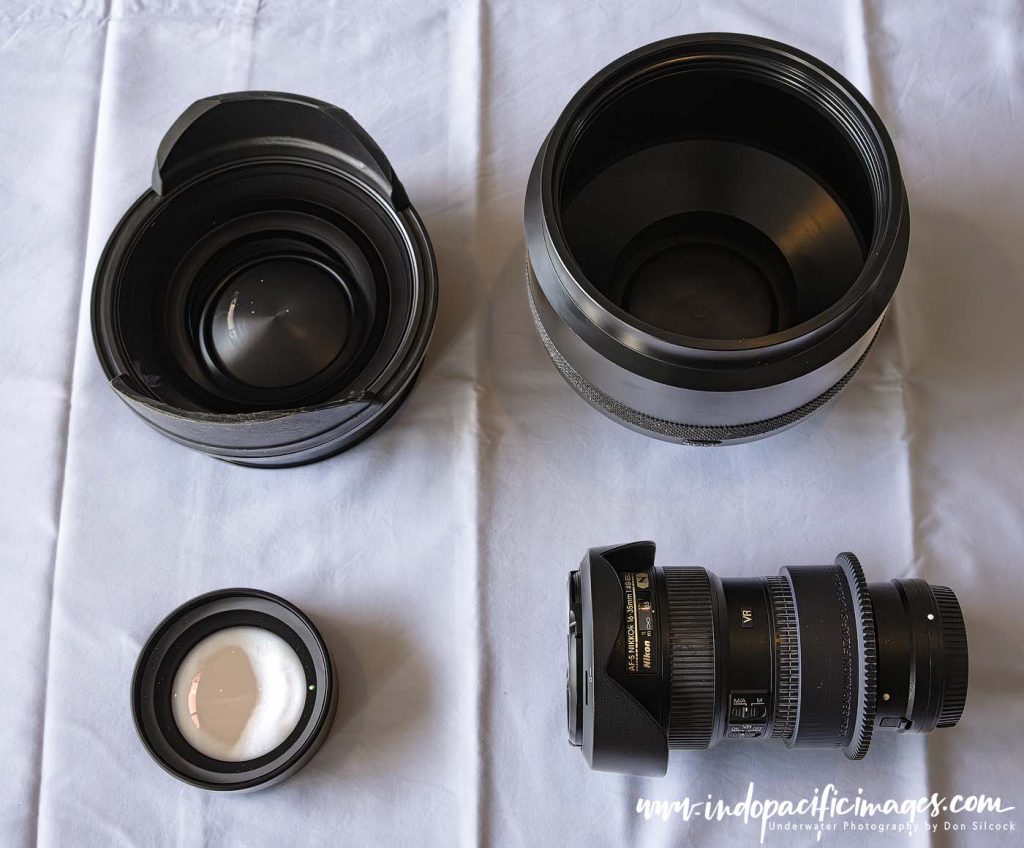
Much like how the legendary Nikonos RS lenses were designed. Correcting for the distortion on their front glass element (where the refractive index of water meets that of air). The OPP is designed around the physics of the interface between water and air.
But rather than modify the internal elements of the lens to correct for the change in refractive index as the Nikonos RS lenses do. The OPP uses a standard lens. Which is fitted with a correction lens in what is referred to as an “inverted telescope” arrangement.
Ultimate Underwater Travel Lens – Lens and Optical Correction Lens
Àt the core of the OPP is the camera lens. Which in my case is the rectilinear F mount 16-35mm f/4G VR wide-angle zoom for Nikon DSLR’s. It’s a lens I used a lot for landscape photography, before I moved to the Nikon Z mirrorless system. It performed well overall and very much in alignment with Nasim Mansurov’s review.
However, I rarely used it underwater because of the corner sharpness issues inherent with dome ports and rectilinear lenses. To use it with my Nikon Z8 requires the FTZ adaptor. And I have the FTZII version, which works perfectly with AF-S generation F mount lenses like the 16-35mm.
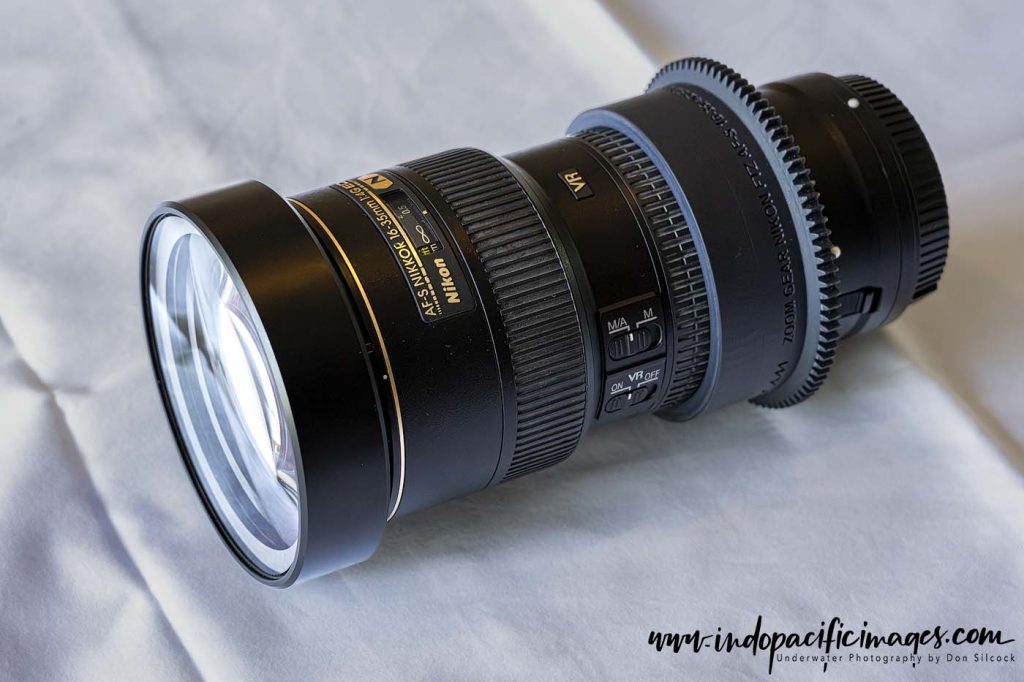
The 16-35mm lens is fitted with a SEACAM Optical Correction Lens (OCL). Which is similar in many ways to the excellent Achromat close-up lenses. Paired together the Nikon 16-35mm and the OCL becomes a highly integrated and precisely matched opitical unit. SEACAM’s internal testing indicates that it performs significantly better optically than the 16-35mm does as a standalone lens.
The basic function of the integrated lens and OCL unit in the Optical Precision Port is to provide fast and accurate focusing on the virtual image created by the Front Optical Port – the optical element where the refractive index of water interfaces with that of air.
Ultimate Underwater Travel Lens – Front Optical Port
Think of the OPP as a complete optical system. Which uses three high-quality lenses (the Front Optical Port, the OCL and the Nikon 16-35mm) to convert the image as seen through the refractive index of water. Into one seen through the refractive index of air, which is then delivered to the camera’s sensor and recorded.
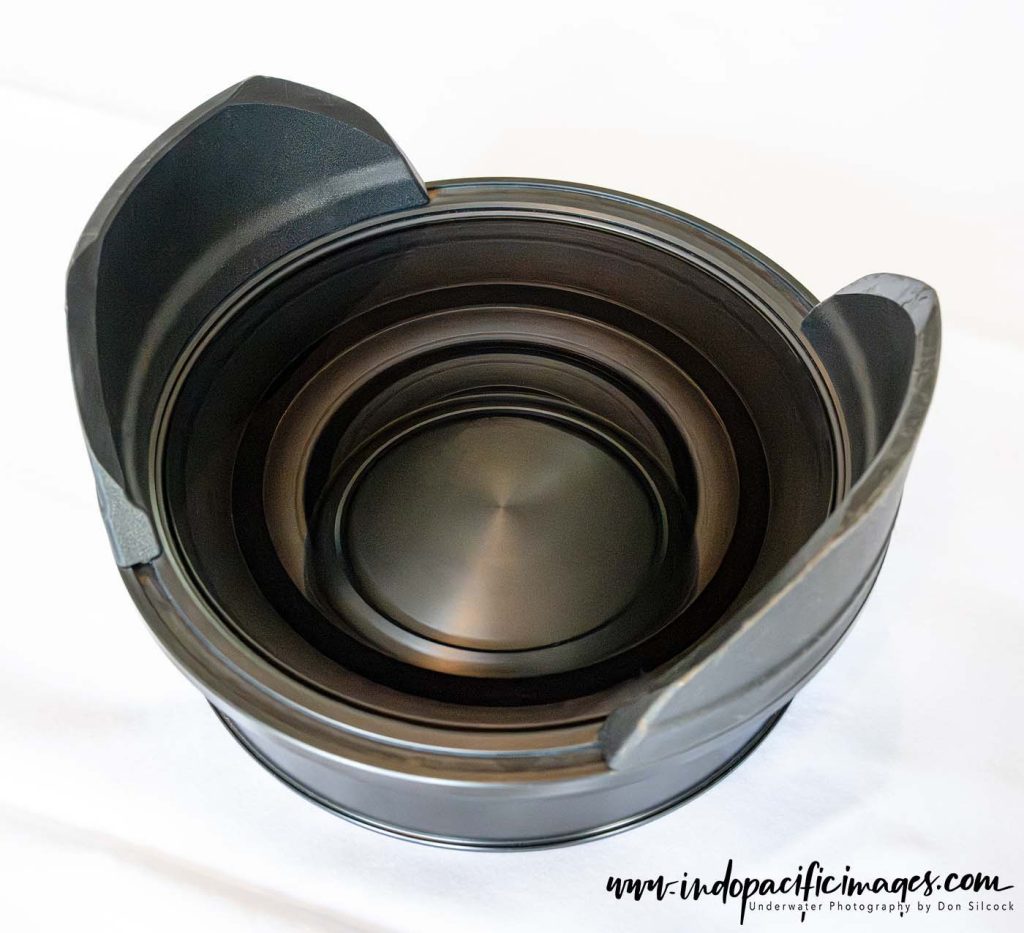
Much like the original designs of the legendary Nikon RS lenses did. SEACAM’s engineers have worked with the basic problem of underwater imaging – the different refractive indexes of air and water – and engineered a high quality solution.
They did that by designing the Front Optical Port (FOP) to capture the subject being photographed in-water. And then deliver it on the nodal point of the combined OCL and 16-35mm lens unit – in air, inside the housing. And, done that way, the camera recieves an image of the subject that has the absolute optimum optical fidelity, corner sharpness and depth of field.
Contrast that fully engineered solution to the inevitable optical compromise of a dome port’s curvature trying to capture the flat virtual image created by a rectilinear lens.
First class engineering will always win against a compromised solution!
Ultimate Underwater Travel Lens – Extension Ring
The fourth and final element of the Optical Precision Port – is the extension ring, or in SEACAM terminology, the PVL. For wide-angle underwater photography all extension rings do the same thing. They position the external water-facing element (dome port or FOP) in exactly the right position axially along the centre line of the camera.
This is an incredibly important, but often over-looked, part of the overall imaging underwater imaging equation. As the nodal point of the dome/FOP must be in the correct position as explained well in the link.
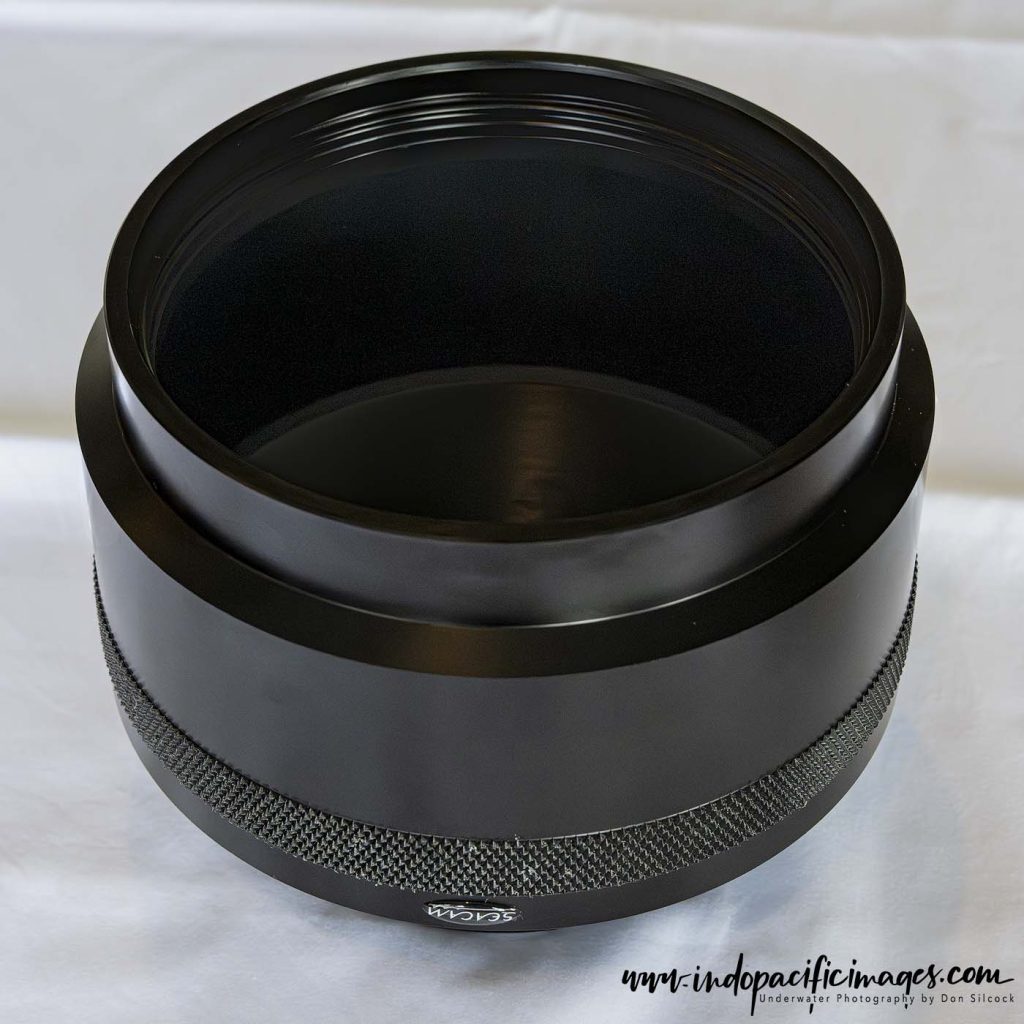
The extension ring (PVL) for my OPP is specifically for the integrated OCL and 16-35mm unit and positions the nodal point exactly where it should be for optimum results. It’s a light-weight item that has a built-in buoyancy collar which makes the fully assembled unit virtually neutral in the water.
A really key point about using the extension ring this way is that it opens the door for other rectilinear lenses to be used with the standard FOP and OCL. As I understand it, 72mm and 82mm OCL’s will be available in addition to the 77mm version I am using. So, in principle, all that will be required in the future to use other wide-angle zoom lenses will be the correct extension and zoom rings for the specific lens.
Clearly the the overall design of the Optical Precision Port had been very carefully thought through!
The Optical Precision Port – Wonderful Wide-Angle Images
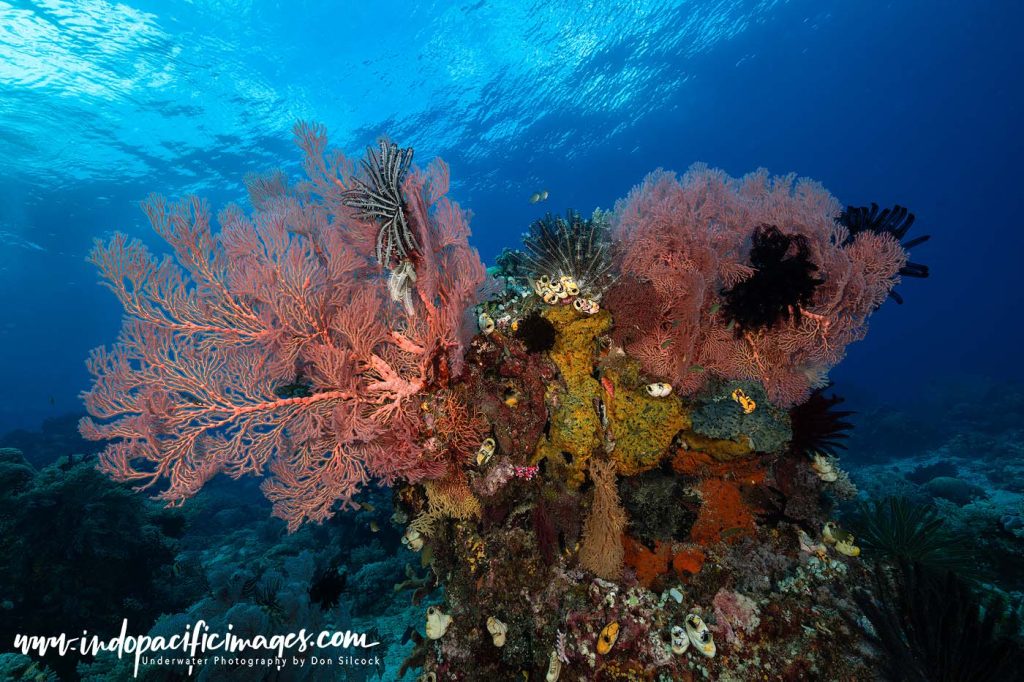
There are many positives about the OPP but for me the #1 thing is the way it renders wide-angle images. Having taken and processed a very significant number of those in the last 21 months or so, I have have pixel-peeped repeatedly at the raw photographic data captured through the OPP and then digitally recorded by my Z8.
No doubt that the Z8 is an incredible camera, but at the end of the day the images it captures are only as good as the data it recieves. On land, the vast array of specialized and very expensive lenses that cater for those who want/need the very best image quality are readily available, albeit at an often significant cost!
Previously, if you wanted optimal quality, wide-angle, rectilinear images underwater the only real choice was the Nauticam WACP-1. But you had to pay the “travel penalty” that came with it. And I personally did that for about 5 years as I believed it was worth paying.
The Optical Precision Port changes the equation significantly and my overall experience with it has been extremely positive. But my opinion is subjective as I have no way of objectively comparing the image quality of the OPP against the WACP-1. Plus, because I am a SEACAM Ambassador, conclusions will obviously be drawn… So, all I can do is to try and explain that experienece.
The Optical Precision Port – Rendering
In photography, rendering refers to how specific equipment, like lenses or software, translate a scene into a final image. It is often used to describe the subjective “look” of a lens – in terms of the color, contrast, or bokeh it produces (renders).
I use dual SEACAM 160D stobes for all my wide-angle images – set on TTL probably 90% of the time (it just works…). I also have the Z8 enabled for High Speed Sync (HSS), or Auto FP (Focal Plane) in Nikon terminology, which I find very helpful in certain circumstances.
The power, coverage and warmth of the light from the 160D’s is exceptional and truly the best I have ever used. Combine the OPP with the excellent dynamic range of the Nikon Z8 and that light, and you have an incredibly powerful system that allows beautiful rectilinear images to be captured.
During processing (I use Photoshop ACR and often the TK9 luminosity masking plug-in) of those images I am always impressed with the detail, and the fidelity of that detail, when viewed at the pixel level.
Simply stated, it is way beyond anything I have personally experienced with underwater images before. Anecdotally though, it was similar to what I experienced when I started to use a Fuji GX100S medium format digital camera and the exceptional GF lenses for landscape photography. Basically it was a “next level” experience!
The BIG Advantage of the OPP – Superb Felixibility
Over a period of nine weeks in northern Indonesia I averaged three dives per day, almost every day. That was almost 180 dives in total and I took about 10,000 images underwater. 90% of those images were with my Z8 based system and of those 9,000 images roughly 7,000 were taken with the Optical Precision Port.
Why, you may ask, did I use it so much?
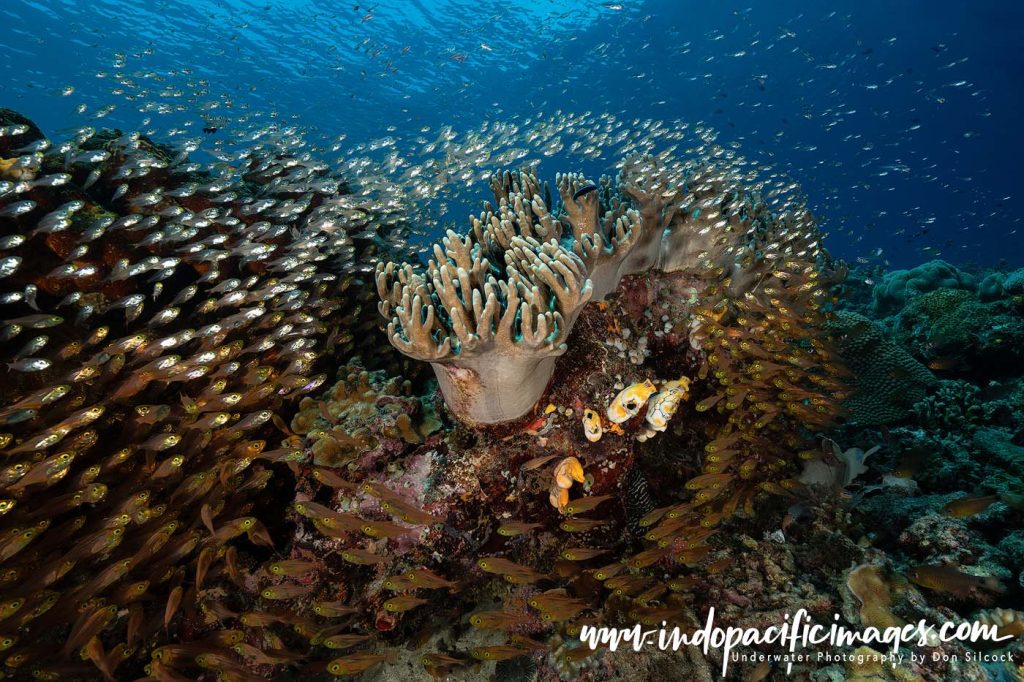
Basically the OPP is my underwater “standard lens” in that it does nearly everything I need. At the wide end @ 16mm I can photograph reef scenics, while zoomed in at the 35mm it is capable of semi-macro images. So, unless I know in advance that I need to go ultra-wide with the Nikon 8-15mm, I stick with the OPP.
I do enjoy shooting ultra-wide with the Nikon 8-15mm. Plus I recently became the very proud owner of a SEACAM converted RS13mm lens which I am looking forward to using (more to follow on that…). But, if I were really limited on what I could take on a trip, I would leave the ultra-wide lenses and ports behind and just use the OPP.
At 16mm and beautifully rectilinear, it does almost all of what I personally need on most trips.
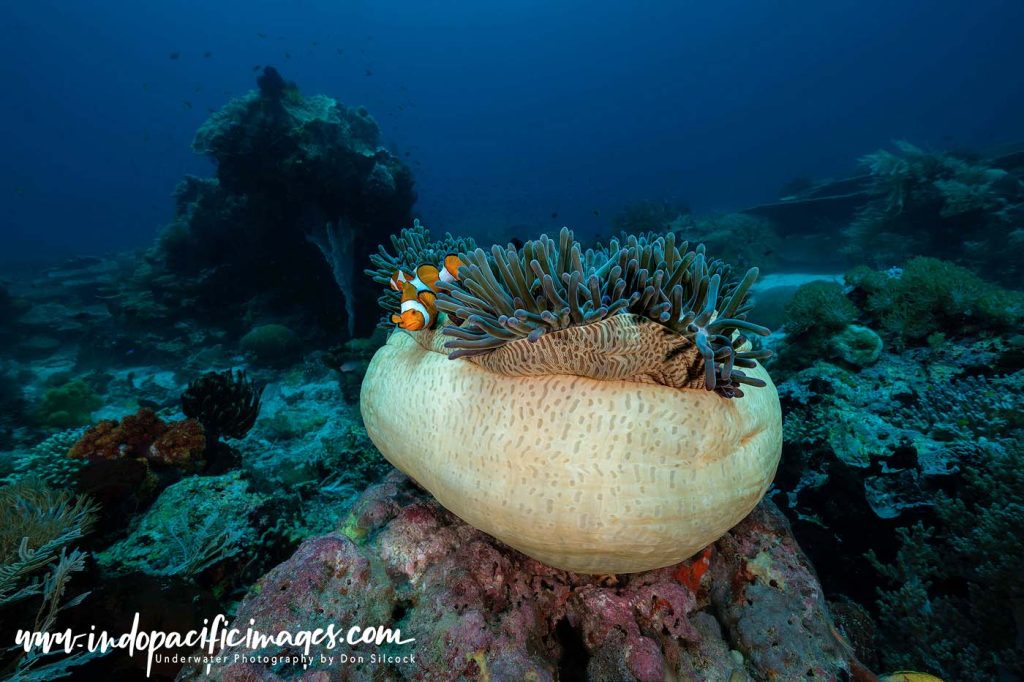
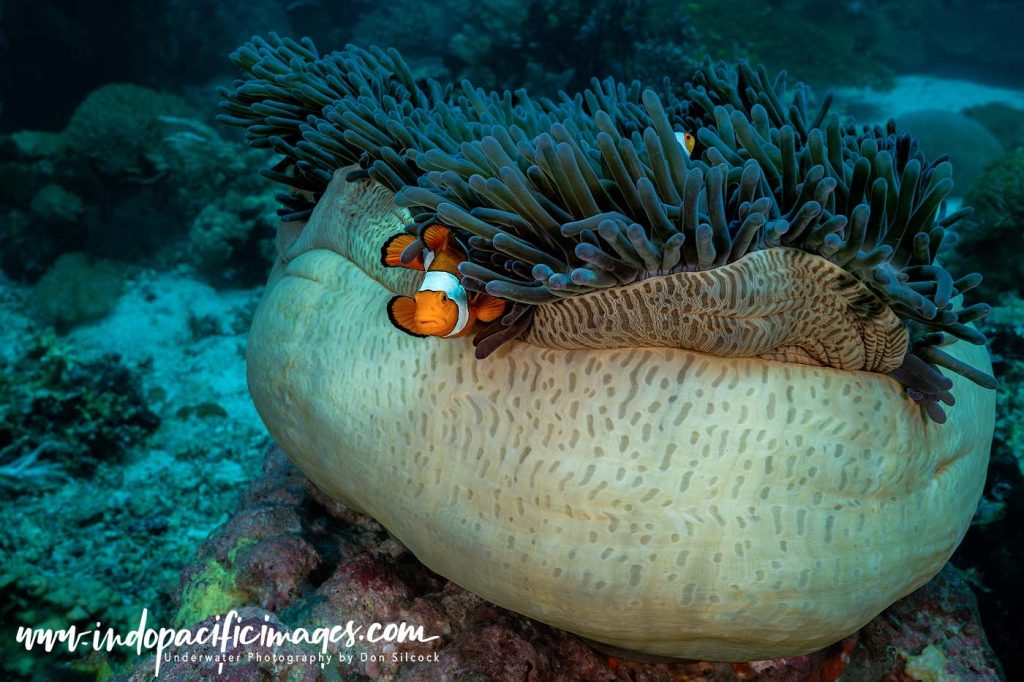
The Other BIG Advantage of the OPP – Semi Macro
For sure the Optical Precision Port is NOT a macro lens. But as the old saying goes “the best lens you have is the one on the camera”. And in underwater photography it is also the only one you will have with you underwater…
So the capability to zoom in when a surprise macro subject is spotted, combined with a high resolution camera like the 45.7 MP Z8 is a very nice addition. Here is an example at a site called Yenkarom in Batanta. The guide had told me that it was more of a colorful wide-angle site but had some critters… Unsure what to do, I decided to stay with the OPP and see what happens.
Sure enough there there some nice wide-angle subjects, then near the end of the dive we stumbled on a beautiful Halameda ghost pipe fish. So I zoomed into 35mm and adjusted the strobes and eventually got the image below that I was happy with
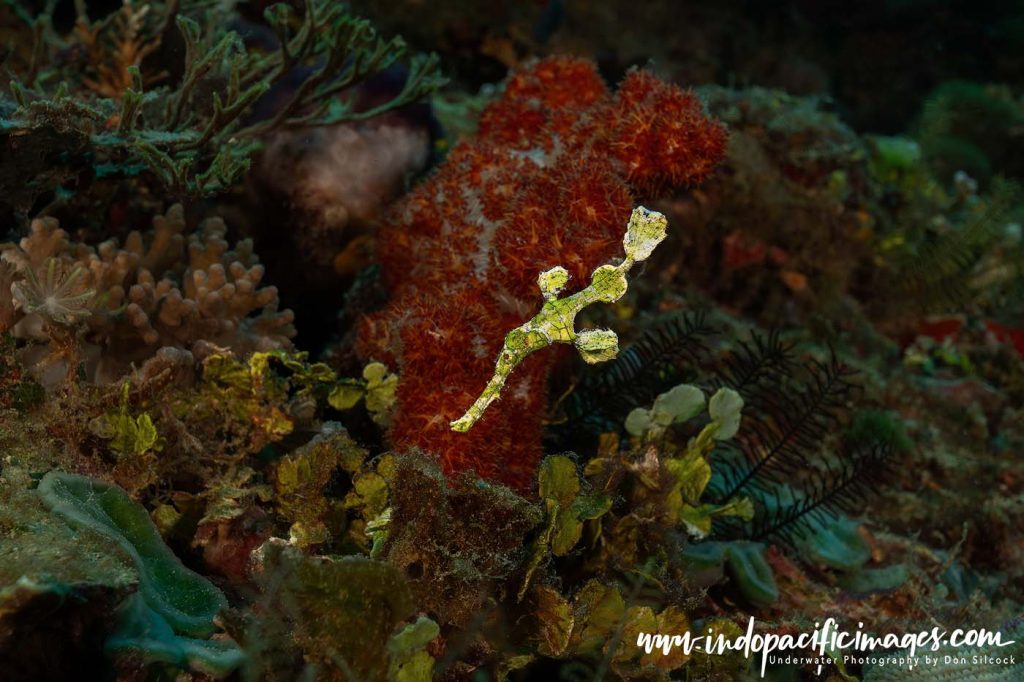
This is the same image after cropping and it came out at 2500 x 2500 pixels. Which is the resolution I normally submit images at for magazine publication.
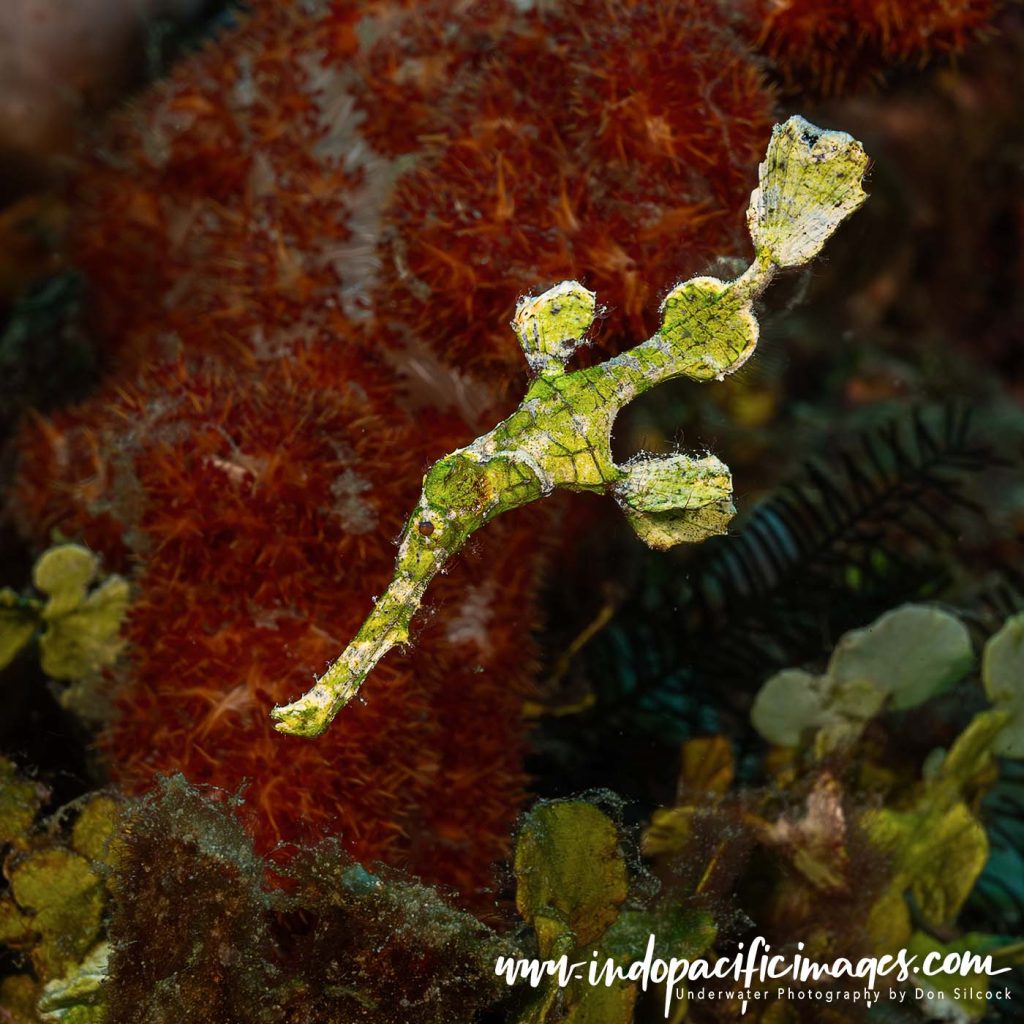
Similarly, while I was in Morotai at Metita Dive Resort we set out to dive Lighthouse Reef. Which is an excellent wide-angle dive as the seamount the lighthouse was built on sits right in the path of the predominant current and is rich in both hard and soft corals.
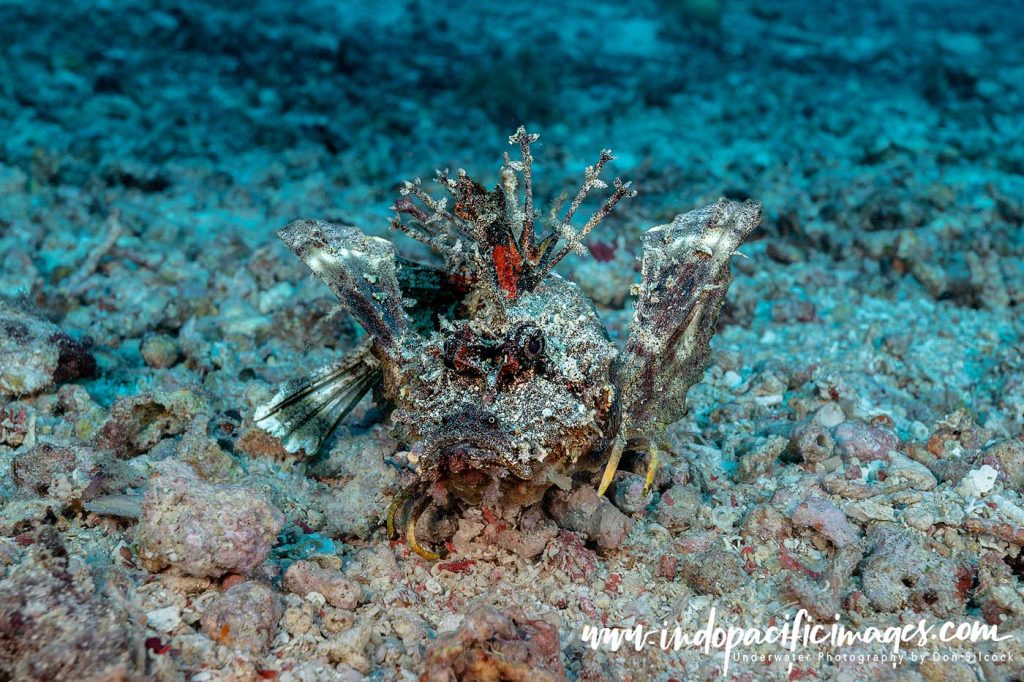
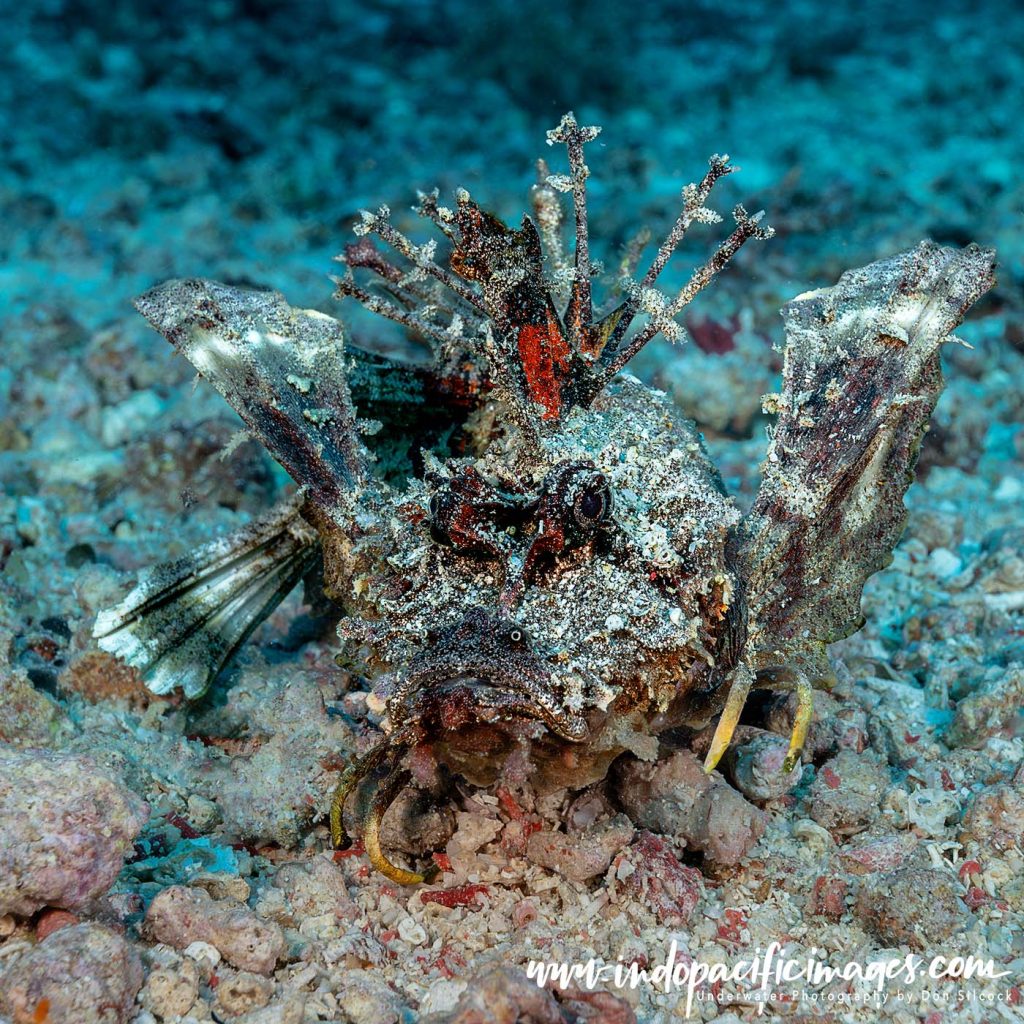
Just after we entered the water my eagle-eyed guide Fajar spotted as Spiny Devil Scorpionfiish. Which was hiding in plain sight on a bed of coral rubble. With the OPP zoomed to 35mm and the strobes repositioned I was able to get this image.
This is the same image cropped to 1:1 which produced an image size of 3030 x 3030 pixels.
Ultimate Underwater Travel Lens – Travel is MUCH Easier…
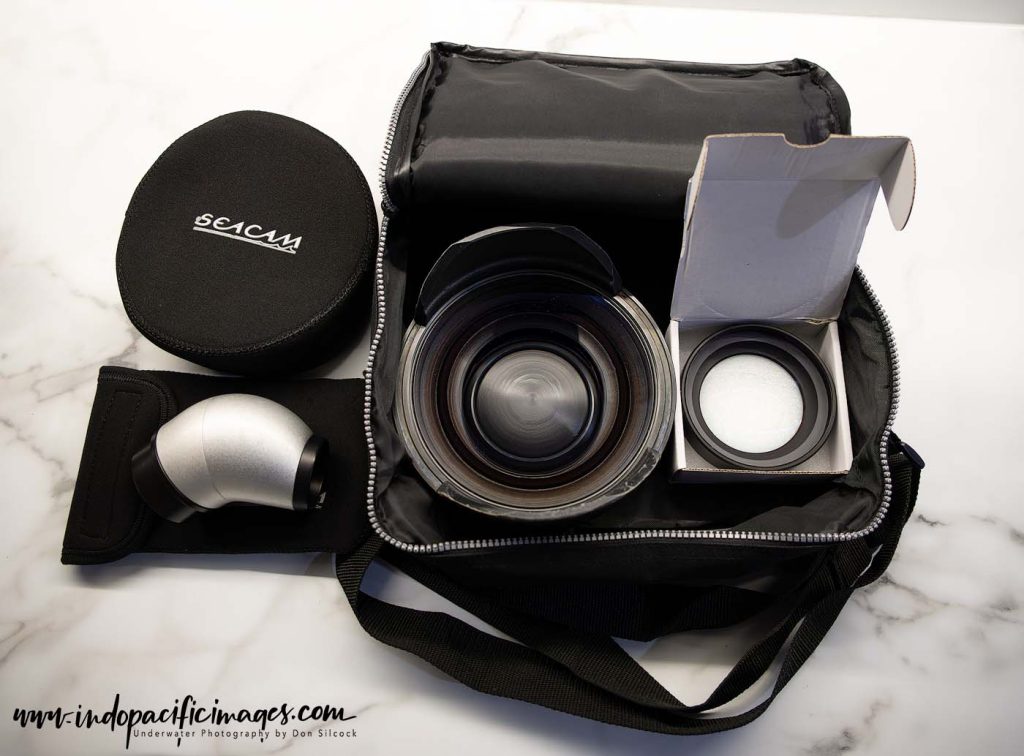
The total weight of the OPP, ready to travel with all end caps in place, is just under 3.2kg. Which is roughly the same as the 240mm SEACAM superdome. So there is some bulk as optical glass is inherently dense and quite heavy.
But when it comes to traveling with with the OPP its modular design really helps. I use a smallish regulator bag to store both the Front Optical Port and the Optical Correction Lens. Plus I usually put my SEACAM viewfinder(s) in there too and that bag goes easily in my carry-on. While I use the hollow extension ring to store other gear and that goes in my check-in luggage.
I personally used the Nauticam WACP-1 for five years and its weight, with the mounting ring is about 4kg. But by the time it’s in its travel case it is well over 5kg and its large overall (non-modular) size means it has to go in your check-in. Where it will occupy a significant amount of the overall available space.
So I find the OPP much easier to travel with than the WACP-1.
Ultimate Underwater Travel Lens – In Summary
SEACAM enjoys the excellent reputation it has because of the care and attention to every detail that goes into the design and manufacturing of all its products. Personally I have been associated with the company for 2.5 years now. And a formal Ambassador for 1.5 years – so yes… I am somewhat biased.
But that bias is built on a basic fact. For those 2.5 years I have used my SEACAM equipment extensively. And in a significant number of different locations without a single problem. It all just works reliably, repeatedly and extremely well!
The Optical Precision Port, which I have been using for 21 months, is an innovative and extremely well designed and engineered solution to one of underwater photography’s most difficult problems. Namely, using lenses designed to work with the refractive index of air underwater.
It also helps to solve another of underwater photography’s biggest problems – how to travel with such a specialised lens. I sincerely believe that the OPP is the ultimate underwater travel lens. And I also hope that I have been able to explain why…
But, if you still have questions please email me on don.silcock@gmail.com and I will do my best to answer them. But please be patient as I might be underwater – with the OPP of course!
Ultimate Underwater Travel Lens – Over/Under (Split-Shot) Images
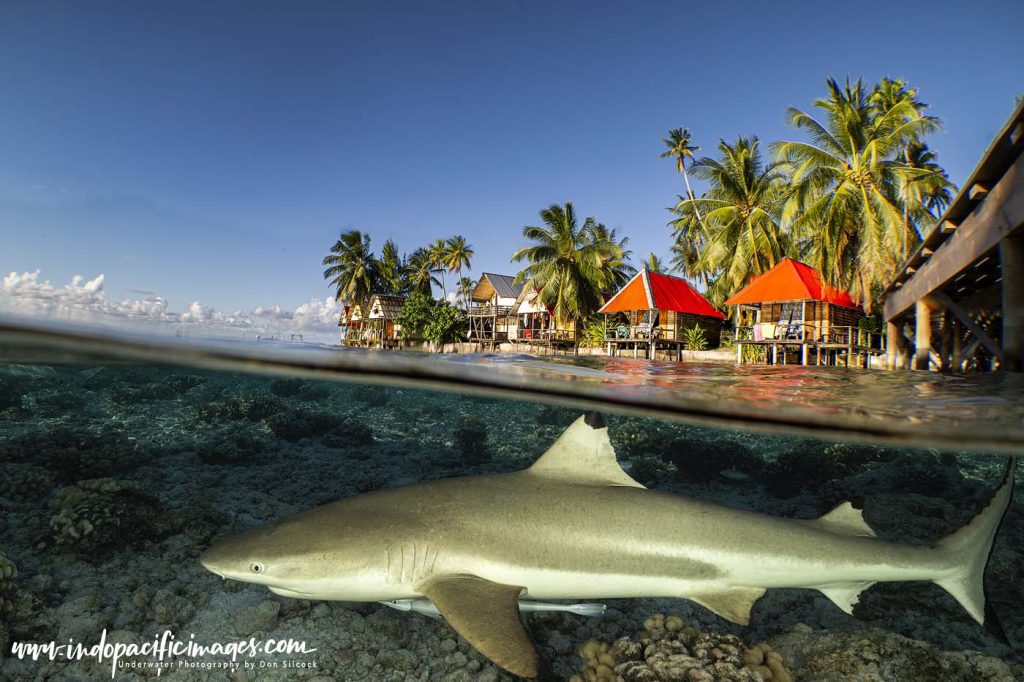
I must be honest and admit that for well over a year of travelling with the Optical Precision Port it had failed to dawn on me that it’s capable of taking over/under (split shot) images… So I decided to give it a try on a recent trip to Fakarava Atoll in French Polynesia.
I was there for the annual spawning of camouflage groupers and staying at Tetemanu Village. Late afternoon provides a perfect opportunity for split shots as the sunlight softens and blacktip reef sharks patrol the shallow lagoon in front of the overwater cabins.
I was delighted to find out that it does indeed work! But… there is a catch in that from 16mm to about 21mm on the 16-35mm lens, the OPP vignettes. Quite heavily so between 16mm to 19mm and then acceptably so to 21mm.
Travelling to Fakarava is a classic example of baggage limitations, with carry on strictly limited to 5kg – yes 5kg!
PS… Ultimate Underwater Travel Lens – The Objective Assessment
In true SEACAM fashion… To objectively assess and compare the optical performance of the OPP a special testing facility was built at their Voitsberg facility in Austria.
This was no small feat, and required a quite significant investment. But it was the only way to actually understand what the OPP is really capable of. And, most importantly, how that capability compares to that of other established underwater optical systems.
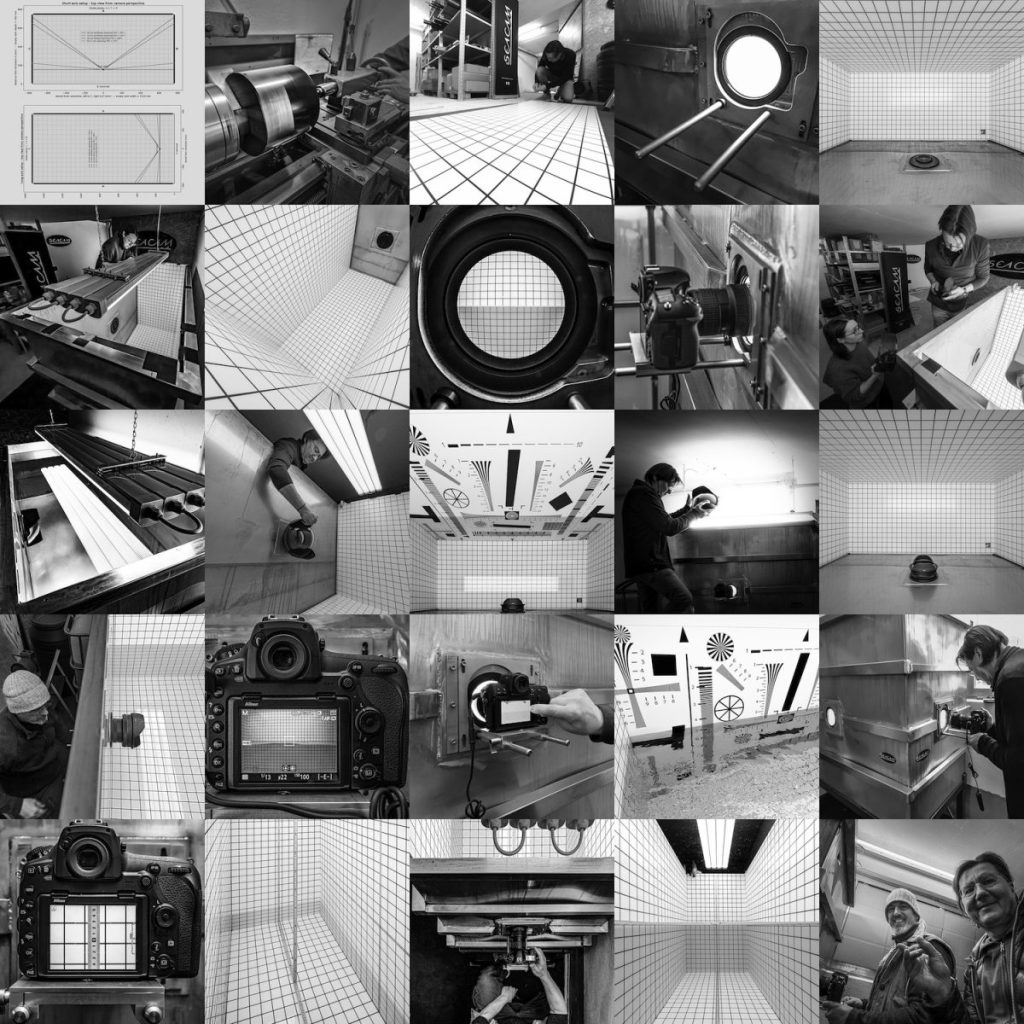
The multi-phase testing was led by SEACAM Ambassador Christoph Gerigk and carried out over several days under fully controlled conditions. Different lens and port combinations were used, plus the legendary Nikonos RS lenses were also tested, as they are generally considered to be the best underwater lenses ever made.
The results of all that work has now been published on the SEACAM website and are most impressive. For me they were particularly compelling as they categorically confirm the subjective conclusions detailed in my summary above.
I was very tempted to try and do some form of sharpness comparison with the OPP, as I knew the “pixel-peepers” would want them… But I decided not to go down that path because as Christoph Gerigk points out in his test report – random isolated shots or spontaneous impressions is simply not the same as a systematic series of comparisons under reproducible conditions.