
Where to Dive in Indonesia… Indonesia is not simply another dive destination.
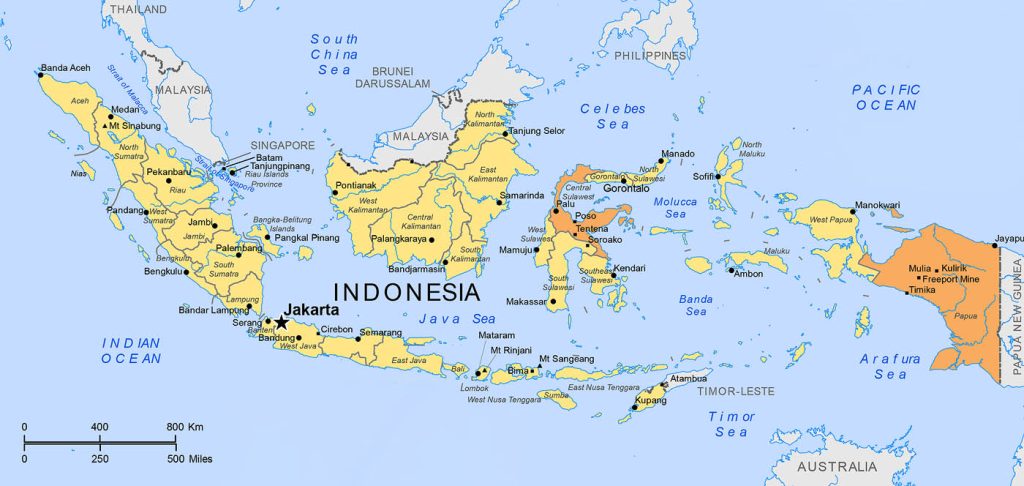
Stretching across more than 17,000 islands between the Pacific and Indian Oceans, the vast Indonesian archipelago sits at the heart of the Coral Triangle — the global epicentre of tropical marine biodiversity.
Nowhere else on Earth offers the same combination of coral reef diversity, fish biomass, macro life, pelagic encounters, volcanic seascapes, historic wrecks and powerful current systems on the sheer scale that Indonesia does.
For divers and underwater photographers, Indonesia is less a single destination than almost an entire lifetime of exploration.
But understanding where to dive in Indonesia can initially feel overwhelming. The country spans more than 5,000 kilometres from west to east and contains hundreds of distinct dive regions.
Each of those regions is shaped by geography, oceanography and the immense force of the Indonesian Throughflow.
The Indonesian Throughflow — Nature’s Marine Supply Chain
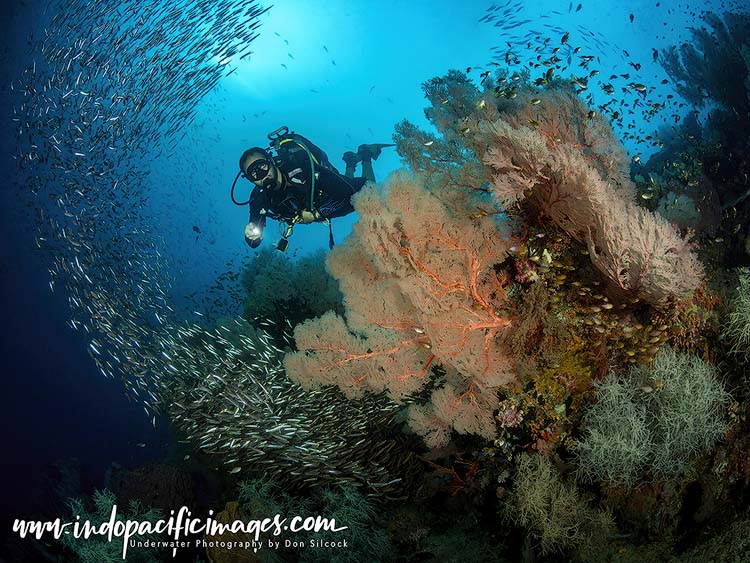
The incredibly powerful Indonesian Throughflow is the largest movement of tropical water on the planet.
As its nutrient-rich waters surge through the archipelago, they feed reefs, transport eggs and larvae, stimulate plankton growth and sustain extraordinary marine ecosystems.
Where the Throughflow interacts with steep underwater topography and island chains, biodiversity flourishes – spectacular coral reefs, dense schools of fish, exceptional macro life and seasonal pelagic encounters.
Need to Know – Indonesian Throughflow
The Throughflow is the catalyst for Indonesia’s incredible marine biodiversity and is the reason destinations such as Raja Ampat, Komodo, Alor and Nusa Penida are so biologically rich and dynamic.
But it also explains why diving conditions in Indonesia can vary dramatically with areas directly influenced by it often featuring strong unpredictable currents and cooler water.
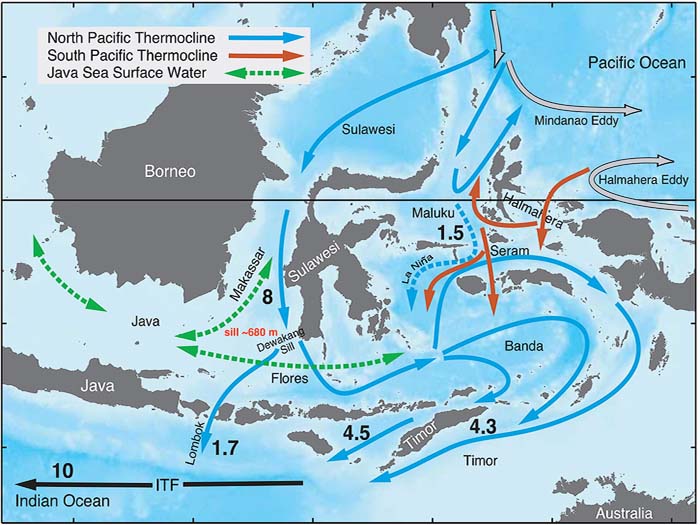
For underwater photographers, understanding the Indonesian Throughflow helps explain where and when marine life concentrations are likely to be at their best.
Simply put, follow the path of the Throughflow and you will find the best diving in Indonesia.
Where to Dive in Indonesia: Raja Ampat – The Crown Jewel
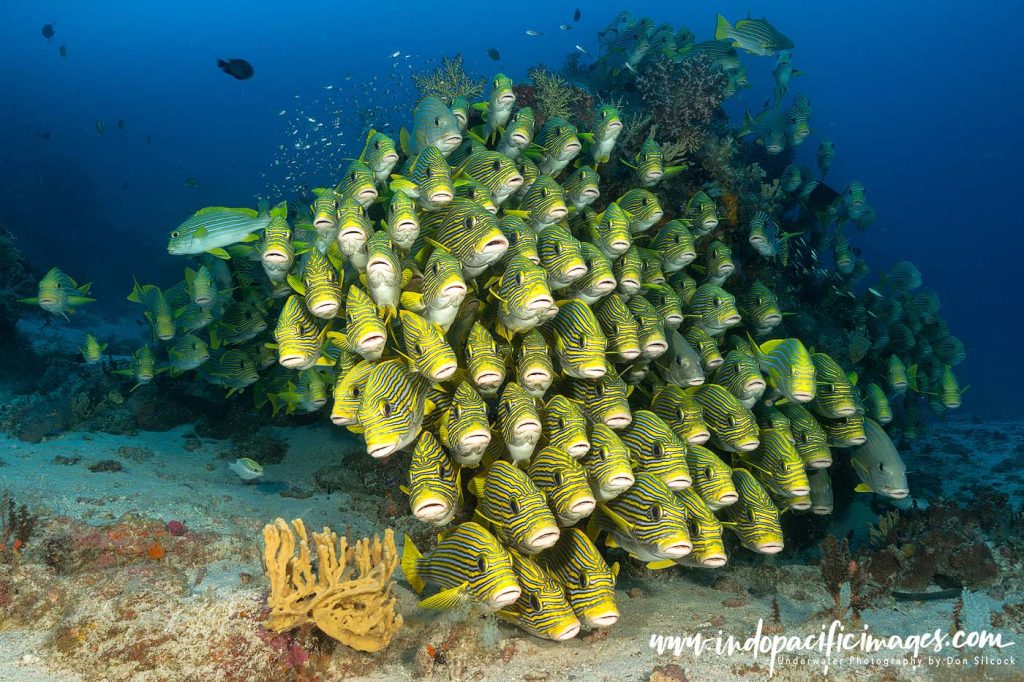
Located on the western tip of the huge island of New Guinea (the largest tropical island on Earth and second only to Greenland in overall size) in Indonesia’s remote West Papua province, Raja Ampat is widely regarded as probably the very best tropical diving destination on Earth.
Meaning “Four Kings” in Bahasa Indonesia, Raja Ampat consists of the four main islands of Waigeo, Batanta, Salawati and Misool. Together with more than 1,500 smaller islands and reefs spread across an enormous marine area.
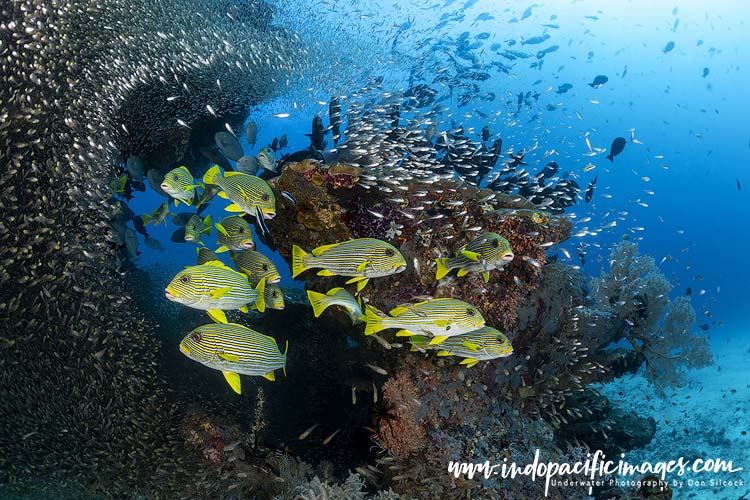
What makes Raja Ampat so extraordinary is not simply the number of species present, but the sheer abundance of life.
With surveys of the area identifying over 600 species of hard coral (nearly 75% of the world’s total) and over 1700 species of reef fish.
More than any other similarly sized region on the planet!
Need to Know – Raja Ampat
Raja Ampat is renowned for its exceptional diving and tremendous biodiversity. It truly is the jewel in the crown of Indonesian diving, but the strong currents created by the waters of the Indonesian Throughflow, as they pass through the area on their way south, can be quite challenging.
To make the most of Raja Ampat you really need to be comfortable with diving in strong currents. That is particularly so if you are also an underwater photographer.
Where to Dive in Indonesia: Komodo – Currents, Dragons and Big Fish
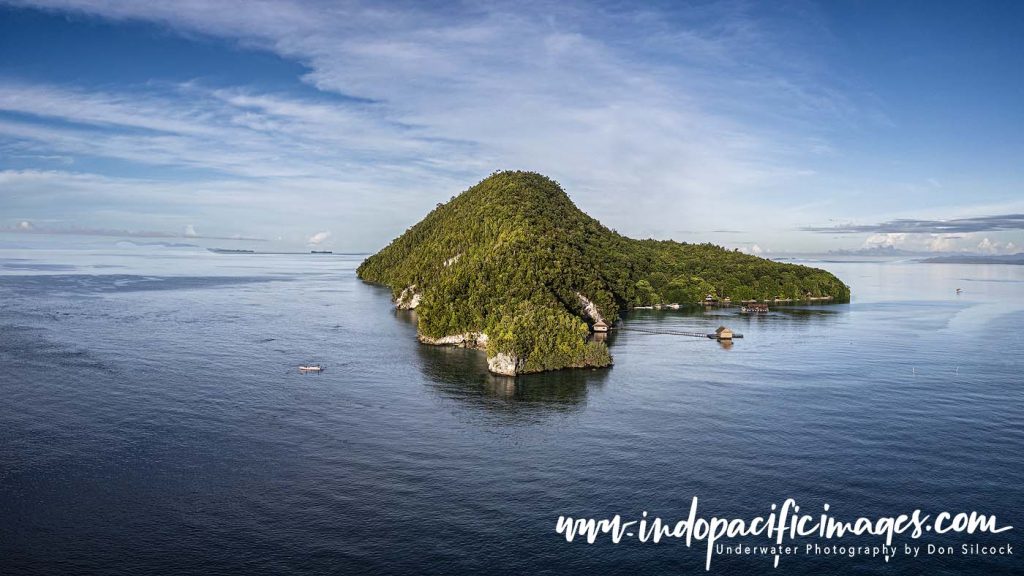
Located within the Lesser Sunda Islands east of Bali, Komodo National Park offers some of the most exhilarating diving in Indonesia.
The region sits directly in the path of the Indonesian Throughflow as water accelerates between the Indian Ocean and the Flores Sea. The result is nutrient-rich water, huge current exchanges and exceptional marine productivity.
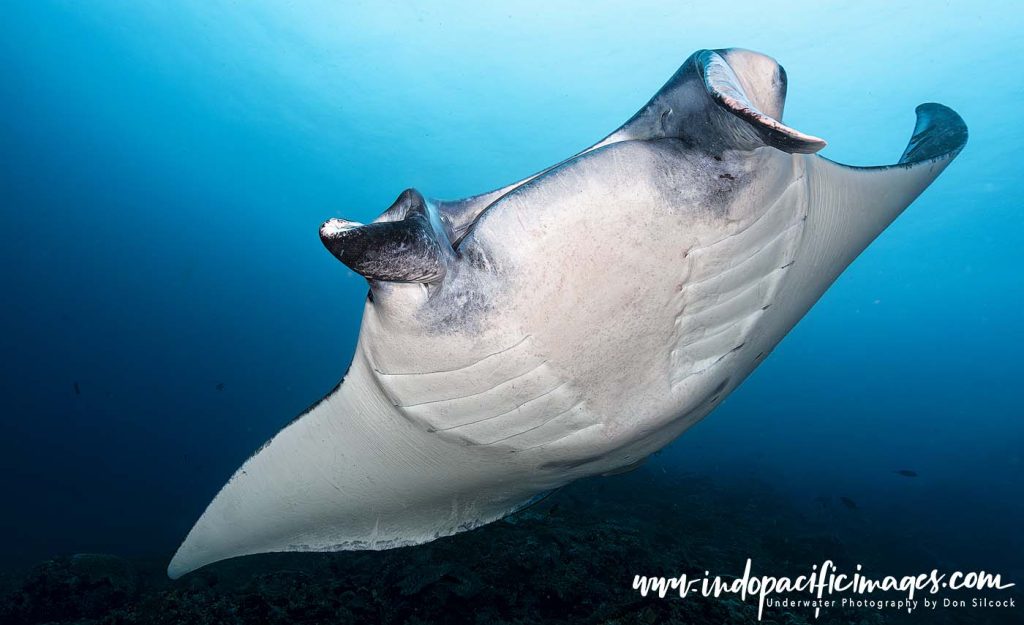
Komodo is famous for its powerful drift dives, manta rays, huge schools of fish, vibrant soft corals, dramatic underwater topography.
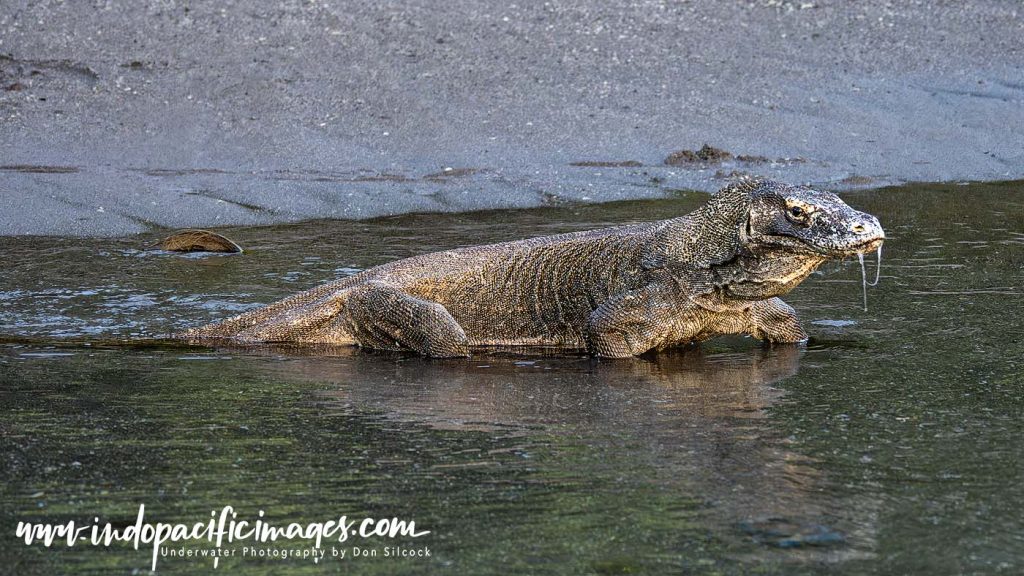
And of course it’s unique dragons, which are found nowhere else in the world!
Northern Komodo generally offers warmer water and colourful reef diving, while the south features colder nutrient-rich upwellings and more temperate marine ecosystems.
Above water, the islands are equally remarkable and resemble the African savannah. The overall area has a pronounced wet and dry season and for much of the year, southeast trade winds blow from the direction of Australia, bringing relatively dry air.
Some areas receive little or no rain for up to eight months each year.
Need to Know – Komodo
Komodo is a close second to Raja Ampat in terms of the overall quality of its diving, but it recieves almost 11x the number of visitors (432,000 versus 39,000 in 2025). Which of course means that it can get a lot more crowded underwater – degrading the overall experience.
Like Raja Ampat the defining characteristic of diving in Komodo is current. Which means you also have to be comfortable with diving in strong currents.
Komodo is often divided into three distinct regions. The north is known for vibrant coral reefs, schooling fish, and warm, clear water. While Central Komodo offers iconic sites such as Batu Bolong and Manta Point, combining rich reefs with regular manta encounters. The south is cooler, more nutrient-rich, and features colourful soft corals, unique marine life, and dramatic underwater scenery.
Water temperatures can vary significantly, ranging from around 28-30°C in the north to as low as 22-24°C in parts of the south, particularly during periods of upwelling.
For underwater photographers, Komodo offers outstanding opportunities for both wide-angle and macro photography. From manta rays, reefscapes, and swirling fish schools to nudibranchs, frogfish, and rare critters, few destinations provide such a diverse range of photographic subjects within a single trip.
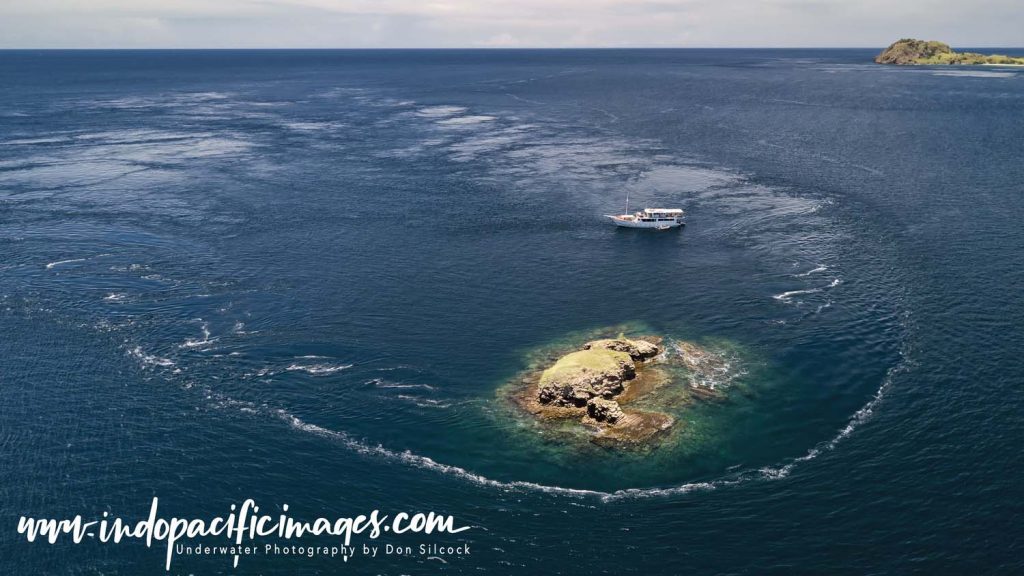
Where to Dive in Indonesia: Sulawesi – Walls, Critters and Diversity
Roughly the size of the south island of New Zealand, Sulawesi sits near the centre of the Indonesian archipelago and offers some of the country’s most varied diving.
North Sulawesi is renowned for its three key locations on the tip of the Minahasa Peninsula. With Bunaken Marine Park on the west, the islands of Bangka and Gannga to the north and on the eastern side the Lembeh Strait – arguably the world capital of muck amd critter diving.
Located near the city of Manado, Bunaken is famous for its dramatic walls and generally excellent visibility together with its healthy coral reefs and numerous turtle encounters. It was Bunaken that first put North Sulawesi on the global diving map, but it was soon followed by the Lembeh Strait with its incredible array of exotic critters.
Black volcanic sand slopes hide an astonishing diversity of bizarre and photogenic marine life including:
Mimic octopus
Hairy frogfish
Rhinopias
Blue-ring octopus
Wonderpus
For macro photographers, Lembeh is almost impossible to surpass.
Bangka and Gangga
These islands combine soft corals, reef fish and macro subjects into an excellent hybrid destination.
Best For
Macro photography
Critter diving
Reef walls
Hybrid dive trips
Skill Level
Beginner to advanced.
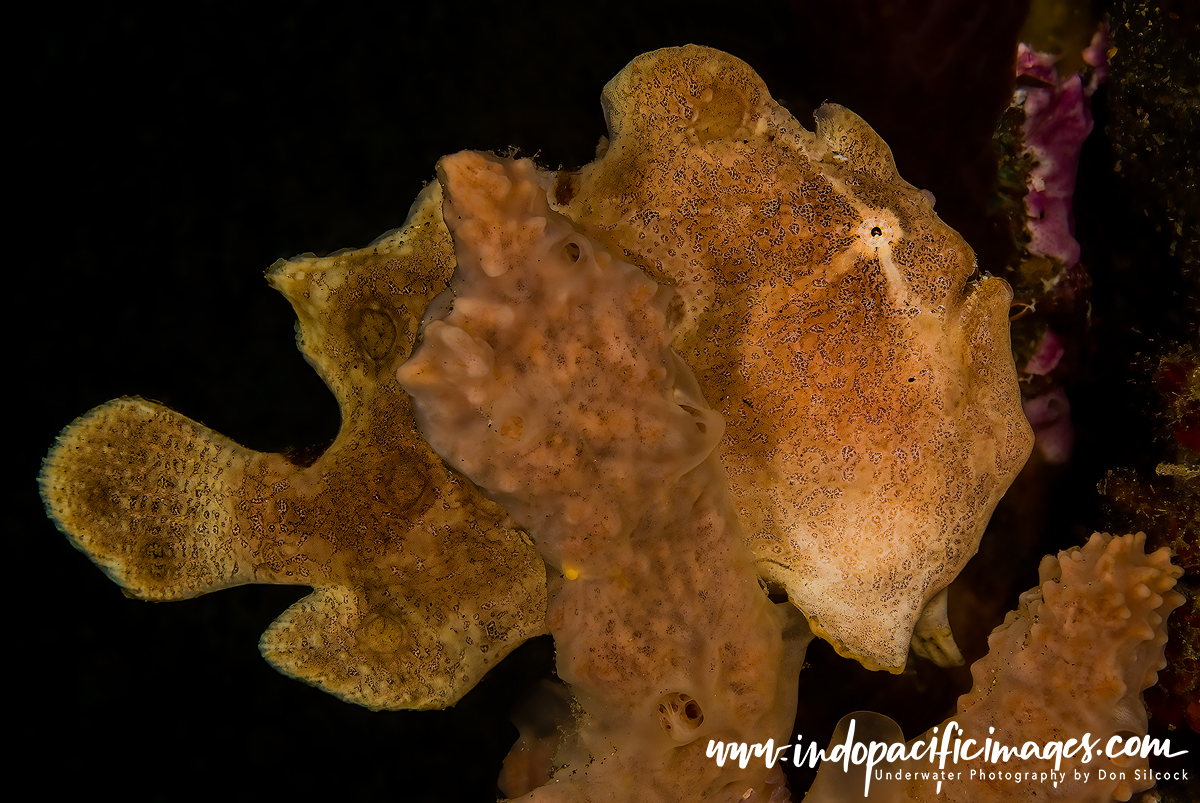
Diving Indonesia – Halmahera
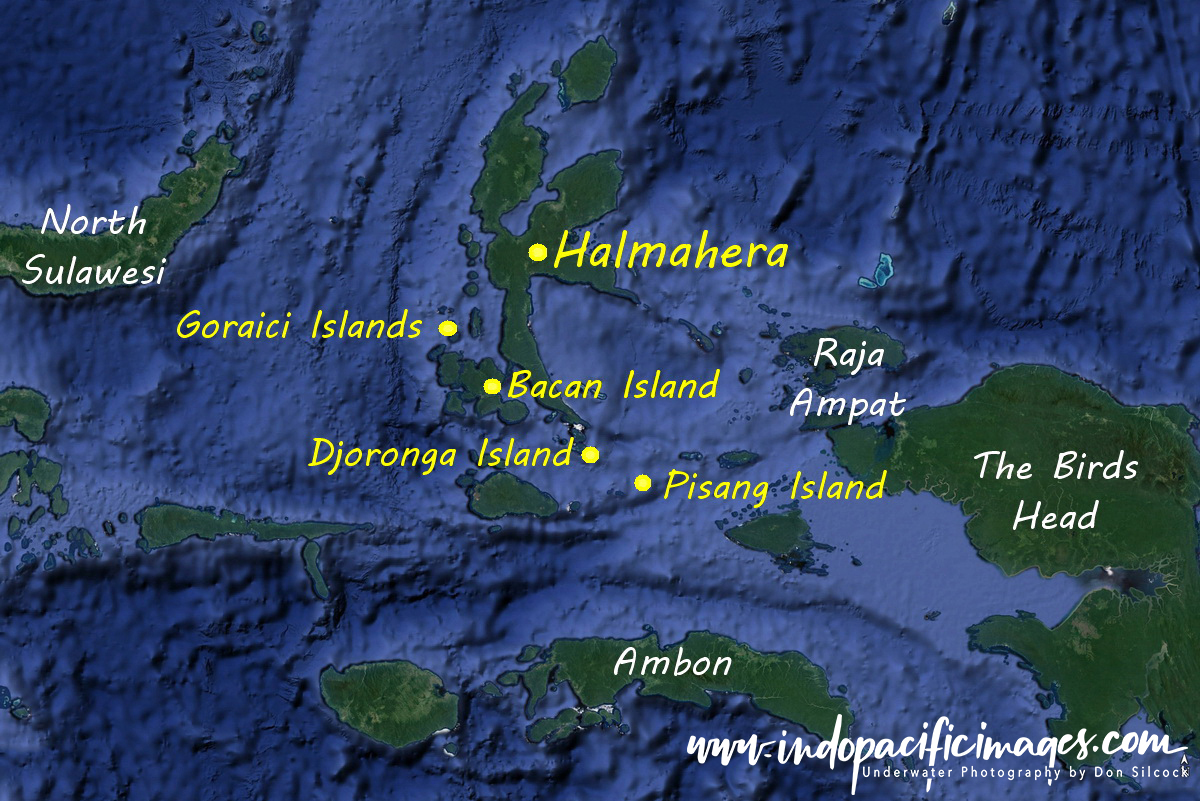
The large, starfish shaped island of Halmahera is located roughly halfway between West Papua and Sulawesi in the far north of the archipelago.
Remote and sparsely populated for its size. The island is swept on all sides by the Indonesian Throughflow and should have marine biodiversity approaching the levels of Raja Ampat. It most probably did at one time… But dynamite and cyanide fishing, the twin scourges of the archipelago, have wrought horrendous damage to large areas around Halmahera.
There are still some excellent areas to dive. But they are remote and mainly accessible from a liveaboard as land-based diving is limited – but growing now that the pandemic has (hopefully…) passed.
Almost no liveaboards do dedicated trips around Halmahera. Instead those that follow the monsoonal weather patterns and transit through the area on the way from Raja Ampat to North Sulawesi are the way to go.
That said those locations that can be reached, like Djoronga Island on the southern tip of Halmahera. And the Patintie Strait between Halmahera and the large island of Bacan offer some great diving. Similarly the journey from Raja Ampat to Halmahera, and from there to North Sulawesi offer the chance to dive the very remote and exciting Pisang (banana..) Island in the middle of the Halmahera Sea. And the Goraici Islands in the Molucca Sea.
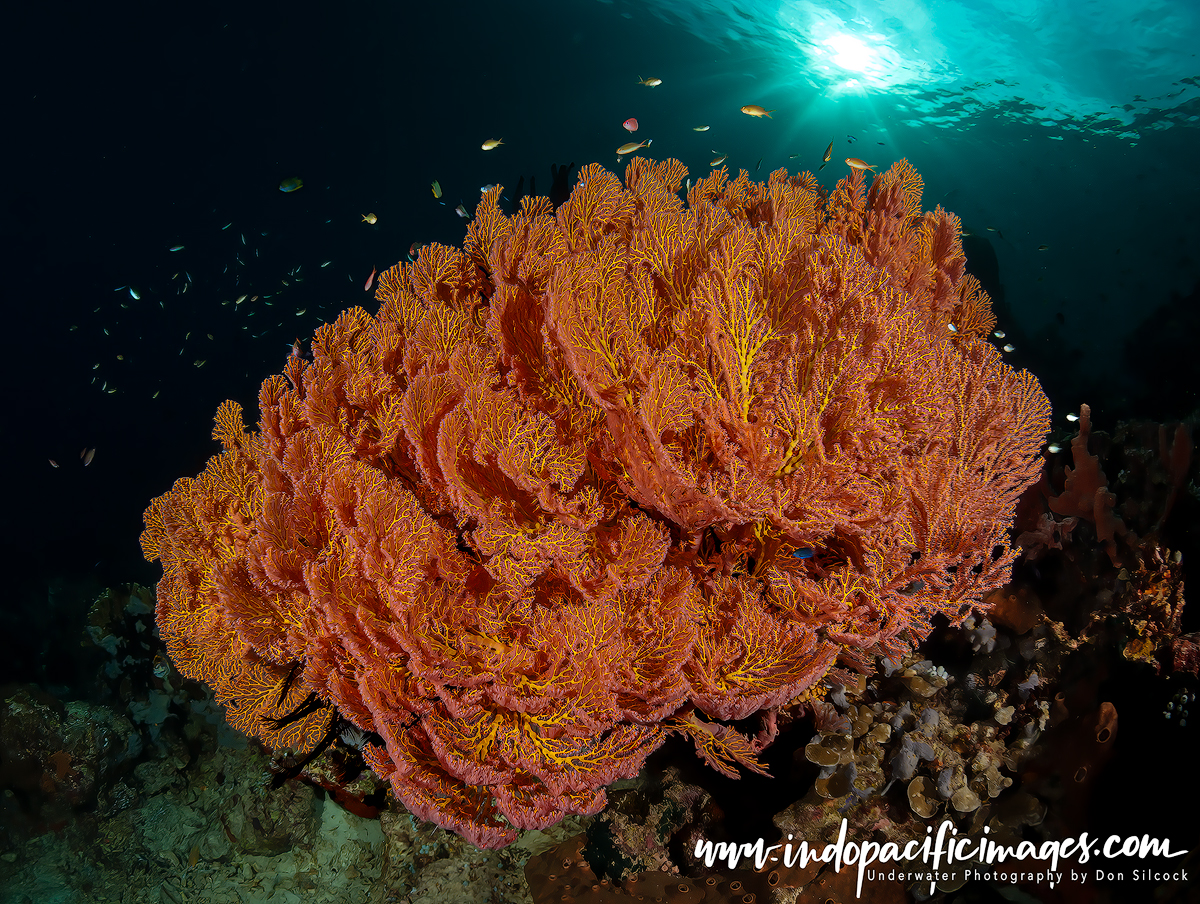
Diving Indonesia – Maluku
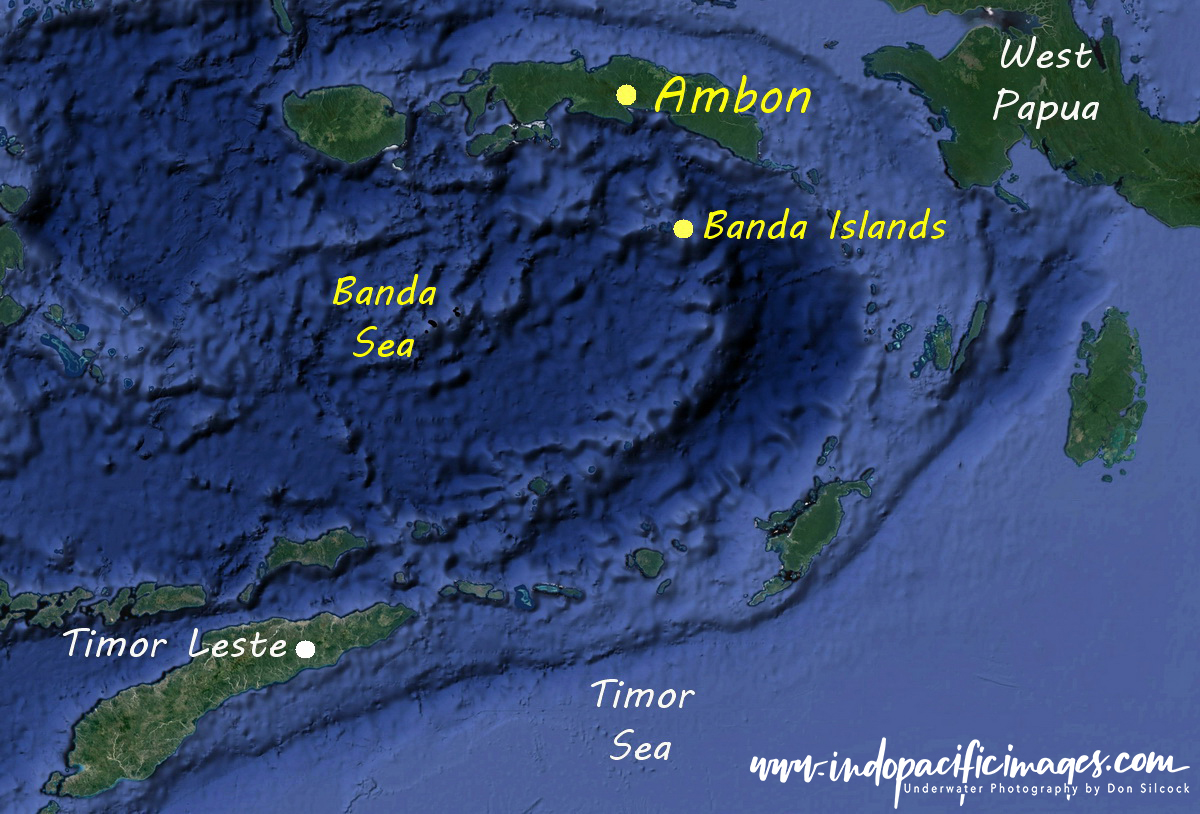
Formerly known as the Moluccas, the islands of this province were what the European explorers were looking for when they came searching for the “spice islands” of the East Indies.
First to arrive were the Spanish and the Portuguese… But they were supplanted by the Dutch with their bigger ships and better guns. And then the British turned up and made their presence felt…
But the Dutch ultimately prevailed. With their East Indies Company effectively ruling the archipelago until the independent country of Indonesia emerged after WWII.
Back in the 16th century cloves, nutmeg and mace were the only way to flavour and preserve meat. They were also perceived to offer a degree of protection from the deadly plagues that regularly ravaged Europe. Almost as valuable as gold, fortunes were made trading those rare and exotic spices.
The only place in the world they grew was on the very remote Banda Islands. And those European explorers wanted to to find those islands and control the source of the spice trade. Cutting out all the Arab and Venician spice trade merchants with their greatly inflated prices.
The city of Ambon on the island of the same name is the provincial capital. With the large bay that forms the entrance to its natural harbour offering excellent critter diving. While the south coast of the island has some really nice wide-angle diving.
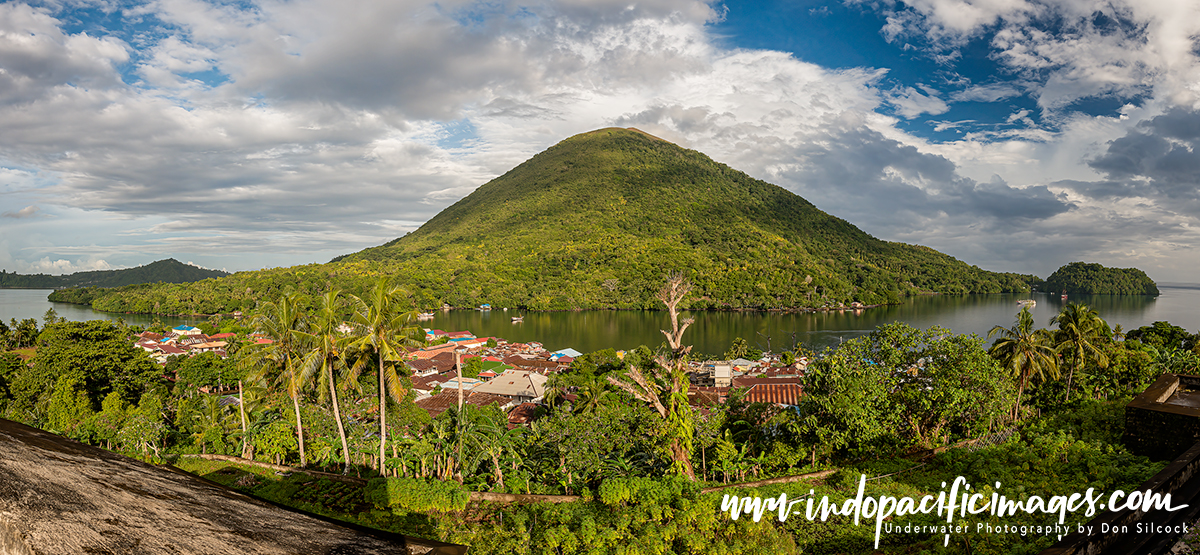
To the south are the Banda Islands which are a quite special and unique diving location. And the huge Banda Sea offers the possibility of some amazing encounters with blue and sperm whales. Plus schooling hammerheads and the isolated sea snake infested Gunning Api “snake island”.
Diving Indonesia – Bali, Nusa Penida and Nusa Lembongan
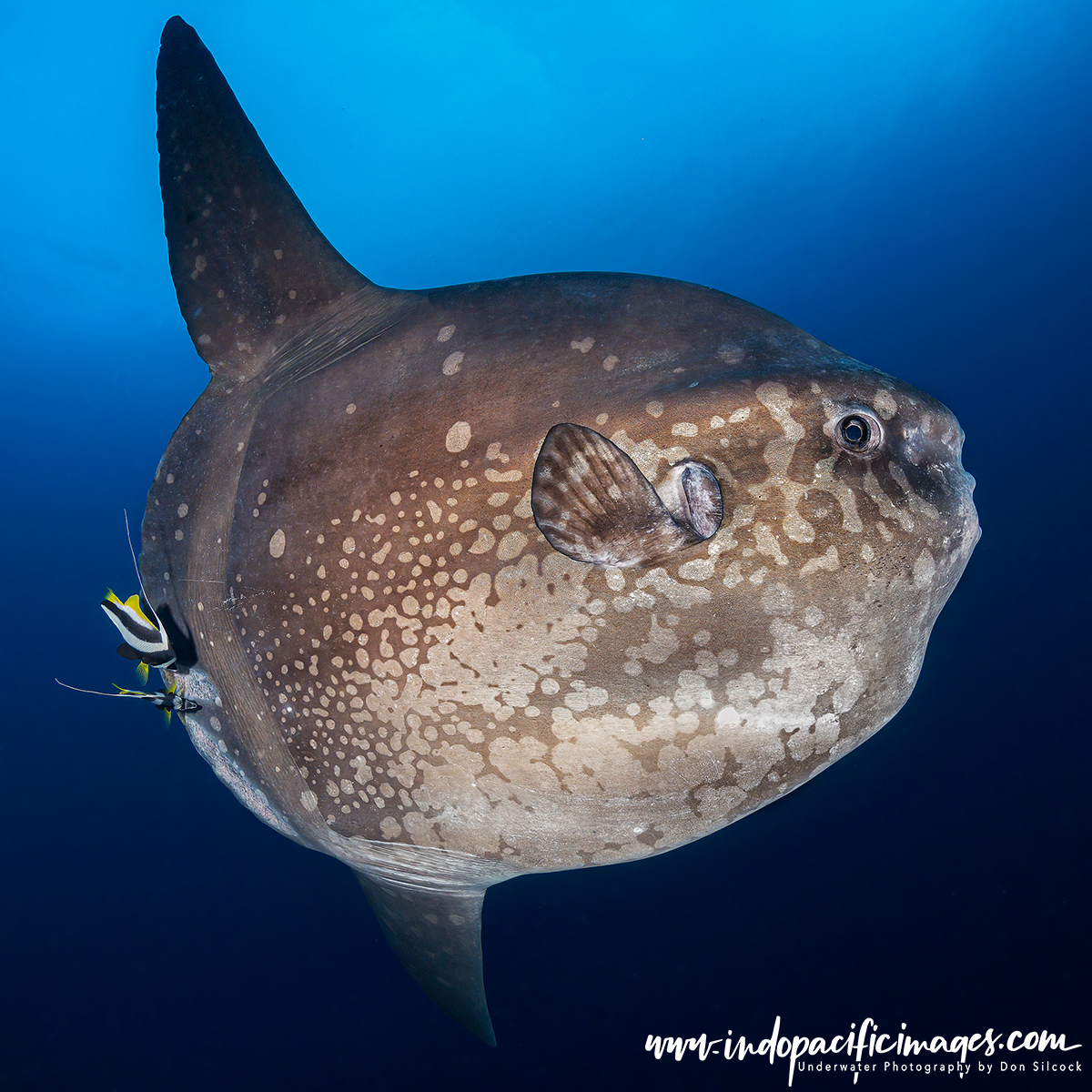
Where the Indonesian Throughflow touches the north and east coast of the Island of the Gods. And those of its close neighbours Nusa Penida and Nusa Lembongan, is where you will find excellent marine biodiversity.
Be warned though… The Lombok Strait, between Bali and the island of Lombok, is the main exit for the waters of the Indonesian Throughflow into the Indian Ocean. With the east coast of Bali experiencing some huge currents. With the islands of Nusa Penida and Nusa Lembongan sitting right in the middle of it! Most operators are well aware of the dangerous locations are and will avoid them like the plague… Make sure you do too!
The main locations for diving in Bali are Tulamben and nearby Amed on the north-east coast. Padang Bai on the east coast is also a very popular location. There are a few interesting critter diving spots further west from Tulamben. And on the western tip of Bali there is some good diving at Menjangan Island and the Secret Bay critter site at Gillimanuk.
Diving Indonesia – The Lesser Sunda Islands
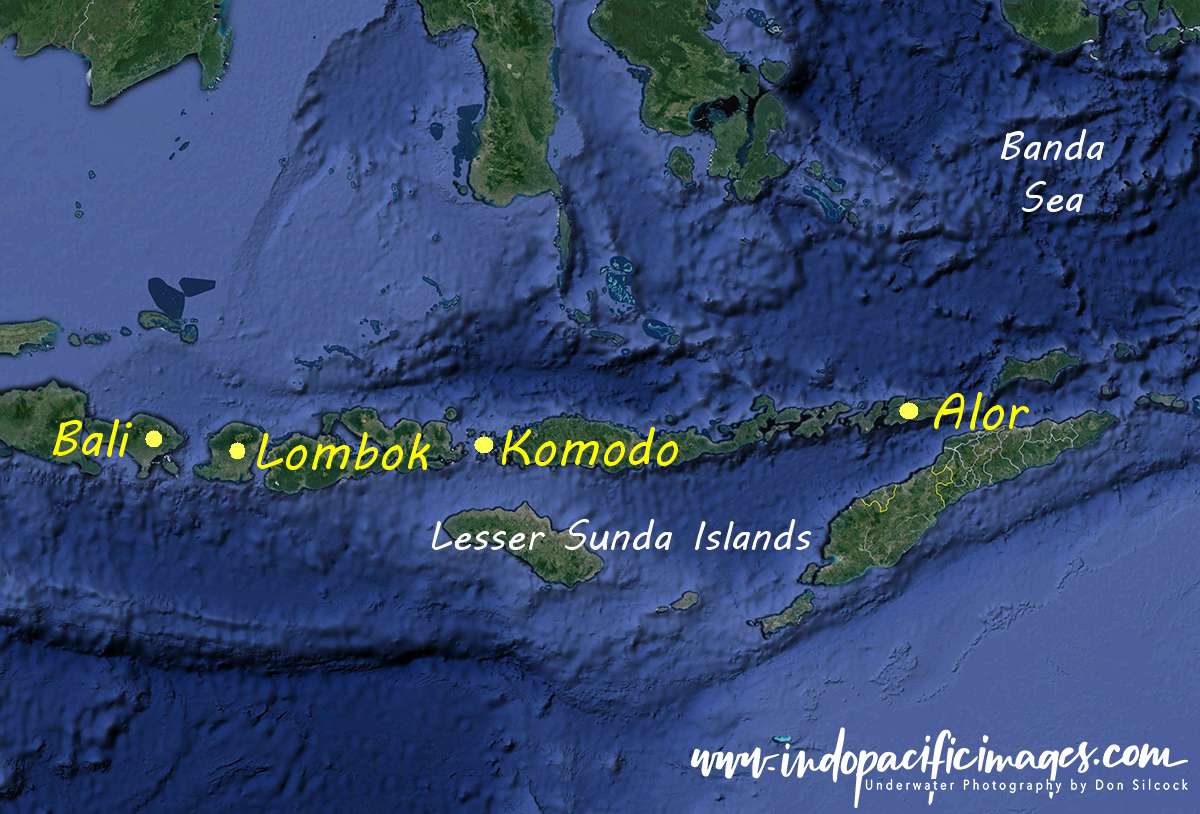
To the east of Bali are the chain of islands called the Lesser Sundas. Which effectively form the southern rim of the archipelago, with the area around Komodo being the main location for diving.
Komodo has experienced similar exponential growth in diving tourism as Raja Ampat. And the main town of Labuan Bajo is now virtually unrecognizable from what it was just 10 years ago.
Although it does get crowded and lacks the incredible biomass of Raja Ampat there is some really tremendous diving in the Komodo area.
Other locations in the Lesser Sundas are the south and east coasts of Lombok. The nearby islands of the Gilis have become the technical diving centre of Indonesia. While further to the east the area around Alor is known for great critter diving.
In Summary…
Trying to summarise the diving in Indonesia is like evaluating the length of a ball of string – it’s not an easy task. Understanding that massive flow of water through the archipelago is the key to knowing where to dive.
Follow the Throughflow and you will be on the right track and you won’t be disappointed!