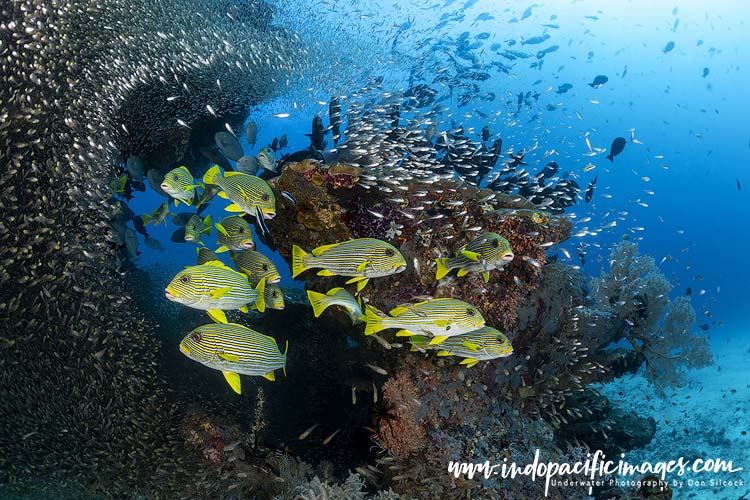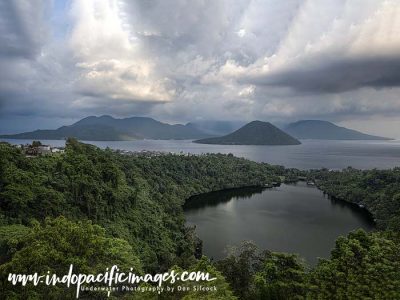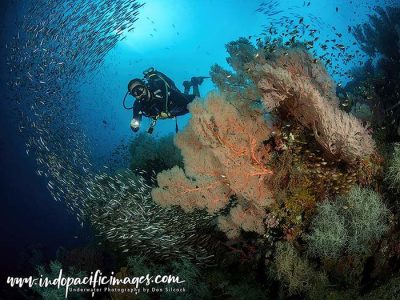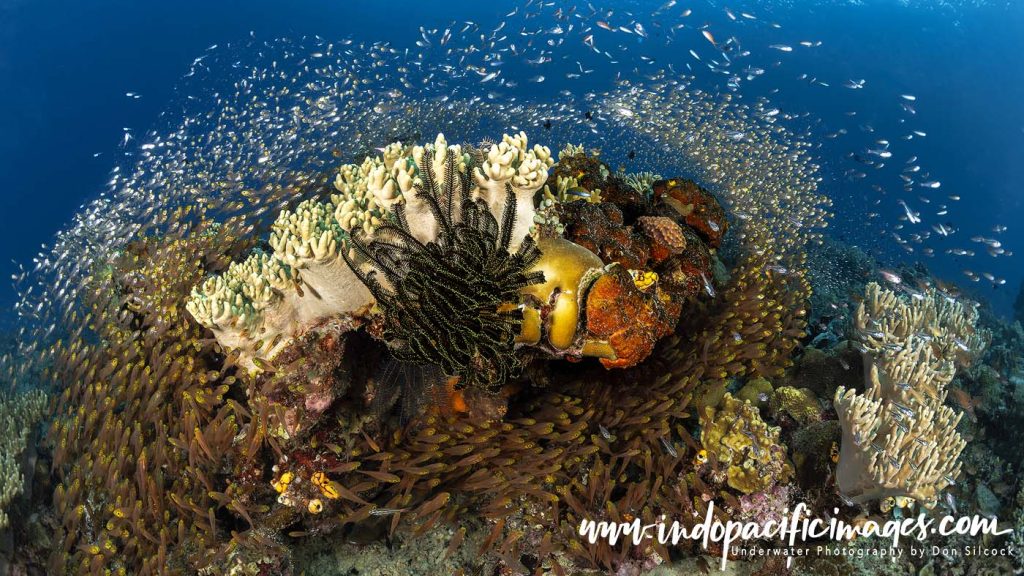
Diving Indonesia… With over 17,000 islands straddling the equator between the Indian and Pacific Oceans, Indonesia is the undisputed heart of the Coral Triangle. For divers, this isn’t just a travel destination, it is almost a pilgrimage to what is considered the most biodiverse marine environment on Earth.
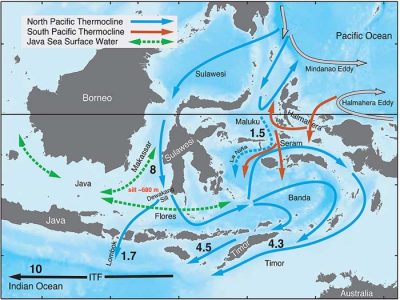
The archipelago’s unique geography creates the Indonesian Throughflow – a massive movement of water that funnels nutrient-rich currents from the Pacific into the Indian Ocean, fueling a kaleidoscope of life that ranges from microscopic “critters” to oceanic giants.
Indonesia is said to host roughly 70% of all known coral species and about 37% of the world’s reef fish species. That staggering variety is spread across several distinct diving regions, each offering almost completely different underwater landscapes. While the western part of the country features the shallow, sandy bays of Bali. The eastern regions like West Papua and Sulawesi are defined by dramatic drop-offs, deep-sea trenches, and ancient volcanic seamounts.Iconic
Diving Indonesia – The Last Paradise… Raja Ampat
Located off the northwest tip of Bird’s Head Peninsula in West Papua, Raja Ampat is often cited by marine biologists as having the highest marine life diversity ever recorded. The “Four Kings” (the islands of Misool, Salawati, Batanta, and Waigeo) are surrounded by nutrient-dense waters where you can find over 1,400 species of fish.
Diving Indonesia – Sulawesi
Sulawesi: Walls and WeirdnessSulawesi offers a “two-for-one” experience. On one side of the tip is Bunaken National Park, famous for its vertical walls that drop hundreds of meters into the deep blue. These walls are honeycombed with caves and crevices, home to huge resident green sea turtles and reef sharks.Lembeh Strait: Just a short drive away lies the polar opposite of Bunaken. Lembeh is the “Muck Diving Capital of the World.” There are no colorful reefs here; instead, divers scan the black volcanic sand for the world’s strangest creatures: Mimic octopuses, Flamboyant cuttlefish, Hairy frogfish, and Bobbit worms.
Diving Indonesia – Bali
4. Bali: The All-RounderBali is perhaps the most accessible diving destination in the country. It offers a rare variety of environments within a few hours’ drive.Tulamben: Home to the USAT Liberty shipwreck, an easy shore dive where the 120-meter wreck is encrusted in soft corals and swarmed by bumphead parrotfish.Nusa Penida: Known for its colder, deeper water, this is the premier spot to see the Mola Mola (Oceanic Sunfish) during the months of July through October, as well as year-round manta ray encounters at Manta Point.Diving Conditions and LogisticsWater Temperatures and VisibilityIn most of Indonesia, the water is a balmy 27°C to 30°C, requiring only a 3mm wetsuit. However, specific areas like Southern Komodo, Nusa Penida, and Alor can experience cold upwellings where temperatures plummet to 16°C–20°C. In these areas, a 5mm wetsuit and a hood are highly recommended.Visibility is generally excellent, often exceeding 30 meters in the open ocean sites of Raja Ampat or the Banda Sea. However, in “muck” sites or during plankton blooms (which bring in the mantas), visibility may drop to 10 meters or less.
Seasonal PlanningBecause Indonesia is so vast, “peak season” depends on where you are going:Komodo & Bali: The dry season runs from April to October, offering the calmest seas and best visibility.Raja Ampat: The prime window is October to April, when the winds die down, making it safe for liveaboards to navigate the remote northern reaches.Currents: A Word of CautionIndonesia is famous for its currents. Many of the best sites are “drift dives,” where you jump into a moving body of water and let the tide carry you along the reef. While exhilarating, these conditions require good buoyancy control. Using a reef hook is common practice in places like Komodo to allow divers to “park” on a rock and watch the shark action without exhausting themselves swimming against the flow.Why Indonesia Stands OutBeyond the sheer number of species, it is the health of the ecosystem that impresses. While many global reefs struggle with bleaching, many of Indonesia’s remote areas—particularly those protected by National Park status or local “Sasi” (traditional conservation) laws—remain resilient.Whether you are a macro photographer hunting for a 2-centimeter Pygmy Seahorse or a big-animal enthusiast looking for a wall of schooling hammerheads in the Banda Sea, Indonesia offers a lifetime of exploration. It is a place where every “safety stop” feels like a main event, and where the transition from the lush, tropical jungle above to the vibrant, teeming reefs below is nothing short of seamless.For any diver, Indonesia is not just a destination to check off a list; it is the gold standard by which all other tropical diving is measured.