
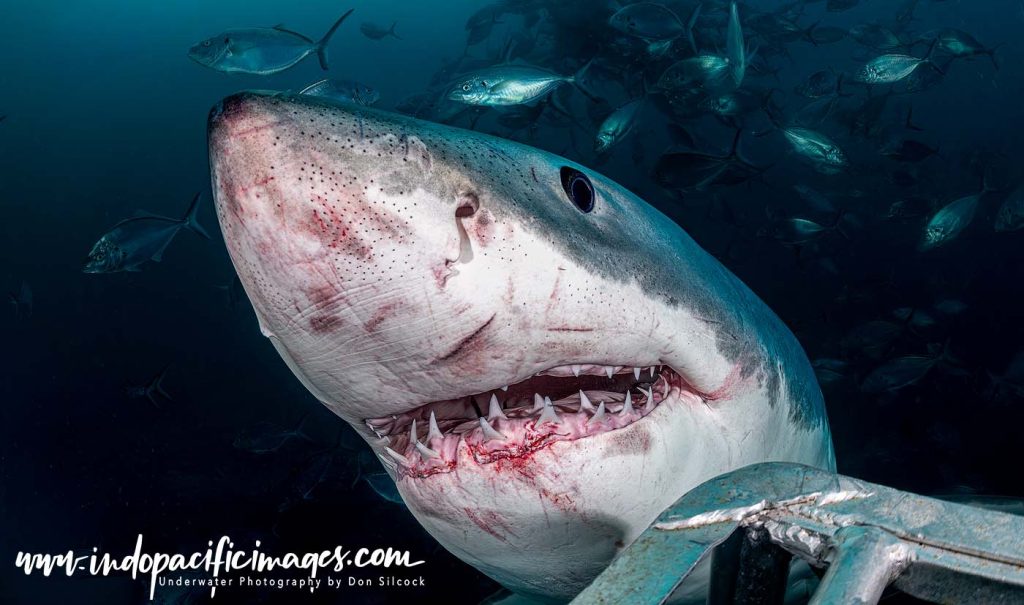
Australian Great White Cage Diving… Cage diving with great white sharks in Australia is one of the most exhilarating wildlife experiences you can have. And the Neptune Islands off Port Lincoln are the only place in the country where it’s possible. Thanks to a unique combination of deep water, strong currents, and thriving fur-seal colonies, sightings here are among the most consistent anywhere in the world.
Unlike many shark-tourism destinations, Australian Great White Cage Diving is well regulated, professionally operated, and conducted with a strong focus on safety and conservation.
Surface Cage or Ocean-Floor?
Great white shark cage diving in Australia is limited to two methods, each offering a different perspective on these apex predators.
Surface Cage Diving
Surface cages are fixed to the stern of the vessel and supplied with surface air. Regulated use of berley draws sharks toward the cage, resulting in close and often repeated passes. The advantages of the surface cage are that it is suitable for non-divers, there is a constant air supply — no scuba gear required.
The close encounters the surface cage enable are ideal for photography plus it’s a predictable and controlled experience – so most visitors choose this option for its ease, reliability, and high shark-encounter rate. Use this link to read more about surface cage diving.
Ocean-Floor Cage Diving
Only one operator offers ocean-floor cage diving, which requires scuba certification. The cage is dropped to around 18–20m and positioned just above or on the seabed, where sharks often appear silently from the blue.
The advantages of the ocean-cage are that no berley is used, the behaviour of the sharks is more “natural” and it’s an atmospheric, immersive setting. Overall the deep cages are a calmer, more organic alternative to surface cages and appeal strongly to certified divers and photographers.
Use this link to read more about ocean-floor cage diving.
Australian Great White Shark Cage Diving – Port Lincoln
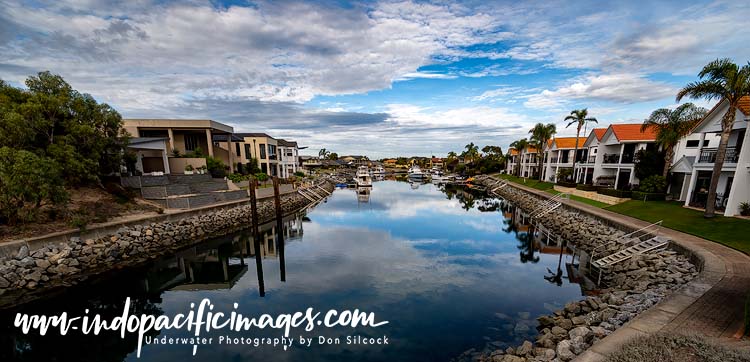
The town of Port Lincoln is the operating base for the two cage diving operators and is located at the bottom of South Australia’s Spencer Gulf.
It is also the tuna fishing capital of Australia and one of the wealthiest places in the country – as a drive around the Lincoln Cove Marina will show you!
The town is a short 50 minute flight across the Spencer Gulf from Adelaide, the capital of South Australia.
And, as you fly into Lincoln you will see a lot of large rings floating in the sea – they are the tuna pens that have made the town so wealthy.

Using a special netting technique developed in Port Lincoln and now generally adopted globally, huge schools of juvenile tuna are caught in the Southern Ocean.
The nets are then closed and slowly towed back to Lincoln, where the tuna is fattened up before being harvested.
Which all sounds rather tame… But we are talking about doing all that in the wild waters of the Southern Ocean!
To understand the magnitude of that challenge, check out the National Geographic documentary Tuna Cowboys on YouTube!
The Tuna Capital…
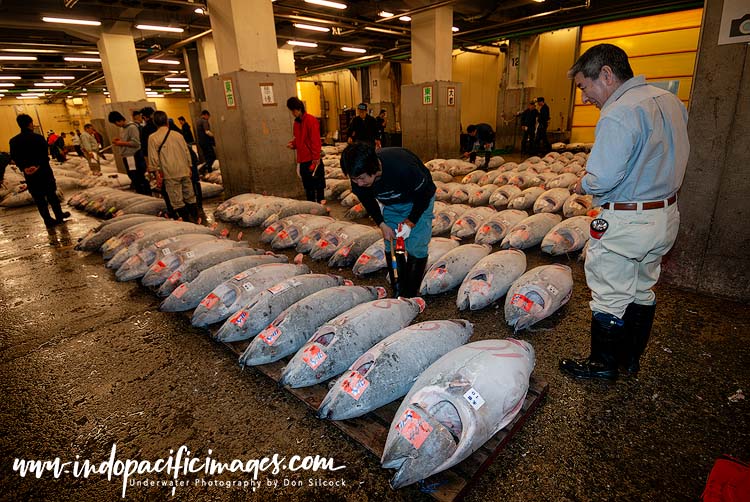
Once the tuna is harvested it is cleaned, tagged for traceability and then either put into deep freeze. Pending the arrival of the mother ship that transports it back to Japan.
Or it is chilled and flown there (usually on the evening it has been harvested) where it’s freshness brings a significant premium.
Either way the tuna would end up at the massive and iconic Tsukiji Fish Market in Tokyo…
Which closed in October 2018 after the ultra-modern Toyosu Market was opened.
Either way, Australian Southern Ocean tuna is highly valued and in great demand!
Australian Great White Cage Diving – The Neptune Islands
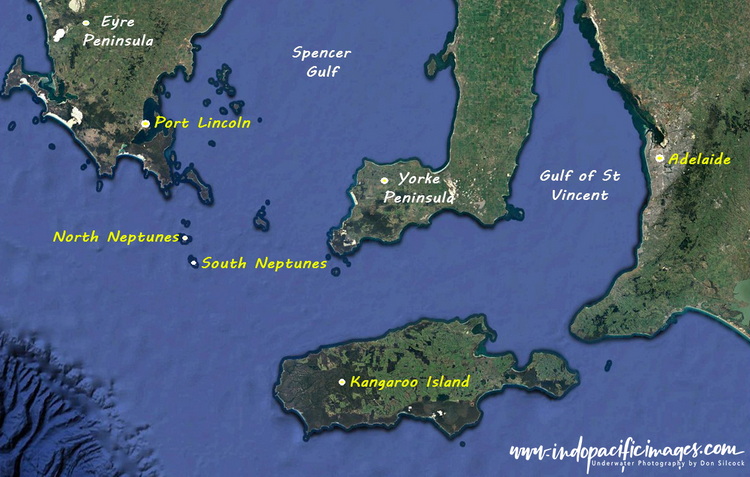
Great White shark cage diving is only permitted at the four main islands of the North and South Neptune Islands.
Those islands are located some 60km south-east of Port Lincoln. Roughly one-third of the way to Kangaroo Island in the Great Australian Bight – the huge open bay that covers most of the southern coastline of the Australian continent.
The food of choice for great white sharks is seals… And studies have shown that one seal provides enough nutrition to sustain a great white for 2-3 days.
The Neptune Islands have one of the largest colonies of fur seals in Australia. And it is the reliable availability of those seals that have made the islands a key location on the great white “super-highway”… The migratory corridor they use along the southern coast of Australia.
Great whites are present all year round at the Neptunes. But they are not resident there – they come and go… Staying only long enough to either satiate their appetites, or till they decide to move on to another feeding ground.
Australian Great White Cage Diving – Where They Roam
Long-term tagging of great whites over a period of 12 years, conducted by a team of marine scientists led by Julia Spaet, reveals just how far and wide Australasian great whites roam.
Detailed analysis of that data by the scientists revealed some interesting patterns.
With the highest concentrations of tagged sharks in the coastal waters of New South Wales from late August to late February.
Followed by eastern Bass Strait area between Victoria and Tasmania from December through to April.
Interestingly, no obvious seasonal patterns were found for coastal areas in South Australia.
Which tends to support the year-round, but random appearances of great whites at the Neptune Islands.
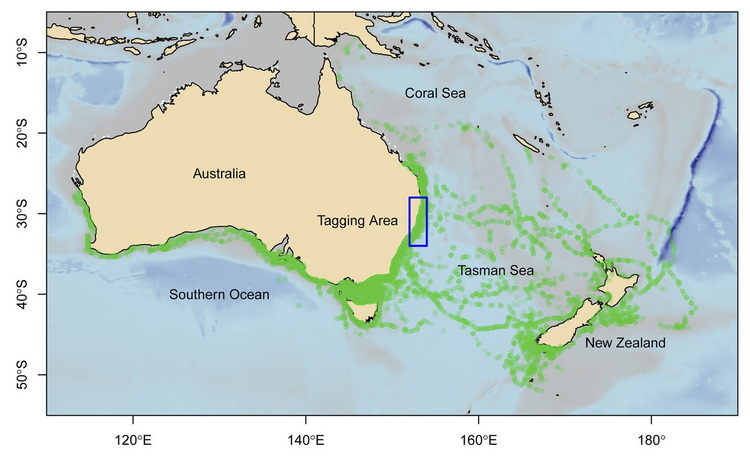
In that the fur seal colonies provide a known source of nutrition for the sharks. But it is obviously not the only one – it’s just that the rest are not known to us!
Australian Great White Cage Diving – Best Time to Go…
Both traditionally and rationally the Australian winter and spring seasons have been the best times of the year for great whites at the Neptune Islands. Traditionally, as that is when the most sharks have been seen. And rationally as those months are when the seal pups are born and weaned. So their initial forays out in to the waters around the Neptunes make them easy targets for the patrolling sharks.
Back To: A Guide to Australian Great Whites