

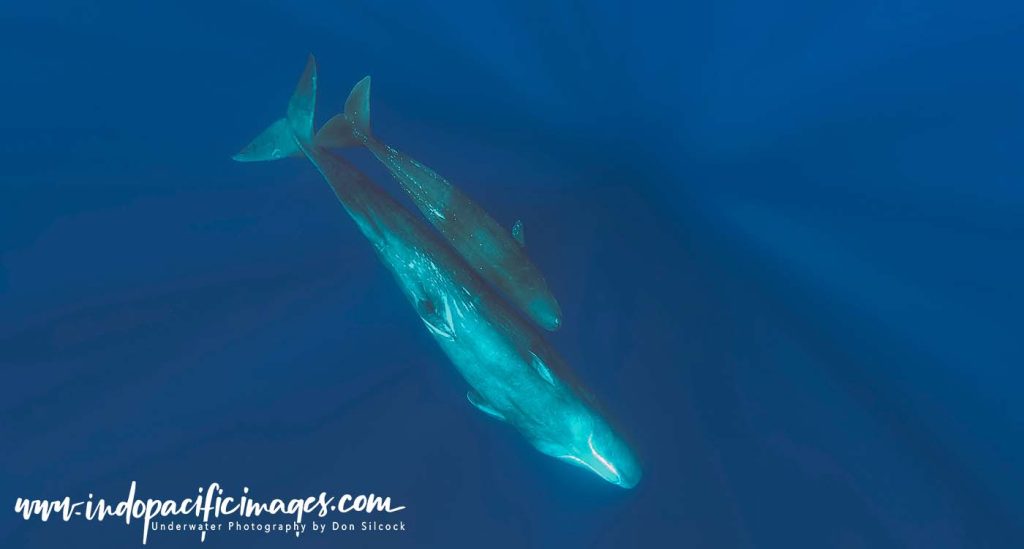
The Sperm Whales of the Azores – Elusive, intelligent and truly magnificent creatures, sperm whales are one of the great attractions of the remote Azores archipelago in the middle of the North Atlantic Ocean.
The Azores Archipelago
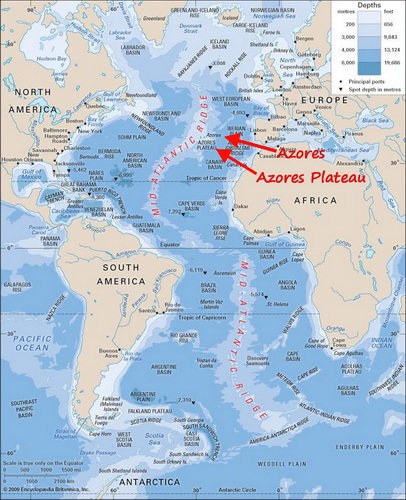
Like the tips of a vast underwater mountain range, the nine islands of the Azores are merely the visible peaks of a much larger volcanic landscape hidden beneath the North Atlantic.
The islands rise from the Azores Plateau. An extensive elevated area of seafloor associated with the Mid-Atlantic Ridge.
That great underwater mountain chain stretches almost the entire length of the Atlantic, from the Arctic to the Southern Ocean.
And forms part of the global system of mid-ocean ridges that encircles the planet.
The Azores occupy a particularly complex part of that system, as they are where the boundaries between the North American, Eurasian and African tectonic plates converge.
The result is a landscape shaped by volcanism, faulting and seafloor spreading over millions of years.
And it is a landscape that becomes even more impressive when viewed from beneath the surface.
The Azores Plateau
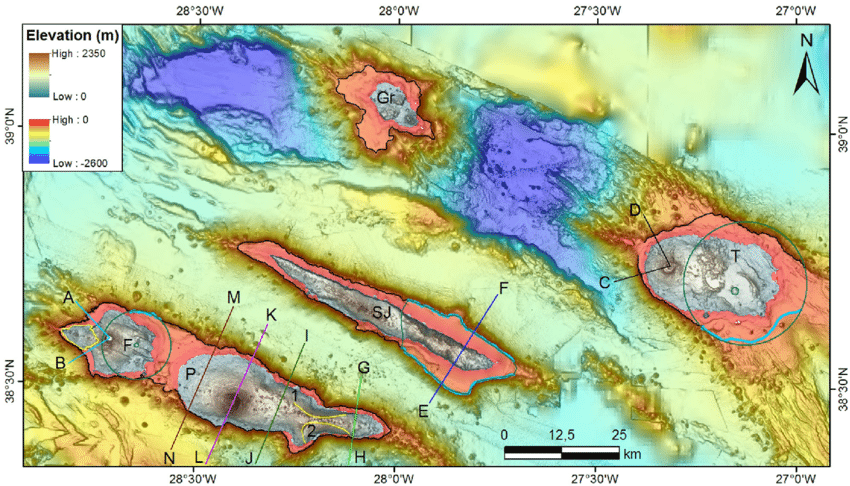
The Azores Plateau lies at relatively shallow depths compared with the surrounding deep Atlantic, while the seabed beyond it plunges several thousand metres deeper.
Rising from this underwater landscape are numerous volcanic mountains and seamounts, with only the tallest breaking the surface to form the islands we know today.
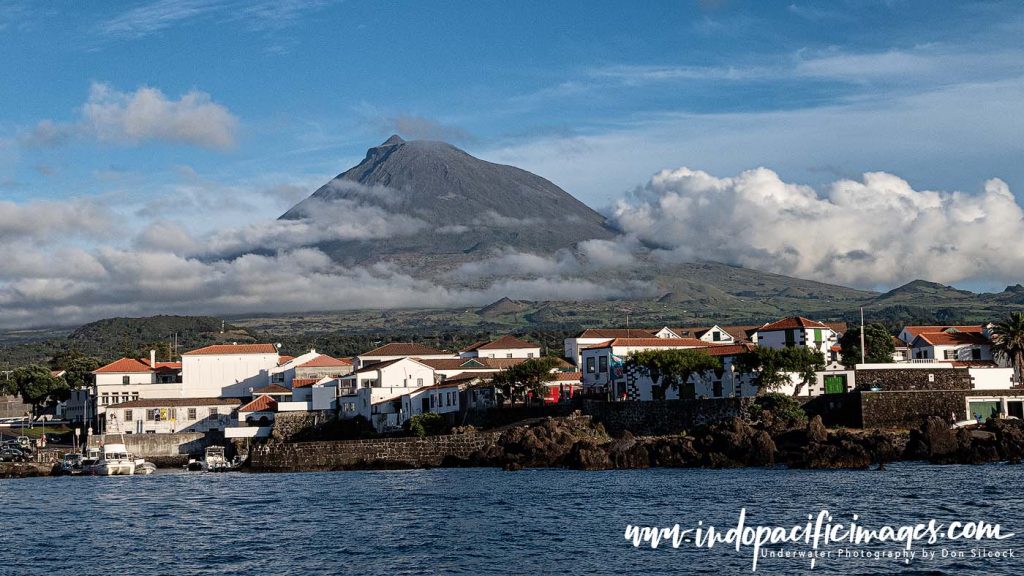
Pico provides perhaps the most dramatic illustration. At 2,350m, Mount Pico is the highest point in the Azores and in all of Portugal. But its impressive height above sea level tells only part of the story.
The volcanic mountain continues thousands of metres beneath the ocean, making Pico an enormous submarine structure whose summit happens to emerge from the Atlantic.
Standing high on its flanks on a clear day, it is difficult not to be struck by the sheer isolation of the Azores.
The nine islands sit roughly halfway between Europe and North America, isolated outposts surrounded by the immense waters of the North Atlantic. Yet beneath those waters is an extraordinary marine environment.
The visible islands are only a fraction of the underwater terrain. More than a hundred seamounts and submarine mountains are scattered across the region.
Creating a complex three-dimensional landscape that influences currents, concentrates nutrients and provides important habitat for marine life.
For the large pelagic animals of the North Atlantic, these underwater mountains can act as biological oases in an otherwise enormous ocean.
The Sperm Whales of the Azores – Location…
The Azores lie at one of the most geologically fascinating locations in the Atlantic, close to the junction of the North American, Eurasian and African tectonic plates.
The region’s complex combination of volcanic activity, faulting, rifting and seafloor spreading has created the elevated Azores Plateau and the extraordinary underwater topography surrounding the islands.
But it is what happens to the ocean around these mountains that is particularly important for the sperm whales.
The Azores are influenced by the warm waters of the North Atlantic circulation, while the complex underwater topography causes mixing, current acceleration and localised areas of enhanced productivity.
The seamounts and submarine ridges effectively interrupt the flow of the ocean, helping to concentrate nutrients and prey. The result is a series of productive marine environments scattered through the deep Atlantic.
As the seasons change, the waters around the Azores become increasingly productive. Spring brings rising temperatures, increasing sunlight and major plankton blooms. Followed by an abundance of organisms higher up the food chain. For migratory whales moving northwards towards their summer feeding grounds, the Azores provides an important stopover in the vast Atlantic.
And for sperm whales, there is another particularly compelling reason to be here – deep water.
Why Sperm Whales Like the Azores
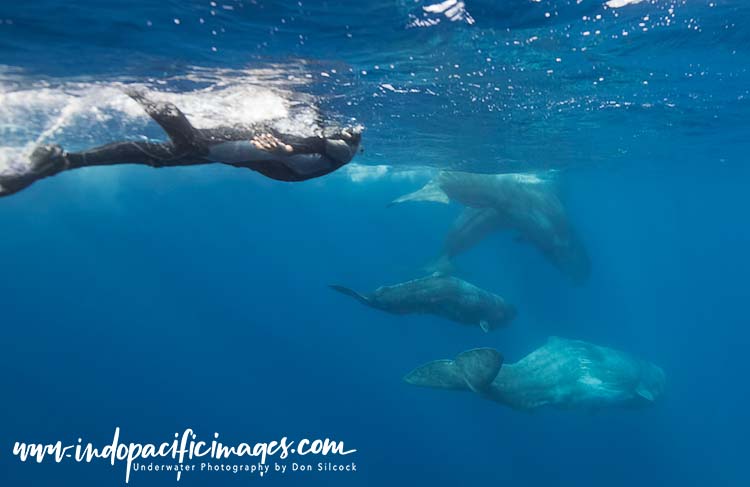
Sperm whales (Physeter macrocephalus) are superbly adapted to life in the deep ocean. They are the largest of the toothed whales and among the deepest-diving mammals on Earth.
They feed primarily on the fearsome Giant Squid (Architeuthis dux) and other deep-water prey.
The deep basins surrounding the Azores, combined with the numerous underwater mountains and steep submarine slopes, create exactly the kind of environment that sperm whales favour.
To us, the Azores are nine spectacular volcanic islands surrounded by blue water. To a sperm whale, they are part of a vast underwater hunting ground.
It is also one of the few places where visitors have historically been able to experience these extraordinary animals in the water under regulated conditions.
Encounters with Sperm Whales in the Azores
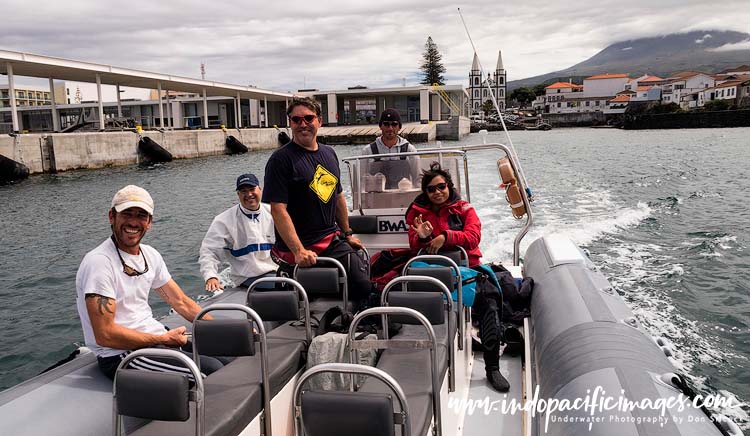
Whale watching is a major tourist attraction in the Azores, but to get in the water with the whales requires a special permit from the Regional Environment Directorate.
Plus you need to hire a boat and guide, which typically means being aprt of a small dedicated group like I was.
We were there in September which was the optimum time to experience the sperm whales of the Azores.
The visibility was excellent, the water was still relatively warm and the main tourist season was beginning to wind down.
It also the end of the main calving season. Which starts in July and means there is the highest chance of encounters with curious juvenile sperm whales.
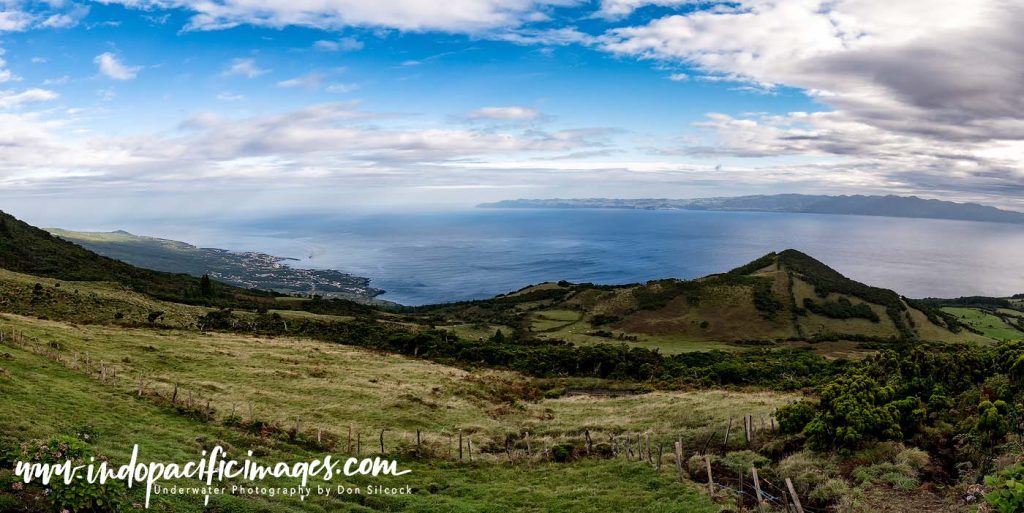
We were based in Madalena, the main town on the picturesque island of Pico and is dominated by its volcano. A drive up the flanks of the volcano on a clear day provides a view that seems to stretch to eternity. Looking out across the Atlantic from so high above the sea puts the isolation of the Azores into perspective.It also gives a sense of just how much ocean there is for a sperm whale to disappear into.
Sperm whales spend a significant proportion of their lives below the surface, making long and often very deep dives in search of prey. When they disappear beneath the surface, there is no way of knowing exactly where they will reappear.
Even when whales are known to be in the area, finding them can therefore be a matter of patience, experience and luck. Which is where the vigias come in.
Vigias and the Sperm Whales Spotters
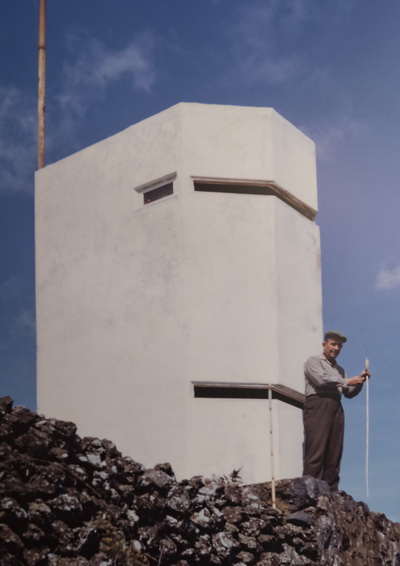
The spectacular views from the high ground around the Azores played an important role in the islands’ former shore-based whaling industry. From carefully chosen locations high above the sea. Experienced observers known as vigias, could scan enormous areas of ocean for the tell-tale blows of whales at the surface.
The skill of the vigia was considerable. An experienced spotter could identify the type of whale from its blow, estimate its direction and distance. And then communicate the sighting to those waiting below.
The system was remarkably effective and the spotters could even tell what type of whale it was from the blow!.
And, somewhat ironically, the same basic methodology is still used today. The old whale lookouts have been incorporated into modern whale-watching operations, with spotters scanning the ocean from elevated positions and communicating sightings to boats.
The difference is that the elaborate signalling systems of the whaling era — including small rockets and white sheets — have long since been replaced by mobile phones and modern communications.
The purpose, however, has changed completely. The whales are no longer being located so that they can be hunted. They are being located so that people can experience them.
How Many Sperm Whales Are There?
Exactly how many sperm whales remain in the world’s oceans is impossible to say with precision, but the most commonly used estimate is 360,000.
That number extrapolated in 2002 by Hal Whitehead, the Professor of Biology at Dalhousie University in Nova Scotia. Who used an innovative mathematical model and a variety of existing data.
He also estimated that the number of sperm whales before hunting began was probably about 1.1m. But early open-boat whaling reduced that number by some 29% by 1880 to around 780,000 animals. From then on there was a slight but slow recovery through to the end of WWII. Then the introduction of industrial-scale hunting completely devastated the global population of sperm whales. Reducing it to the estimated 360,000 – 32% if its original number!
Whitehead also attempted to estimate the possible rate of recovery for the global sperm whale population. Concluding that 1% per year was the maximum possible, which if correct would mean that there about 420,000 whales. Just 38% of that original estimated population…
The general scientific consensus seems to be that a 1% increase per year is overly optimistic. Because it does not (cannot…) take in to account the ratio of male and female whales taken by the whalers. And the inevitable impact that would have on the social and reproductive behaviour of the global population.
So, the best guess seems to be in the region of 380,000 to 400,000 sperm whales alive today and explains why they are still classed as “Vulnerable” on the IUCN Red List.
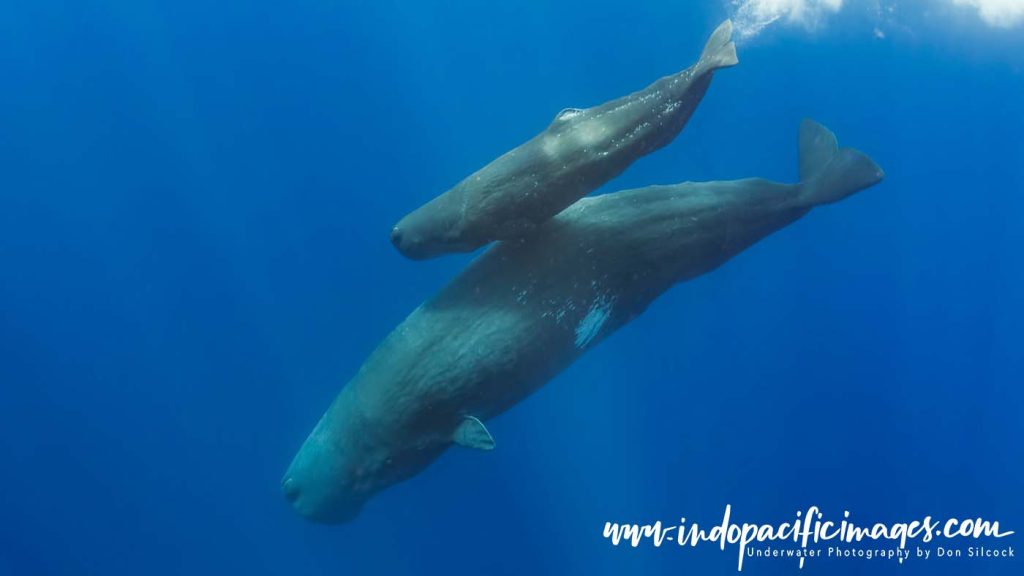
Sperm Whales of the Azores
The total sperm whales of the Azores number is also not known. But from the results of various surveys that have been conducted it seems that a reasonable estimate is about 2500.
That number includes the small, but unknown, number of whales that are year-round residents. Together with those that are known to migrate between the Azores and other areas of the North Atlantic.
Put in very simple terms, the total area of the Azores is just under 2400 km². So if there really are 2500 whales that would be roughly one per km². But sperm whales are very gregarious animals and females usually gather together with their calves in social groups, typically with one or two males.
Then allow for the fact that sperm whales socialize at the surface for about 25% of their time. They spend the other 75% foraging in the depths for food… And so you quickly get the picture that when a group is encountered the chances of spending much time with them is limited to say the least…
Add to that the basic fact that whaling ended in the Azores less than 30 years ago. And the average age of a sperm whale is believed to be at least 50 years. It’s easy to understand their reluctance to linger at the surface when they hear boat engines approaching!
So, while we had many encounters with the sperm whales of the Azores. There was virtually no close interaction or intimate moments of connectivity with them. As they typically would move away at best, or dive as we got close. So we were limited to drive-by photography most of the time.
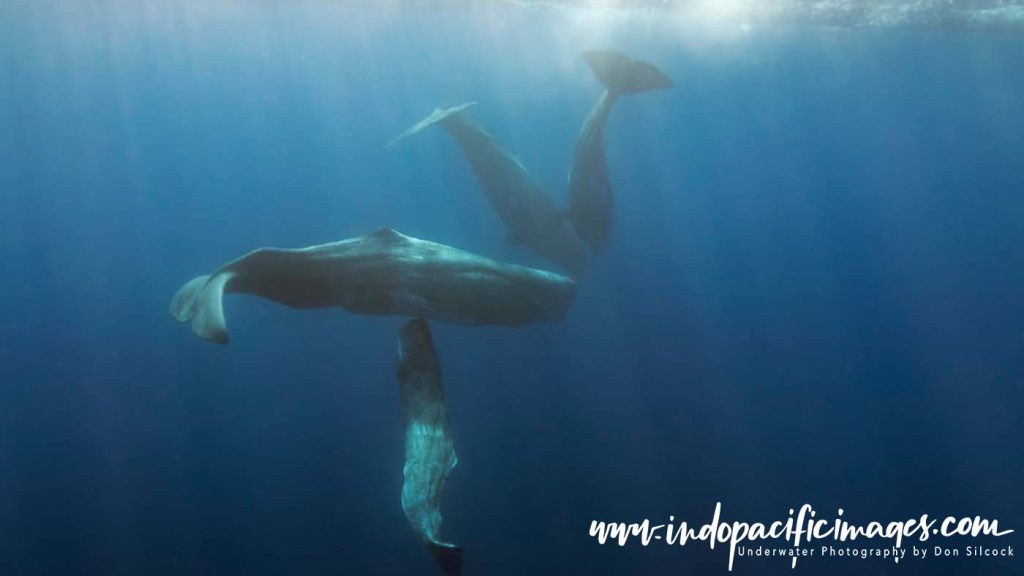
The Magic of the Azores
The sperm whales of the Azores are the product of an extraordinary combination of geography, oceanography and biology. The islands themselves are spectacular. But their real story continues far below the surface… In the deep water surrounding the volcanic peaks, along the submarine slopes and across the seamounts that punctuate the North Atlantic.
That underwater landscape creates the conditions that support an astonishing marine ecosystem. And somewhere within that vast blue wilderness, sperm whales continue to dive into the darkness in search of their prey.
For those of us fortunate enough to encounter them, the experience is difficult to describe adequately. Those encounters are brief and purely from a photographic perspective, for me they were dissapointing. But simply being in the water with these magnificent creatures justified all the expense and long travel from Australia.
The sperm whales of the Azores are truly elusive, unpredictable and utterly wonderful.
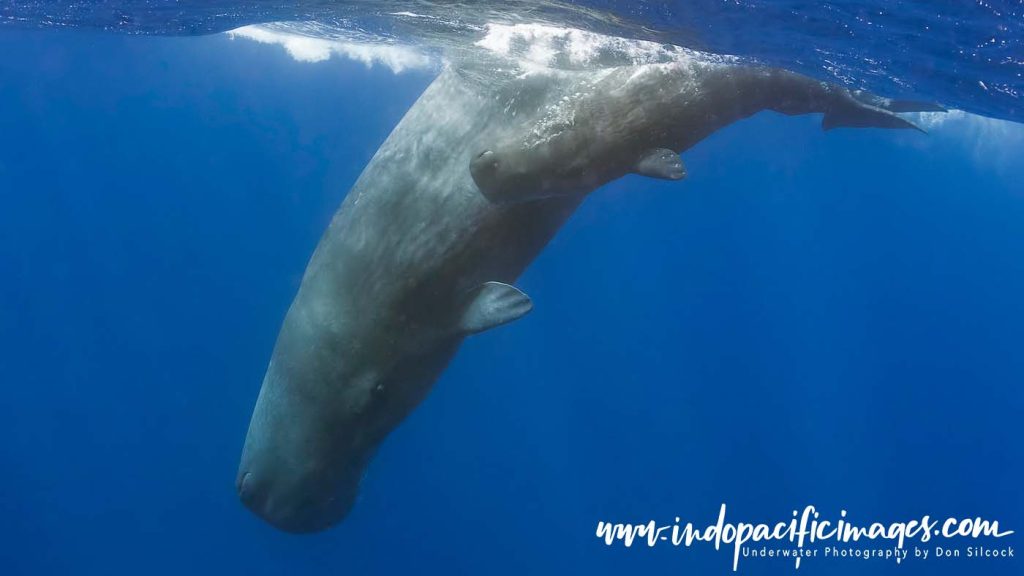
In Water Approvals…
All images taken under a special permit granted by the Regiao Autonoma Dos Acores, Secretaria Regional Do Ambiente E Do Mar, Dreccao Regional do Ambiente.
Back To: Diving the Azores