
Open boat whaling in the Azores was something I thought I could never understand, let alone come to terms with. But then I had never been to the Azores. And I certainly knew very little about the people who lived there, their history or their culture.
I went to there for entirely selfish reasons. I wanted to photograph sperm whales – and the islands are one of the few places in the world where it is possible to get into the water with them under special permit.
What I didn’t expect was that the whales would teach me something about the people who had once hunted them.
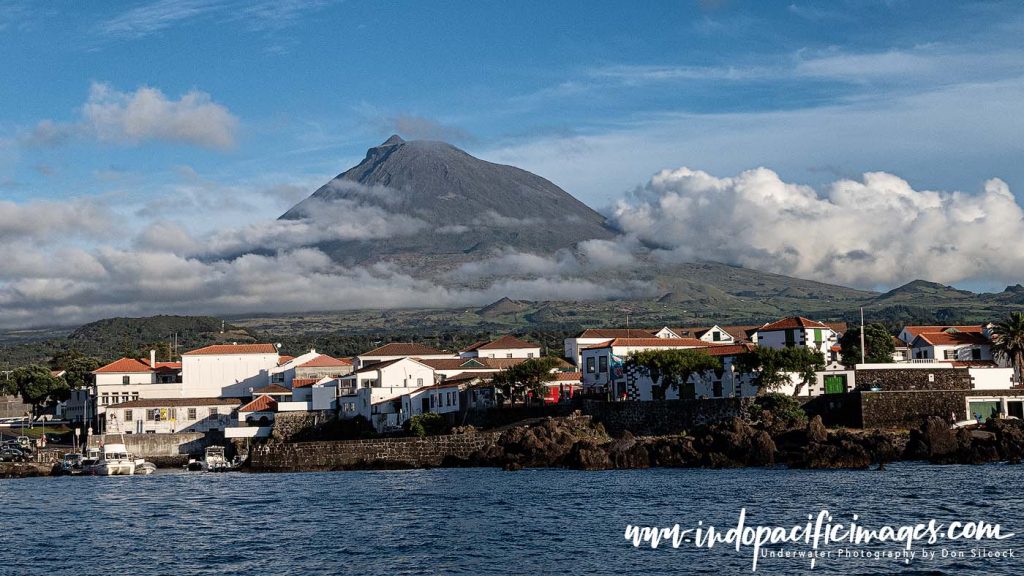
The Azores are simply spectacular, and Pico Island, where I spent three weeks, is particularly stunning.
The main town of Madalena was small but very pleasant, and the local people were welcoming and friendly. But it was also obvious that theirs was a culture with deep roots and a strong sense of identity. People were proud of where they came from and of the traditions that had shaped life on the islands.
Open Boat Whaling in the Azores: The Museum
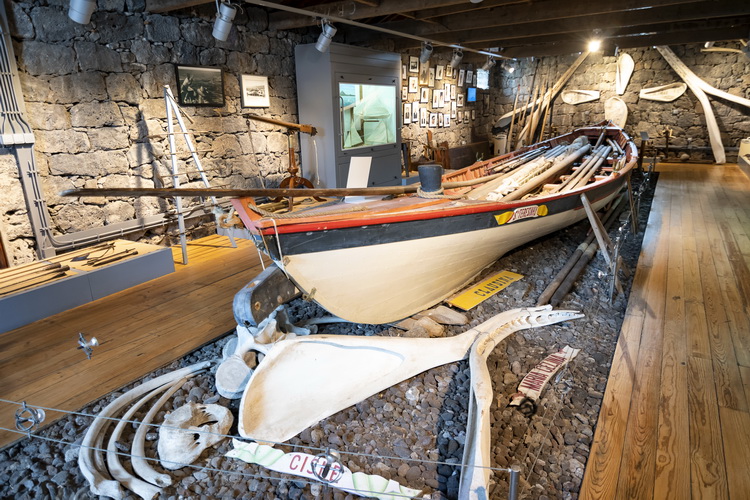
One day, when strong winds kept us on dry land, I decided to drive around the island. In the south of Pico is the town of Lajes and, near the waterfront, the Museu dos Baleeiros – the Whalers’ Museum.
The museum is housed in a restored heritage building and is nicely laid out. With a fascinating collection of memorabilia, photographs and restored wooden whaling boats.
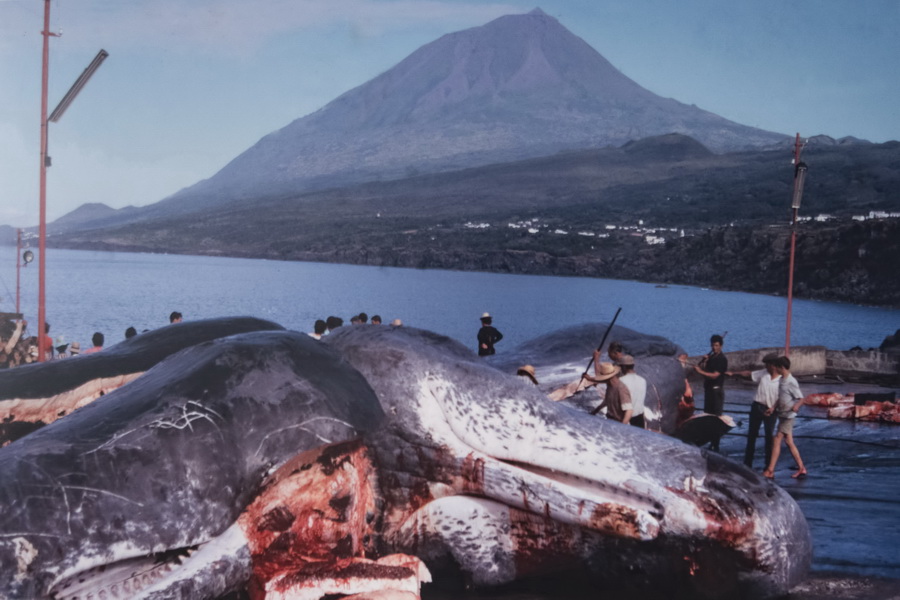
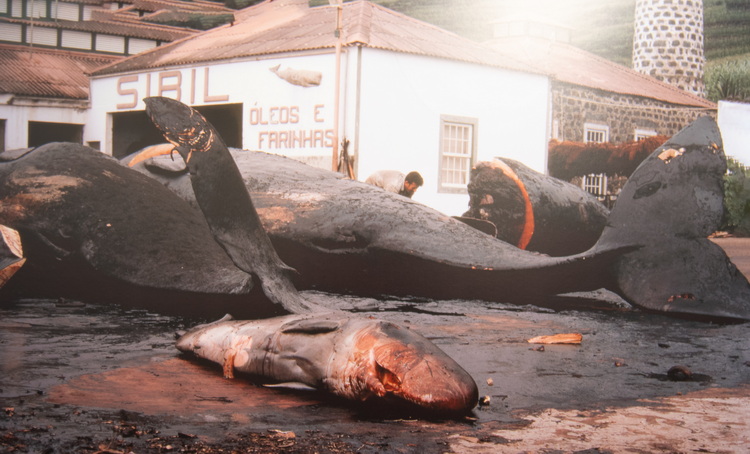
At first I found it interesting, then I walked into the next room… There, hanging on the walls, was a collection of old photographs from the whaling days.
They showed sperm whales being brought ashore, their enormous carcasses hauled from the sea and then rendered for their valuable products.
I found the photographs deeply disturbing.
Sperm whales are magnificent, highly intelligent animals with complex social relationships.
And I have personally spent a lot of time trying to experience and photograph them alive in their natural environment. Seeing them reduced to carcasses and raw material was confronting in a way I hadn’t anticipated.
I felt physically sick and left the museum. As I walked out, the receptionist asked me if I had enjoyed my visit. I think my expression told her all she needed to know…
Trying to Understand Azorean Whaling
That experience stayed with me, to say the least… I wanted to write about my time in the Azores. But it became increasingly obvious that there was a great deal I didn’t understand about the islands, their people or their relationship with whales.
So I started researching, and as I did, my perspective began to change. Which doesn’t mean I suddenly came to approve of whaling – I didn’t.
But I did begin to understand that there is an important difference between agreeing with something and understanding why people did it.
In an increasingly globalised world, cultures can easily begin to blend together. Yet the traditions and experiences that shaped individual communities remain important.
They tell us who people are and, perhaps more importantly, why they are the way they are.
Understanding a culture does not mean agreeing with everything it contains. But it does mean trying to understand why people behaved as they did, rather than judging them entirely through the values of another time and place.
And the more I learned about the history of whaling in the Azores, the more complicated my initial reaction became.
I wanted to write an article about my experience in the Azores. But it was very clear to me that there was a lot that I did not know about the island, its people and its animals… So I started to research all that. And as I did I started to realise why their culture is so important to the people of the Azores.
In these days of increasing globalisation we are all starting to blend together… Our cultures are what defines us and makes us who we are. A strong culture is something to respect – even when elements of it seem appalling at first sight.
The History of Whaling in the Azores
The Azores are a long way from everywhere. The volcanic islands lie roughly 1,360 kilometres west of mainland Portugal in the middle of the North Atlantic. They were settled by Portuguese colonists in the 15th century, and life on the islands was never easy. The rugged volcanic terrain and remote location meant that people had to make the most of whatever opportunities the land and sea provided.
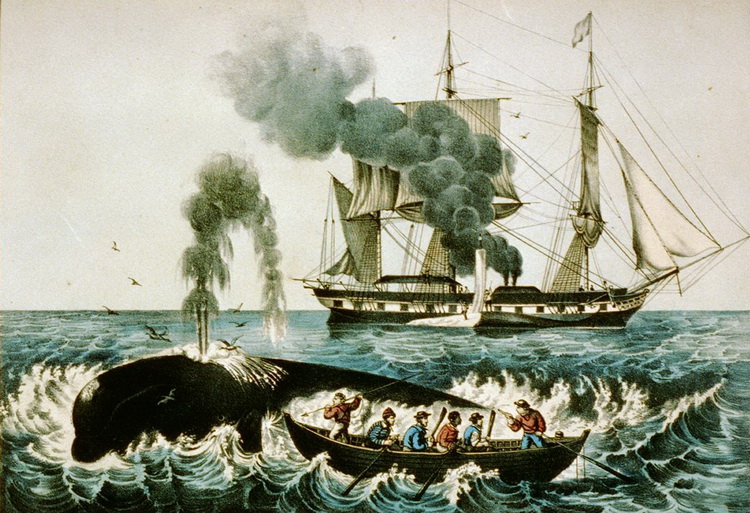
That helps explain the importance of the American whaling ships that began visiting the islands in the 18th century.
Faial, in particular, became an important mid-Atlantic port. By the late 18th century, hundreds of whaling vessels were calling there.
Attracted by the sperm whales found in the surrounding waters, as well as the opportunity to repair, resupply and take on provisions.
The people of neighbouring Pico took notice. And Azorean men began signing on to American whaling vessels and acquiring valuable knowledge of the trade.
They learned how to read the sea, how to identify whales, how to approach them and, ultimately, how to hunt them from small open boats.
Whaling began from Lajes on Pico in 1867 and continued for more than a century. At its peak, the local industry involved 22 canoes and 98 men organised into seven community whaling companies.
It was an extraordinary way to make a living. The sperm whale was particularly valuable because of the high-quality products obtained from it, including spermaceti oil from the enormous head.
And the hunting technique remained remarkably traditional.
Lookouts, known as vigias, were positioned high on the cliffs around the island. When a whale was spotted, signals alerted the whalers below.
The men launched their open boats under sail and headed out towards the whales.
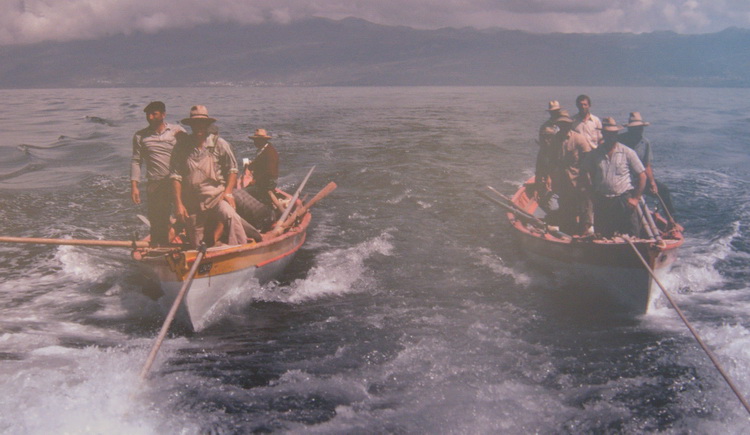
As they approached, the sails were lowered. The final approach was made silently under paddle power, and the harpoon was thrown by hand. From the 1930s, motorised launches were introduced to tow the whaleboats closer to the whales. But the final approach and harpooning continued in the traditional manner.
It was a remarkably dangerous way to hunt and it required extraordinary skill.
The Men Who Hunted the Whales
One of the things that became increasingly apparent to me as I researched the subject was just how intimately the Azorean whalers understood the animals they hunted.
They had to as their lives depended on it.
The men had to know where sperm whales were likely to surface, how they behaved and how they would react to the approaching boats.
They had to be in exactly the right place at exactly the right time. And then they had to get close enough to launch a hand-thrown harpoon at an animal weighing many tonnes.
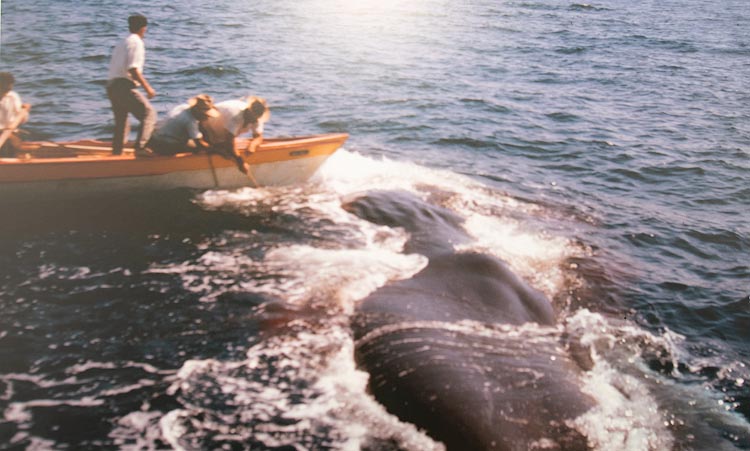
I found myself caught between two very different reactions. I still hated the idea of killing the whales. But I couldn’t deny the courage required to pursue such an enormous and powerful animal in a small wooden boat. Sperm whales are not docile creatures. They are immensely powerful animals and have been known to attack boats. The Azorean whalers were putting themselves at considerable risk every time they went to sea.
I found that difficult to reconcile, but perhaps that was the point.
The more I learned about the people themselves, the harder it became to see them simply as “whalers” and therefore as something I could condemn from the safety of my own modern perspective. They were men living in a remote island community, making a living from the resources available to them and using skills that had been passed down through their families and communities.
I could still dislike what they did. But I could understand the people who did it and that was an important distinction.
Open Boat Whaling in the Azores: Discovery Reports
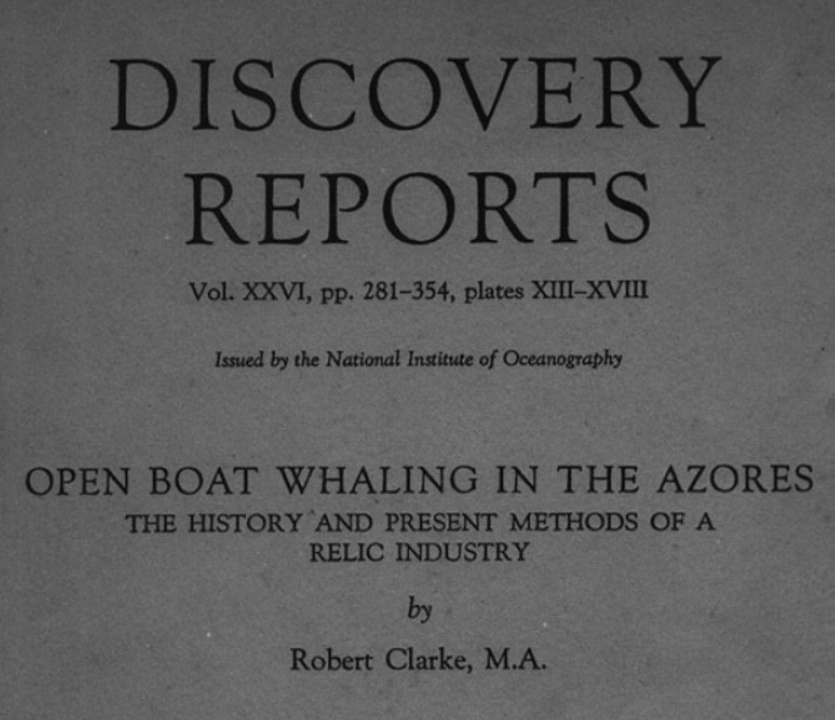
One of the most fascinating discoveries I made during my research was the work of British marine biologist Dr Robert Clarke.
In 1949, Clarke spent ten weeks in the Azores studying the sperm-whaling industry. His resulting Discovery Report, Open Boat Whaling in the Azores, provides an extraordinary snapshot of the industry and the people involved in it.
For me, it was much more than a historical document. It was a time capsule.
Clarke’s report provides a remarkable glimpse into the Azores of 1949 and documents the whaling industry in considerable detail. It also contains photographs taken during his visit and gives a fascinating insight into the practical realities of open-boat whaling.
Reading it brought the photographs I had seen in the museum to life. The boats, the men. the vigias, the whales, and the extraordinary risks involved. The report is long, at around 90 pages, but much of it is fascinating reading for anyone interested in the history of sperm whales and the people who hunted them.
I also found a short film made in 1969 by William Neufeld called The Last Whalers. It is understandably dated in its presentation, but it provides another remarkable glimpse into the final years of traditional whaling in the Azores.
I have always viewed whaling as a greedy and evil thing. I still do… but seeing it from the perspective of the Azoreans, who were basically doing what they had to do in the only non-agricultural industry there was at that time. Allowed me to personally come to terms with what happened to the sperm whales of the Azores.
Overlay on that the many religious festivals, patron saint and traditional holidays that are integral to the archipelago. Which are the islander’s way of keeping their culture strong and alive, while offering thanks to their gods, and it is easy to understand why the Azores are indeed a very special place!
The End of Open Boat Whaling in the Azores
By the second half of the 20th century, the economics of whaling were changing. The demand for whale products was declining, and the industry was becoming increasingly difficult to sustain. Portugal supported the International Whaling Commission’s moratorium on commercial whaling in 1982, and the traditional whaling industry in the Azores was coming to an end.
The IWC’s catch records show that three sperm whales were still recorded as taken in the Azores in 1987. After that, the traditional industry was effectively over.
And this is where the story takes an unexpected turn. Because the people who had spent generations watching the sea for whales began to find a completely different way of making a living from them.
In 1987, feasibility studies supported by the International Fund for Animal Welfare and the European Community investigated the potential for whale watching in the Azores. In 1989, the first local and foreign operators began offering whale-watching trips from Lajes. And the transformation was almost poetic. The same cliffs that had once been used by vigias to spot whales for the whalers were once again being used to look for whales.
But this time the whales were not being hunted. They were being watched.
Sperm whales were the original attraction, but the Azores are home to an extraordinary diversity of cetaceans, with more than 25 species recorded in the surrounding waters. Sperm whales can be encountered reliably throughout the year.
The IWC now describes the transformation of the Azores from a whaling community to a whale-watching destination as an important example of how cetaceans can continue to provide economic value to a community without being killed. It also notes that former whalers helped shape the developing industry and, in some cases, advocated stronger protections for whales based on their knowledge of the animals.