
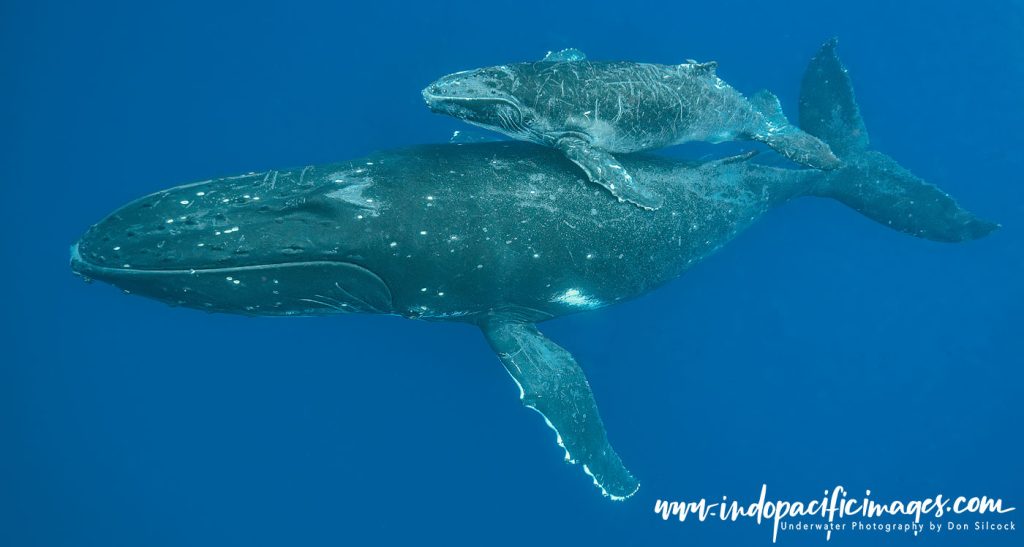
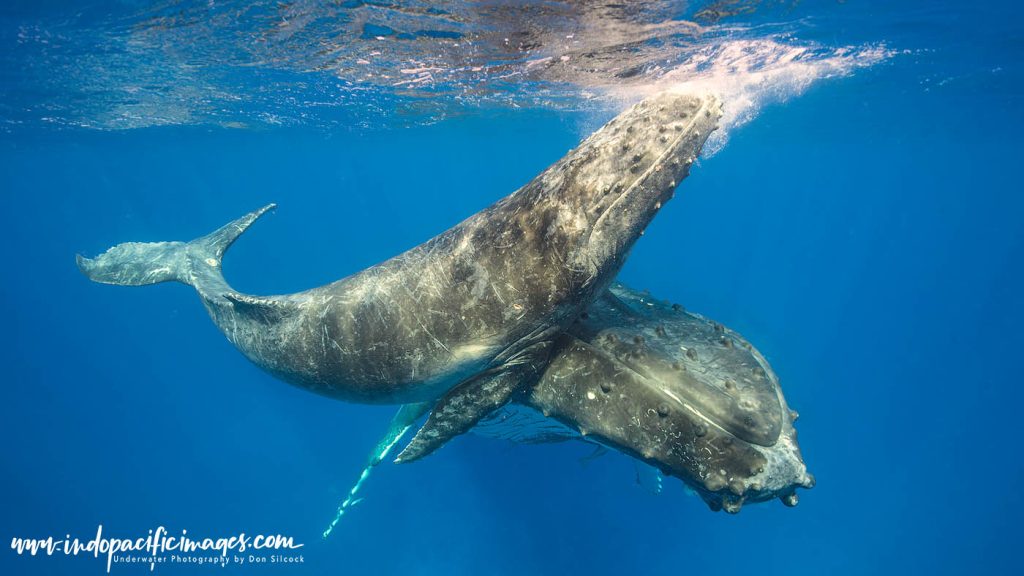
Swimming with humpback whale mother and calf pairs in Tonga is one of the most intimate and emotionally powerful wildlife encounters there is.
Unlike fast-moving adult whales, mother and calf pairs spend extended periods resting in Tonga’s sheltered bays — creating superb opportunities for quiet and respectful in-water encounters.
These encounters are not about pursuit or spectacle. They are about patience, stillness, and allowing the whales to control the interaction.
When conducted correctly, humpback mother and calf encounters can be profoundly moving experiences that also offer extraordinary underwater photography opportunities.
Unique Encounters
Each austral winter, the southern humpback whales of the Tongan Tribe migrate from their Antarctic feeding grounds to the warm waters of Tonga to mate, give birth, and nurse their calves.
Tonga’s shallow, protected reef systems provide ideal nursery conditions, particularly around Vava’u, where mother and calf pairs can rest safely away from heavy swell and predators. Unlike many whale-watching destinations, Tonga permits regulated in-water encounters, making it one of the few places on Earth where swimming with humpback whales — including mother and calf pairs — is legally possible under strict guidelines.
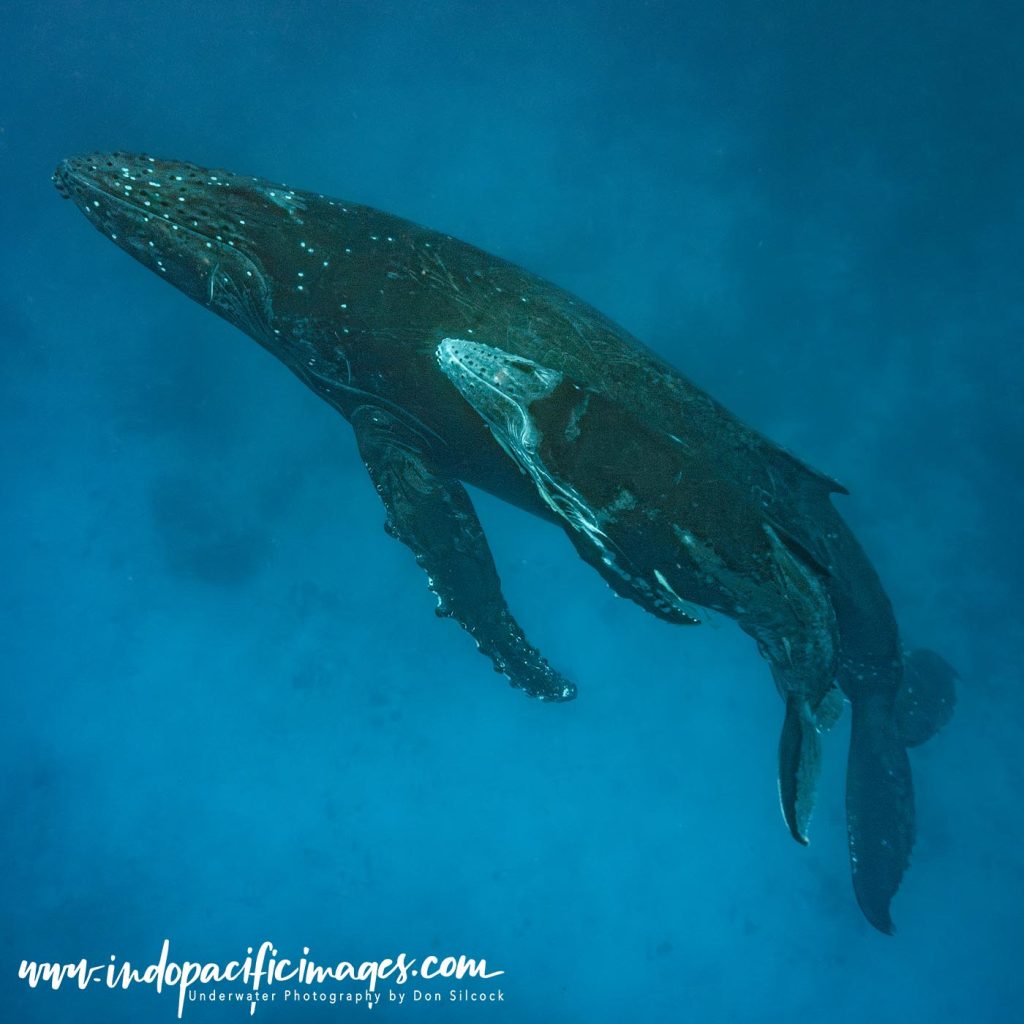
Humpback Mother and Calf Encounters – A Safe Refuge…
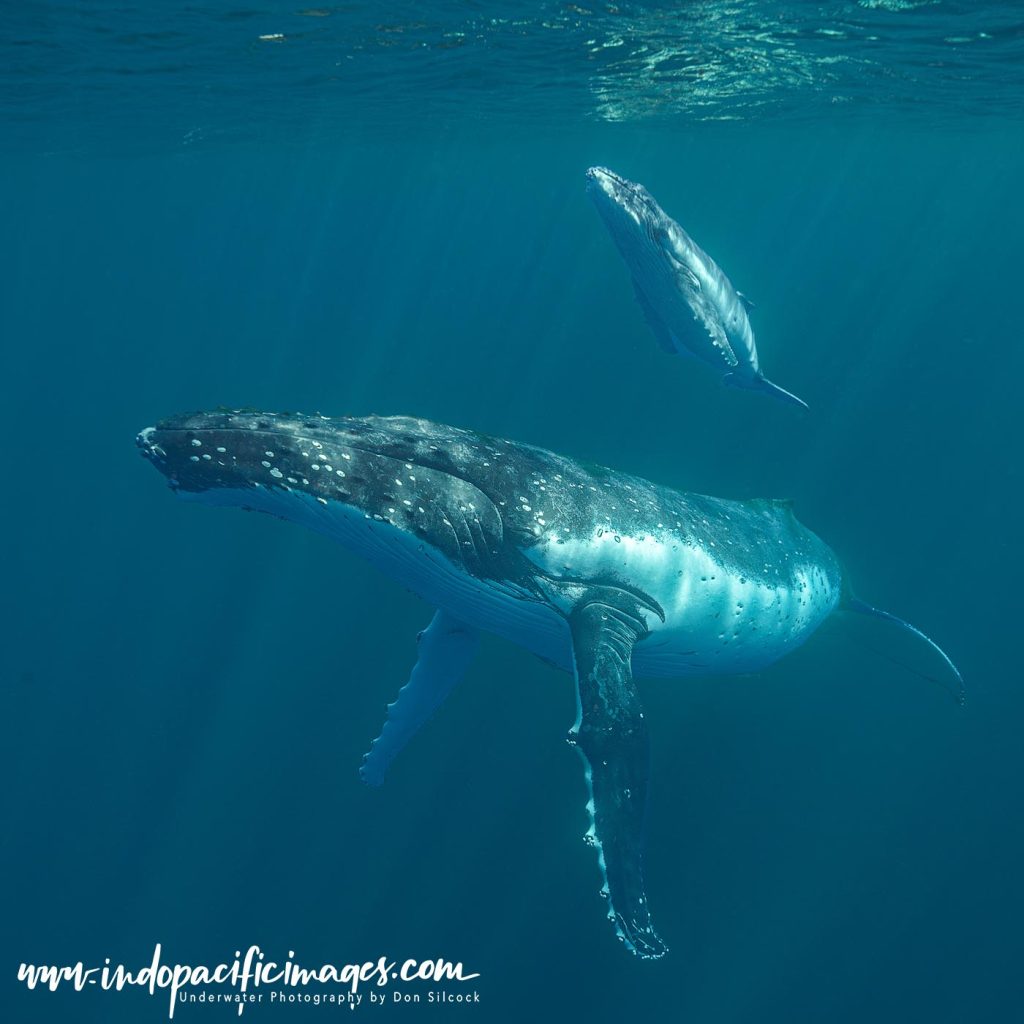
The 170+ islands that make up the Tongan archipelago are ideal for the newly born calves to spend the first few months of their lives.
The mothers are back in Tonga some 12 months after the conception of their calves. And have made the incredible journey up from the Antarctic in their annual migration – a journey of over 6,000km.
The sheltered bays and lagoons of the archipelago are really important to the whales.
The mothers last ate in the Antarctic, at least 2-3 months earlier. And since then they have swam all the way up past New Zealand and along the sub-sea volcanic arch that leads to Tonga. They have given birth to their calf and now have to feed it, while constantly looking after it and guarding it from hungry predators!
The mothers are tired and have to recover their strength because soon they will have to make the return journey south to the Antarctic. But this time they will have their calves to look after and feed.
They need a sheltered environment that will allow them to rest while knowing that their calves are as safe as possible from potential predators.
Mature whales usually come to the surface and breath every 10 minutes or so. But calves have to breath every 3-5 minutes and every time they do that they are vulnerable to attack. So shallow bays are ideal for them to rest and keep their calves safe.
Humpback Mother and Calf Encounters – Rules of Engagment (RoE)
Under the “Rules of Engagement” whale watching guidelines established by the Tongan government there is a 300m radius exclusion zone around the humpbacks.
Vessels must not enter, however licensed operators may proceed into what is called the “caution zone”, which allows them to get as close as 100m to the whales. Entry in to the water has to be made silently from that 100m boundary otherwise the mother, sensing possible danger, will lead the calf away.
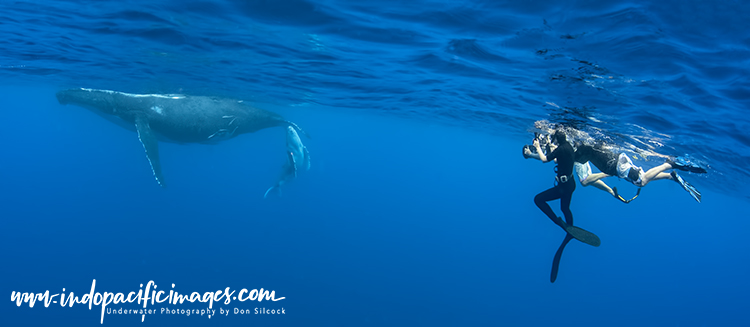
A maximum of 4 swimmers, plus a guide, are allowed to enter the water and approach the whales. Which must be done very quietly (no splashing fins…) and carefully so as not to intimidate and scare them away. A good guide can read the body language of the resting mother. They will then position the group so as to maximize the interaction and photographic potential.
If the mother has “settled” and accepted the presence of the swimmers. The humpback mother and calf encounter becomes sublime as she may even approach to take a closer look. And being so close to such a huge creature is an experience that will stay with your forever!
Back To: Humpback Encounters Main Menu